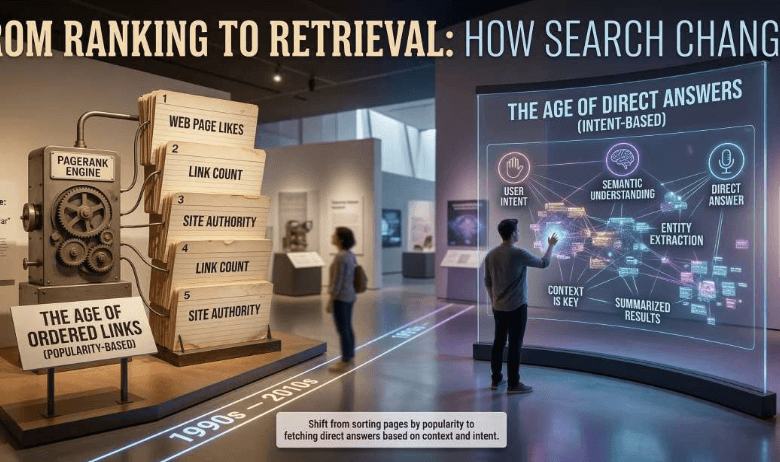
A growing body of industry analysis is shedding light on how generative search retrieves content across B2B industries, and the findings are reshaping the way marketing teams think about visibility, authority, and content strategy. As AI-powered search tools continue to integrate into the daily workflows of business buyers, understanding the retrieval process has become a pressing concern for organizations that depend on search to reach decision-makers. What was once a mechanical exercise built around keywords and backlinks is now a sophisticated process that evaluates meaning, context, and explanatory depth. For B2B marketers, the implications of this shift are significant and long-lasting.
A New Era of Retrieval Is Redefining Visibility
Recent analysis suggests that generative search systems evaluate content in ways that differ sharply from traditional search engines. Instead of scanning pages for keyword matches and ranking them on a list, AI-powered platforms break content into smaller segments, examine the meaning of each segment, and assemble an answer from multiple sources. This method changes how B2B content earns visibility because it rewards clarity, accuracy, and structural quality rather than keyword density alone. The result is a search environment where content strategy must prioritize comprehension over placement and where brands compete for inclusion inside machine-generated explanations rather than for a single position on a results page.
Passage-Level Evaluation Is Reshaping Content Design
One of the most important findings in current research is that generative search systems evaluate content at the passage level. Analysts tracking how generative search retrieves content across B2B industries have noted that AI models often extract short sections from long-form pages rather than relying on the full document. This means a single page can contribute to several different answers, provided each section is clearly written, well-defined, and capable of standing alone. For B2B teams producing complex content about software, compliance, or enterprise services, this shift places new emphasis on section structure, heading clarity, and the logical flow of information within each paragraph.




Semantic Matching Has Replaced Exact-Phrase Optimization
Traditional SEO relied heavily on matching exact phrases to user queries, but generative search operates on semantic similarity. New analysis confirms that AI retrieval systems compare the meaning of a query to the meaning of stored content, even when the wording differs substantially. This changes how B2B marketers should approach topic research. Teams that once built entire pages around a single keyword are now creating broader explanatory assets that address the many ways buyers describe the same concept. In industries such as cybersecurity and legal services, where technical language varies widely across audiences, semantic matching allows well-written content to reach more buyers without requiring exhaustive keyword lists.
Industry-Specific Language Plays a Major Role in Retrieval
Current research also highlights how generative search retrieves content differently based on the specialized language of each B2B industry. In fields like healthcare, insurance, and financial services, AI systems rely heavily on consistent terminology, recognized standards, and authoritative sources. When a page uses precise industry language and defines concepts in ways that align with established frameworks, retrieval systems are more likely to treat that content as credible. This has significant implications for B2B marketers who must balance accessibility with technical accuracy. Content that speaks the language of a regulated industry performs better in AI retrieval because it demonstrates fluency with the concepts buyers expect to see discussed.
Entity Recognition Drives Inclusion in AI Answers
Entities, which include products, companies, standards, processes, and technical concepts, play a critical role in how generative search retrieves content across B2B industries. Analysts have found that AI systems prioritize pages that name entities clearly, define them consistently, and explain how they relate to one another. A B2B page that describes a compliance framework, explains how a specific technology supports that framework, and lists the steps involved in achieving compliance gives retrieval systems a rich set of connected ideas to draw from. This interconnected entity structure helps AI models assemble accurate and comprehensive answers, which increases the likelihood that the source will be cited.
Consistency Across Pages Strengthens Retrieval Signals
Another important theme emerging from recent analysis is the value of consistency across multiple pages on the same website. When a B2B company explains a concept using similar language on a product page, a blog article, and a reference guide, generative search systems recognize the pattern and treat the site as a reliable source on that topic. Inconsistent definitions, on the other hand, weaken retrieval signals because AI models interpret the variation as uncertainty. This finding encourages B2B marketing teams to create shared terminology guidelines, ensure documentation aligns with marketing content, and maintain stable definitions over time as part of a long-term generative engine optimization strategy.
Technical Accessibility Is Still a Determining Factor
Although generative search focuses on meaning, technical accessibility remains a foundational requirement. Analysts have confirmed that AI systems cannot evaluate content they cannot reach. Pages hidden behind authentication walls, blocked by restrictive robots.txt files, or slowed by heavy scripts often fail to appear in generative answers. B2B companies that depend on gated content for lead generation face a strategic dilemma, since high-value information must remain accessible enough for AI systems to evaluate while still supporting commercial goals. Many organizations are responding by creating a layer of open, educational content that supports retrieval while preserving gated assets for deeper engagement.
Authority Signals Are Evolving in Real Time
How generative search retrieves content across B2B industries also depends on evolving definitions of authority. Traditional authority signals such as domain strength and backlink profiles still matter, but analysts report that AI systems increasingly weigh explanatory clarity, cross-source agreement, and alignment with established knowledge. This means a newer B2B brand with clear, consistent, and well-sourced content can compete with larger competitors that rely on legacy signals. Industry commentary suggests that this leveling effect is one of the most significant structural changes in modern search, offering mid-market B2B companies a meaningful opportunity to gain visibility in AI-generated answers.
Measurement Practices Must Adapt to the New Retrieval Model
As retrieval behavior changes, measurement must evolve alongside it. New analysis highlights the importance of tracking citation presence, branded mentions in generated answers, and the indirect influence of AI visibility on downstream conversions. Traditional metrics such as rankings and click-through rates remain useful for navigational queries, but they do not fully capture how generative search retrieves content or how that retrieval shapes buyer understanding. Forward-thinking B2B marketers are now supplementing their analytics with AI visibility tools that monitor how often their content appears in AI-generated responses across platforms such as Google, ChatGPT, and Perplexity.
See also: How Wearable Tech Is Enhancing Player Performance in Golf
Cross-Industry Patterns Reveal Useful Lessons
Although retrieval behavior varies by industry, analysts have identified several cross-industry patterns that offer broadly applicable lessons. B2B companies in technical fields tend to benefit most from structured definitions and workflow explanations. Professional services firms gain traction through authoritative commentary and clear answers to procedural questions. Product-driven B2B brands see strong results when they document use cases, integration scenarios, and outcomes in a consistent format. These patterns suggest that how generative search retrieves content is influenced not only by the subject matter but also by the content formats that best serve each industry’s buyers.
Forward SEO Teams Are Turning Retrieval Insight Into Strategy
Some of the most effective B2B marketing teams are using retrieval research to shape their long-term content strategies. They are designing topic clusters that reinforce entity relationships, building explanatory hubs that support multiple retrieval paths, and investing in long-term maintenance to preserve consistency across pages. These practices reflect a broader recognition that generative search rewards discipline and depth. Marketing teams that embrace this approach are building durable visibility, even as AI tools continue to evolve. The shift is gradual, but the direction is clear, and the brands that act early gain meaningful advantages in both organic traffic and AI-driven discovery.
Conclusion
The latest analysis of how generative search retrieves content across B2B industries points to a fundamental shift in how visibility is earned, measured, and sustained. Passage-level evaluation, semantic matching, entity recognition, and consistency across pages are now central to the retrieval process, and B2B companies that align their content with these factors are better positioned to succeed in AI-powered search environments. At 321 Web Marketing, we help B2B organizations translate these research insights into practical strategies that strengthen content quality, improve retrieval readiness, and support long-term visibility across both traditional and generative search platforms. As AI continues to shape the buyer journey, understanding how generative search retrieves content will remain a defining competency for marketing teams committed to sustainable growth.