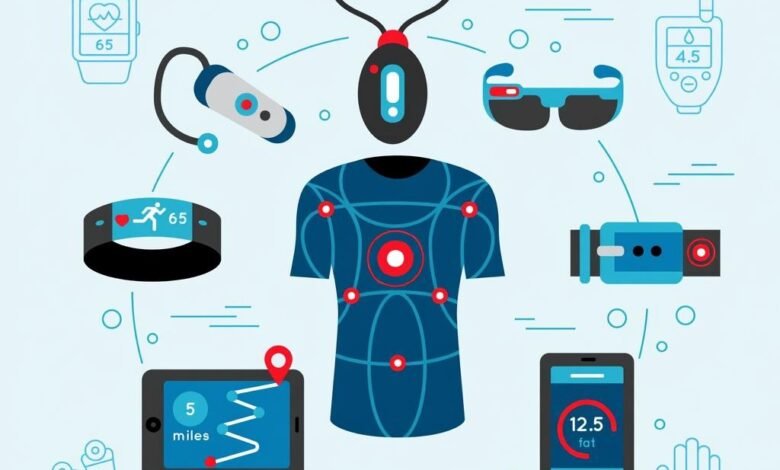
Golfers, good news! You’re no longer limited to feel and memory when trying to improve your game. Wearable technology now offers real-time feedback, personalized insights and measurable progress across every part of a player’s performance.
Whether they’re tracking your heart rate, monitoring your swing tempo or providing GPS yardages, today’s wearables help golfers make smarter decisions on and off the course. These devices don’t just collect data; they actually translate it into action.
If you’re a golfer who wants to practice with purpose, understand your patterns and adjust faster, wearable tech is becoming an important part of the game. Here’s why.



Wearables Turn Data Into Faster Improvement
Faster progress comes when you know exactly what to work on. Wearable tech speeds this up by tracking things like your shot quality, club usage and performance over time, so you can target your biggest opportunities for improvement.
For example, instead of practising based purely on feel, you get round-by-round data showing where you lose strokes, whether it’s missed fairways, poor approach accuracy or inconsistent putting.
You can also see how your performance shifts based on course conditions, your fatigue levels or what the right club choice is for you. This helps you focus each session on the skills that cost you the most shots.
Better Club Selection and Yardage Control
Shot selection becomes more accurate when you know your true distances instead of estimating. Wearable tech helps you track how far each club goes in real conditions, not just on the range.
During a round, wrist-based devices and smart sensors display front, middle and back yardages to the green, plus distances to hazards or layup zones. This helps you avoid trouble spots and pick targets that suit your shot shape.
Over time, the data also builds a history of how each club performs across different lies, wind conditions and pressure situations, making it easier to pick right from the start.
You may notice your 7-iron plays 140 into the wind, but closer to 150 in calm conditions. Or that your driver carries farther when you’re rested. With that kind of feedback, you can plan every shot with more confidence and fewer surprises.
Smarter Course Strategy Through Shot Pattern Data
Wearable tech helps you map shot dispersion, miss tendencies and club-by-club outcomes, so you can build a plan that fits how you actually play.
For example, if your data shows a consistent miss short and right with long irons, you can start aiming for the center of the green instead of chasing back pins. If your tee shots tend to fade under pressure, you can shift your aim point to stay in play. Over time, these adjustments add up to fewer doubles and more pars.
Some systems even compare your stats to average performance at your skill level. This shows whether you’re losing shots off the tee, on approaches or around the green. That kind of clarity makes it easier to work on the right parts of your game, while also making better decisions during each round.
Cleaner Swing Mechanics With Instant Feedback
Your swing can break down at any point: tempo, transition, wrist position or path. It’s hard to figure out where or why this happens by feel alone, which makes your wearable one of your best tools for monitoring your swing. Wearable sensors measure these movements as you make them, giving you a clearer picture of what needs to change.
You can see if you’re rushing your backswing, losing rhythm at the top or holding your wrist in a position that leaves the clubface open. Some tools also measure swing speed and rotation to help you understand why your shot starts offline or lacks power.
With this kind of feedback, you’re not just guessing or waiting for a coach to review your video. You’re actually reacting in the moment and making mechanical adjustments while they still feel fresh. When you get feedback on the exact movement that caused a miss, it becomes easier to rebuild your swing with purpose and control.
See also: Advancing Manufacturing Efficiency Through Modern Adhesive Technologies
More Consistent Putting Through Stroke Metrics
Putting success often depends on small details you can’t detect by eye. Subtle changes in your tempo, club face angle or stroke length can shift your start line or leave putts short. Wearable putting tools track these movements and highlight what’s throwing your distance or direction off.
You can review how fast your backswing was, whether your face was open at impact or how evenly you delivered speed through the ball. This helps you build a repeatable stroke for both short putts and longer lag distances. Instead of adjusting after three putts, you’re building stroke consistency with measured feedback.
By tracking each movement across practice sessions, these tools help you sharpen pace control and reduce missed chances inside scoring range.
Fatigue Management and Recovery Planning
Fatigue affects decision-making, coordination and consistency. For golfers, that means slower reactions, poor club choices and swing timing that breaks down under pressure. Wearable recovery tools help you track how rested your body is so you can plan your training around real-time readiness.
You can monitor sleep quality, recovery scores and physical strain on your wearable tech to help you decide when to push and when to hold back. If your recovery is low, you may shift to putting drills or short sessions to protect rhythm and focus. On high-recovery days, you’re better equipped for full practice rounds or speed training.
This helps you build consistency, avoid overtraining, and make sure your best work happens when your body is ready for it.
Ground Forces and Weight Shift Awareness
How you shift your weight during the swing has a direct impact on strike quality, launch angle and shot consistency. When pressure moves too early, too late or in the wrong direction, the clubface often arrives at impact misaligned. Golf accessories like pressure mats and balance plates help you visualize that movement and correct it with purpose.
The BodiTrak pressure mat and Swing Catalyst Balance Plate show how force builds and transfers across your feet from takeaway to follow-through. These systems reveal whether you’re loading into the trail side, transferring weight efficiently or staying stuck on your back foot. They also make it easier to spot patterns like early extension or a stalled lower body.
When you understand how pressure moves during your swing, you can time rotation better, deliver the club more consistently and avoid compensations that cause poor shots.
Pace of Play Without Losing Precision
When rounds slow down, it’s often because golfers are searching for yardages, second-guessing their targets or taking time logging shots manually. Wearable devices solve this by placing essential information where you need it, streamlining decisions without cutting corners.
Smartwatches with built-in GPS, like the Garmin Approach S70, show yardages to the front, middle and back of the green directly on your wrist. This removes the need to pace off markers or wait for rangefinder readings. Some systems use automatic shot detection to log data in real time, including club used, distance hit and lie location. You keep moving, but every shot is still tracked for review later.
This lets you play faster without giving up on-course focus or post-round analysis. You get full data, faster rounds and fewer interruptions to your mental routine.
Conclusion
Performance gains in golf rarely come from one big change. They come from understanding what needs work, making small adjustments and responding to what your body and game are telling you. Wearable tech gives you the information to do that with more accuracy and less guesswork.
Whether you’re building a more consistent swing, refining your on-course decision-making or managing recovery between rounds, these devices turn feedback into real progress. They’re not a replacement for skill or practice, but they make every session count for more.
For golfers who want to train with intent and play with clarity, wearable tech has become one of the smartest additions to the bag.
About the Author
Jordan Fuller is a professional golfer and entrepreneur who shares practical golf insights, gear reviews, and experience helping players choose equipment like most forgiving drivers for consistent performance on the course.