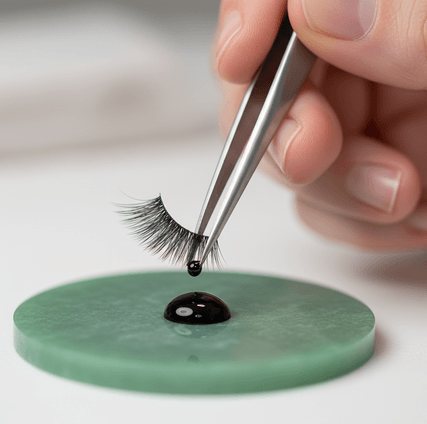
In the world of professional lash artistry, the difference between a flawless set and a frustrating session often comes down to a single tool held between your fingers. Tweezers are not merely accessories — they are extensions of an artist’s hands, directly shaping every placement, every isolation, and every fan. Choosing the wrong pair can mean slipped lashes, client discomfort, and hours of unnecessary strain on your wrists and fingers.
Today’s lash professionals face a genuine dilemma: should they reach for innovative fiber tip tweezers promising superior grip and lightweight comfort, or stick with the trusted reliability of standard metal-tip tweezers that have served the industry for years? Both options have passionate advocates, and both bring real advantages to the lash table. The answer is rarely one-size-fits-all.
This article delivers a thorough, practical comparison of fiber tip versus standard tweezers for lash extensions — examining precision, durability, ergonomics, and technique compatibility — so you can make a confident, informed decision that elevates your work and keeps your clients coming back.




The Essential Role of Eyelash Tweezers in Professional Lash Artistry
Every lash artist knows that technique and training only go so far — the tools in your hands ultimately determine the quality of your work. Eyelash tweezers are not just instruments for picking up lashes; they are precision devices that directly govern how accurately you place each extension, how quickly you move through a full set, and how comfortable the entire experience feels for both artist and client. A poorly balanced or imprecise tweezer can turn a straightforward classic set into an exhausting ordeal, while the right pair makes even complex volume fans feel effortless.
As lash extension techniques have grown more sophisticated — evolving from simple classic applications to intricate mega volume fans requiring ultra-fine fibers — the tools designed to support them have advanced in parallel. Today’s professional lash tools reflect that evolution, offering specialized tip materials, refined tension calibration, and ergonomic designs tailored to specific techniques. Investing in quality tweezers is not an optional upgrade; it is a foundational decision that shapes the consistency, speed, and artistry of every single set you deliver.
Deep Dive: Understanding Fiber Tip Tweezers
Fiber tip tweezers represent a significant leap forward in lash tool engineering. Unlike traditional metal tweezers, these tools feature tips reinforced or coated with specialized fiber material — typically a composite or polymer — that creates a naturally grippy surface without requiring excessive closing pressure. This construction gives lash artists a tactile advantage that bare metal simply cannot replicate, especially when handling ultra-fine synthetic fibers measured in fractions of a millimeter.
The defining features of fiber tip tweezers include their non-slip grip surface, which prevents lashes from sliding or rotating during placement, and their fine-point precision tips, which allow artists to isolate individual natural lashes cleanly. Their notably lightweight build significantly reduces cumulative hand fatigue during back-to-back appointments — a practical benefit that becomes increasingly important in high-volume studio environments. Artists working on volume and mega volume sets particularly appreciate how fiber tips allow them to pick up pre-made or hand-crafted fans without disturbing their structure or causing fiber separation. Brands like SenseLashes have developed fiber tip tweezers specifically engineered to meet these demands, reflecting how seriously the industry now takes tool specialization.
Ideal Use Cases and Techniques for Fiber Tip Tools
Fiber tip tweezers genuinely shine in volume, Russian volume, and mega volume applications where handling ultra-fine 0.03–0.07mm lash fibers demands maximum grip control. They are equally valuable for precise isolation work during classic sets, especially when working with clients whose natural lashes are fine, sparse, or particularly delicate.
Exploring Standard Tweezers for Lash Extensions
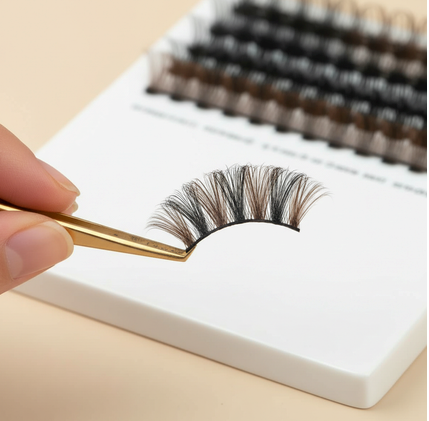
Standard tweezers — the stainless steel workhorses of the lash industry — have earned their place on professional lash tables through decades of reliable performance. Constructed from high-grade surgical or medical-grade stainless steel, these tweezers deliver consistent tension, predictable tip alignment, and a solid, confidence-inspiring feel that many experienced artists prefer. Their all-metal construction makes them exceptionally resistant to the repeated sterilization cycles that busy studios demand, maintaining their structural integrity through autoclave treatments, barbicide soaking, and alcohol disinfection without degradation.
Standard tweezers come in a wide variety of tip configurations — straight tips for isolation work, curved or angled tips for fan creation, and boot-shaped tips for volume pickup — giving artists a versatile toolkit adaptable to nearly every classic and volume technique. Their familiar weight and firm grip appeal particularly to artists who have built their muscle memory around metal tools. For classic lash sets, where clean one-to-one placement is the priority, standard tweezers offer the directness and control that straightforward application requires. Their widespread availability, lower replacement cost, and compatibility with virtually every adhesive and lash fiber type make them a practical, dependable choice for studios at every level.
Comparative Analysis: Fiber Tip vs. Standard Tweezers
When placed side by side, fiber tip and standard tweezers reveal distinct strengths that suit different working styles and technique demands. Understanding these differences helps artists make smarter investments in their professional lash tools.
Grip and precision separate these two types most noticeably. Fiber tips create a textured surface that holds ultra-fine lash fibers securely, reducing slippage during fan creation and placement. Standard metal tips rely on precise tension calibration for grip, which works excellently for classic lash sets but can feel less secure when handling 0.03mm volume fibers.
Durability and maintenance tell a different story. Standard tweezers withstand autoclave sterilization, barbicide soaking, and repeated alcohol disinfection without any material degradation. Fiber tip tweezers require gentler cleaning protocols — harsh chemicals or excessive heat can compromise the fiber coating over time, potentially shortening their lifespan in high-sterilization environments.
Weight and ergonomics favor fiber tip tweezers significantly. Their lighter construction reduces cumulative hand and wrist strain across long appointment days, making them a practical choice for artists managing heavy booking schedules. Standard tweezers carry a more substantial feel that some artists find grounding and confidence-inspiring.
From a cost perspective, standard tweezers for lash extensions are generally more affordable and widely accessible, while fiber tip options sit at a higher price point — an investment that pays off most clearly for volume-focused artists who rely daily on their superior grip performance.
How to Choose the Right Tweezers: Addressing Artist Needs
Selecting the right tweezers ultimately comes down to understanding your own working style, technique focus, and physical needs. There is no universally perfect pair — but there is a perfect pair for you, and a structured approach helps identify it.
Start by assessing your primary technique. Classic lash artists who predominantly work with 0.10–0.20mm individual extensions will find standard tweezers more than sufficient, delivering the directness and control that one-to-one placement demands. Volume and mega volume specialists, however, should strongly consider fiber tip tweezers — their superior grip on ultra-fine 0.03–0.07mm fibers makes fan creation noticeably more controlled and consistent.
Next, evaluate your ergonomic needs honestly. If you complete five or more appointments daily, cumulative hand and wrist fatigue is a real occupational concern. Fiber tip tweezers’ lighter construction directly addresses this, making them worth the higher investment for high-volume schedules. Artists with fewer daily bookings may find standard tweezers perfectly comfortable.
Consider your studio’s sterilization requirements before committing. High-turnover studios using autoclave sterilization should lean toward standard stainless steel tweezers, which handle intense disinfection protocols without material compromise.
Finally, test before you commit. Borrow or sample different tip styles — straight, curved, and boot-shaped — across actual applications. Personal grip preference and muscle memory matter enormously, and hands-on testing reveals compatibility that no product description can fully capture.
See also: About Datrihelminen Life
Best Practices for Using and Handling Lash Tweezers
Even the finest tweezers underperform when used incorrectly. Proper gripping technique is the foundation — hold your tweezers approximately two-thirds down the shaft rather than at the very base, allowing your fingers to respond to subtle pressure changes without overgripping. This relaxed, controlled hold reduces unnecessary tension and gives you far greater tactile feedback during isolation and placement work.
Maintaining a clean working surface and organized lash station directly impacts your efficiency and precision. Keep your tweezers within immediate reach, positioned consistently so muscle memory guides your hand without conscious thought. Avoid setting tweezers tip-down on hard surfaces between uses — even brief contact with trays or tables can gradually misalign delicate tips, compromising the precision you depend on.
Cleaning tweezers between clients is non-negotiable for both hygiene and performance. Wipe tips with a lint-free cloth dampened with isopropyl alcohol immediately after each appointment to remove adhesive residue before it cures and hardens around the tip. Hardened adhesive buildup is one of the most common causes of tip misalignment and reduced grip performance — addressing it promptly keeps your tools functioning at their best throughout a full working day.
Care and Maintenance for Long-Lasting Professional Lash Tools
Protecting your tweezer investment starts with a consistent cleaning routine tailored to the specific material you are working with. For standard stainless steel tweezers, autoclave sterilization, barbicide soaking, and isopropyl alcohol wipes are all safe and effective options. Fiber tip tweezers demand a gentler approach — use alcohol wipes or mild disinfectant solutions only, avoiding prolonged chemical exposure or high-heat sterilization that can degrade the fiber coating and diminish grip performance over time.
Proper storage is equally important and frequently overlooked. Keep tweezers in a dedicated case or magnetic holder that protects the tips from contact with hard surfaces, other metal tools, or loose items in a kit bag. Even minor tip bending from careless storage can throw off the alignment that precise lash work depends on. Storing tweezers tip-up in a designated holder between appointments is a simple habit that meaningfully extends their functional lifespan.
Knowing when to replace tweezers prevents declining work quality from going unnoticed. Watch for tips that no longer close evenly, visible fiber coating wear on fiber tip models, or tension that feels inconsistent under normal pressure. When grip or alignment is compromised, replacement is the right call — no amount of adjustment fully restores a structurally worn tweezer to reliable performance.
Choosing the Right Tweezers for Your Lash Practice
Choosing between fiber tip and standard tweezers is not about finding the objectively superior tool — it is about finding the right tool for your hands, your techniques, and your studio environment. Fiber tip tweezers deliver a meaningful advantage in volume and mega volume applications, where their non-slip grip on ultra-fine fibers translates directly into cleaner fans, more consistent placement, and reduced hand fatigue across demanding appointment schedules. Standard stainless steel tweezers, meanwhile, remain the dependable backbone of classic lash work, offering unmatched durability, sterilization compatibility, and the firm, familiar feel that many experienced artists have built their craft around.
The most successful lash professionals rarely limit themselves to a single pair. Building a curated set of professional lash tools — pairing fiber tip tweezers for volume work with trusted standard tweezers for isolation and classic sets — gives you the flexibility to meet every client’s needs with confidence. Tools from dedicated eyelash extension suppliers like SenseLashes are worth exploring as you assemble that curated kit, particularly when seeking options designed with both technique specificity and long-term durability in mind. Whatever your choice, prioritize quality construction, proper maintenance, and regular replacement when wear becomes evident. Your tweezers are the most direct connection between your skill and your client’s results. Invest in them accordingly, and your artistry will reflect that commitment in every set you deliver.