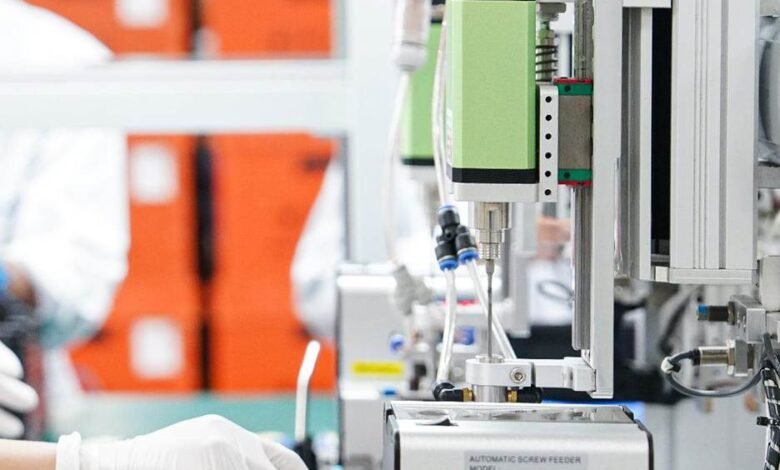
High-volume plastic injection molding sits at the heart of modern manufacturing, producing billions of components each year for industries ranging from automotive and medical devices to consumer electronics and packaging. The fundamental challenge has never changed: manufacturers must deliver massive quantities of parts at speed while keeping costs low and quality impeccable. A single defect in tooling or a slight drift in process parameters can cascade into thousands of rejected parts, wasted material, and costly downtime. For decades, experienced operators and incremental engineering improvements carried the industry forward. Now, artificial intelligence is emerging as a transformative force that fundamentally reshapes how manufacturers approach these longstanding pressures. AI-assisted methods are no longer experimental curiosities—they are becoming essential tools for companies determined to stay competitive. This article explores the key trends driving AI adoption across high-volume plastic injection molding, from smarter tooling design and real-time molding optimization to production efficiency breakthroughs that are redefining what’s possible on the factory floor.
The Foundation: Tooling and Molding in High-Volume Production
In high volume plastic injection molding, tooling is the linchpin that determines whether a production run succeeds or fails. A single mold may need to withstand millions of cycles while maintaining dimensional accuracy measured in microns. Traditionally, manufacturers have wrestled with persistent challenges: uneven tool wear that gradually degrades part quality, design flaws discovered only after expensive steel has been cut, and consistency issues that emerge unpredictably across long production runs. Cooling channel layouts, gate placements, and venting configurations have historically relied on engineering experience and iterative trial-and-error—a costly and time-consuming approach when tooling modifications can take weeks and cost tens of thousands of dollars. Precise molding depends on getting these foundational elements right from the start. When tools underperform, the ripple effects touch every downstream metric: cycle times lengthen, scrap rates climb, and machine availability suffers. AI is now entering this space with the ability to simulate, predict, and optimize tooling performance before a single part is ever produced, fundamentally shifting the economics and reliability of mold design and upkeep.
AI-Optimized Tool Design and Maintenance
AI-powered design platforms are transforming how engineers approach mold creation. Rather than relying solely on conventional CAE simulation, these systems use machine learning algorithms trained on thousands of prior mold designs and their real-world outcomes. They can evaluate stress distribution across cavity surfaces, predict how polymer melt will flow through complex geometries, and optimize conformal cooling channel layouts to achieve uniform heat extraction—all within a fraction of the time manual iteration would require. The result is tooling that runs cooler, lasts longer, and produces more consistent parts from the first shot. On the maintenance side, predictive analytics models continuously ingest sensor data from active molds—tracking cavity pressure trends, temperature fluctuations, and cycle-to-cycle dimensional variation. By identifying subtle patterns that precede failures, such as micro-cracking or progressive wear on parting lines, these systems alert maintenance teams to intervene before unplanned downtime occurs. Manufacturers adopting this approach report significantly extended tool life and fewer mid-run interruptions, translating directly into higher throughput and lower per-part costs across high-volume campaigns.



See also: technology usage summary report
AI-Driven Molding Process Optimization for Enhanced Quality
The molding process itself—where molten polymer meets steel under extreme pressure and heat—has always been sensitive to variability. Small shifts in ambient temperature, material batch properties, or hydraulic system performance can push parts out of specification without warning. Traditionally, operators responded reactively, adjusting parameters after defects appeared and often relying on intuition honed over years on the floor. AI is replacing this reactive approach with continuous, closed-loop optimization that keeps every shot within tolerance.
Modern AI systems integrate directly with machine controllers and sensor arrays to monitor dozens of variables simultaneously: melt temperature, barrel pressure profiles, injection speed curves, holding pressure duration, and cooling rates. Machine learning models trained on historical production data establish a dynamic process window—not a static set of parameters, but an adaptive envelope that shifts in response to real-time conditions. When a sensor detects that cavity pressure is trending slightly high, the system can autonomously reduce injection speed or adjust pack pressure within milliseconds, correcting the deviation before it manifests as flash, short shots, or sink marks.
The quality impact is substantial. Manufacturers leveraging AI-driven molding optimization consistently report defect rate reductions of 30 to 50 percent compared to manually tuned processes. Material waste drops in parallel because fewer parts are scrapped and runners can be optimized for minimal excess. Beyond individual part quality, these systems generate rich datasets that reveal long-term process drift, enabling engineers to address root causes rather than symptoms. For high-volume operations where even a fraction of a percent improvement in yield translates to significant savings, AI-powered molding control has shifted from a competitive advantage to an operational necessity.
Maximizing Production Efficiency with AI-Assisted Methods
Production efficiency in high-volume injection molding isn’t just about running machines faster—it’s about eliminating the hidden losses that accumulate across shifts, weeks, and entire production campaigns. Unplanned downtime, suboptimal cycle times, and energy waste collectively erode margins far more than most manufacturers realize. AI-assisted methods are now targeting each of these inefficiencies with precision that traditional approaches simply cannot match. The shift begins with data: modern molding facilities generate enormous volumes of operational information from PLCs, sensors, SCADA systems, and quality inspection stations. AI transforms this raw data into actionable intelligence, enabling production teams to move from reactive firefighting to proactive optimization. Manufacturers looking to implement these methods should start by identifying their highest-impact efficiency gaps—whether that’s excessive changeover time, recurring machine faults, or energy consumption spikes during peak production. From there, targeted AI deployments can deliver measurable returns within months rather than years.
Predictive Maintenance and Downtime Reduction
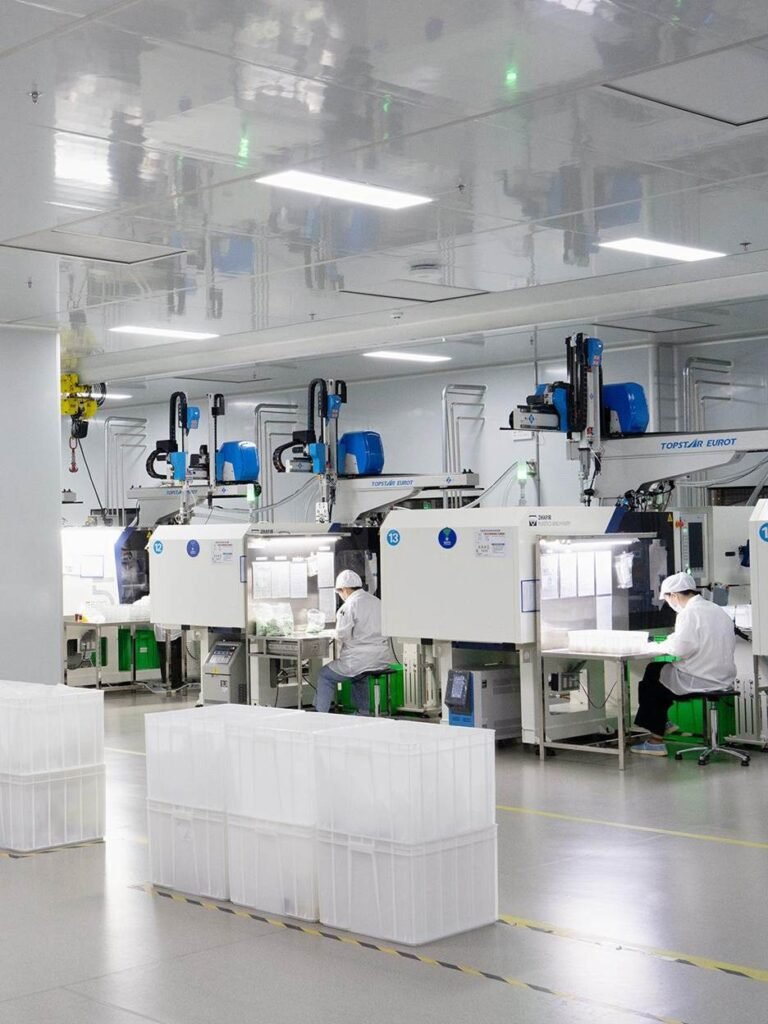
Unplanned machine downtime remains one of the most expensive problems in high-volume molding, often costing thousands of dollars per hour in lost output alone. AI-driven predictive maintenance systems address this by continuously analyzing vibration signatures, hydraulic pressure trends, motor current draw, and thermal profiles across every critical machine component. Rather than following rigid calendar-based maintenance schedules that either replace parts too early or too late, these systems learn the actual degradation patterns of individual machines operating under their specific conditions. When a toggle clamp mechanism begins showing early signs of fatigue or a check valve starts leaking incrementally, the AI flags the issue and recommends intervention during the next planned changeover. Manufacturers implementing predictive maintenance typically see unplanned downtime drop by 25 to 40 percent, with maintenance labor allocated far more efficiently since technicians focus on verified issues rather than routine inspections that often find nothing wrong.
Intelligent Process Control and Cycle Time Optimization
Cycle time is the heartbeat of high-volume production, and even fractional improvements compound dramatically across millions of cycles. AI-powered process control systems go beyond static parameter settings by continuously learning the relationship between machine inputs and output quality. These systems analyze each phase of the molding cycle—injection, packing, cooling, and ejection—to identify where time can be safely recovered without introducing defects. Cooling phases, which often account for 60 to 70 percent of total cycle time, are a primary target. AI models calculate the minimum cooling duration needed based on real-time mold temperature readings and part geometry, dynamically adjusting rather than relying on conservative fixed timers. Similarly, intelligent controllers optimize clamp movements, carriage positioning, and ejector sequences to shave seconds that add up to hours of recovered production capacity each week. Manufacturers should begin by benchmarking current cycle times against theoretical minimums, then deploy AI control on their highest-volume tools first to capture the greatest efficiency gains immediately.
Implementing High-Quality AI Solutions: A Practical Guide
Successfully integrating AI into a high-volume injection molding operation requires a structured approach rather than a rush to deploy the latest technology. The first step is assessing operational readiness: manufacturers should audit their existing data infrastructure to determine whether machines are equipped with adequate sensors and whether production data is being captured in a centralized, accessible format. Without clean, consistent data flowing from the shop floor, even the most sophisticated AI models will underperform. Next, identify the highest-value use case specific to your facility—this might be reducing scrap on a problematic mold, cutting unplanned downtime on aging presses, or optimizing cycle times on your top-revenue tools. Starting with a focused pilot project builds internal confidence and generates measurable ROI that justifies broader rollout. When selecting AI platforms, prioritize solutions purpose-built for injection molding rather than generic industrial tools, since domain-specific models deliver faster and more accurate results. Data infrastructure upgrades often include adding cavity pressure sensors, improving network connectivity between machines, and implementing edge computing devices that can process data locally for real-time response. Equally important is staff training: operators and engineers need to understand how AI recommendations are generated so they trust the system and can intervene intelligently when edge cases arise. Invest in cross-functional teams that pair data specialists with experienced molding technicians—this combination ensures that AI outputs remain grounded in practical manufacturing reality. The end goal is not technology for its own sake but reliable, high-quality solutions that consistently improve throughput, reduce waste, and strengthen your competitive position across every production campaign.
Real-World Applications: Case Studies of AI in Action
A tier-one automotive supplier operating 48 injection molding presses struggled with inconsistent dimensional accuracy on a high-cavity connector housing mold running at volumes exceeding 15 million parts annually. After deploying an AI-assisted process control system that monitored cavity pressure and melt viscosity in real time, the facility reduced its out-of-spec rejection rate from 2.1 percent to 0.6 percent within three months. The system automatically compensated for material lot variations by adjusting holding pressure and injection velocity shot-to-shot, eliminating the manual parameter tweaks that previously consumed hours of operator time each week.
In the medical device sector, a contract manufacturer producing syringe barrels implemented AI-driven predictive maintenance across its fleet of all-electric presses. The system identified a developing ball screw degradation pattern on one machine that would have caused an unplanned shutdown during a critical FDA-validated production run. By scheduling the repair during a planned weekend changeover, the company avoided an estimated three days of lost production and the regulatory complications of an interrupted batch. Across the facility, unplanned downtime fell by 35 percent in the first year.
A consumer electronics packaging producer applied AI-optimized mold design to a new thin-wall container program. Machine learning algorithms redesigned the conformal cooling channels based on thermal simulation data from similar tools, reducing cooling time by 18 percent and cutting overall cycle time from 4.8 seconds to 4.1 seconds. Over a twelve-month campaign producing 80 million units, that fractional improvement recovered more than 900 hours of press capacity—equivalent to adding another machine without the capital expenditure. These examples illustrate that AI-assisted methods deliver measurable, practical gains when applied to clearly defined manufacturing challenges in high-volume molding environments. High-volume molding manufacturers such as WEILAN MFG are among those in the industry actively exploring how these AI-driven approaches can be integrated into production workflows to maintain quality and efficiency at scale.
AI as a Core Discipline in the Future of High-Volume Molding
Artificial intelligence is reshaping high-volume plastic injection molding across every critical dimension of the manufacturing process. In tooling, AI-driven design and predictive maintenance are producing molds that last longer, run more efficiently, and require fewer costly mid-campaign interventions. On the molding floor, real-time process optimization is delivering consistent part quality while dramatically reducing scrap and material waste—turning what was once reactive troubleshooting into proactive, closed-loop control. Production efficiency gains from predictive maintenance, intelligent cycle time optimization, and smarter resource allocation are compounding across millions of cycles, recovering capacity and cutting costs in ways that traditional methods never could.
For manufacturers navigating increasingly demanding quality standards, tighter margins, and accelerating production timelines, AI-assisted methods represent more than incremental improvement—they offer a fundamental shift in operational capability. The companies capturing the greatest value are those treating AI not as a standalone technology initiative but as an integrated strategy woven into tooling design, process engineering, and maintenance workflows. As these systems continue to learn and improve from every production run, the gap between AI-adopting manufacturers and those relying on conventional approaches will only widen. Staying competitive in high-volume plastic injection molding now means embracing AI as a core manufacturing discipline, not an optional upgrade.