In industrial automation, power supply is not merely a utility—it is the backbone of every operation. A single power failure can halt production lines, compromise worker safety, trigger costly equipment damage, and erode the competitive edge that modern manufacturers work hard to maintain. As automation systems grow increasingly complex and interconnected, the demand for rock-solid, uninterrupted power has never been more pressing.
Emerson has long established itself as a trusted leader in industrial automation, delivering equipment components engineered to meet the rigorous demands of real-world industrial environments. Their power solutions are designed with reliability, efficiency, and scalability at their core—qualities that engineers depend on when system failure is simply not an option.
This article explores what makes a power supply truly reliable in automation contexts, examines the strengths of Emerson equipment components, and takes a close look at the Emerson 7379A31G04 as a practical example of performance under pressure. Whether you are specifying a new system or upgrading an existing one, this guide will walk you through selecting, implementing, and maintaining the right power solution to keep your automation systems running at peak performance.



The Critical Role of Industrial Power Supply in Automation Systems
Every automated process—from robotic assembly lines to precision CNC machining—depends entirely on consistent, high-quality power delivery. When that power falters, the consequences extend far beyond a momentary interruption. Production lines grind to a halt, partially completed work is scrapped, and restarting complex systems can take hours. In industries where margins are tight and delivery schedules are unforgiving, even a brief outage translates directly into financial loss and damaged client relationships.
Safety is an equally serious concern. Many automation systems control physical processes that, if suddenly de-energized or subjected to voltage fluctuations, can create hazardous conditions for workers and equipment alike. Unexpected shutdowns in environments involving high-temperature processes, pressurized systems, or heavy machinery introduce real risk of injury and catastrophic equipment damage.
Engineers specifying power solutions face several persistent challenges: managing voltage transients and harmonic disturbances from variable-speed drives, ensuring adequate redundancy so a single component failure does not bring down an entire line, and maintaining stable output under widely varying load conditions. Add environmental factors—heat, humidity, dust, and vibration—and the demands on a power supply become substantial. Selecting components that can withstand these conditions while delivering consistent performance is not optional; it is a fundamental engineering responsibility. Suppliers like Apter Power, which operates within the demanding auto parts sector, understand firsthand how critical stable power delivery is to keeping automated assembly operations running without interruption.
See also: How Wearable Tech Is Enhancing Player Performance in Golf
Understanding Emerson Equipment Components for Reliable Power Solutions
Emerson brings decades of engineering expertise to industrial automation, offering a comprehensive portfolio of power components designed to meet the exacting standards of modern manufacturing environments. Their product range spans power supplies, redundancy modules, and system integration components—each engineered to work seamlessly within complex automation architectures. Rather than offering generic solutions, Emerson tailors its components to address the specific electrical demands, environmental constraints, and operational profiles that industrial engineers encounter daily.
What distinguishes Emerson equipment components is their deliberate design for integration. These modules are built to slot into existing control architectures with minimal friction, supporting common industrial protocols and form factors that reduce engineering overhead during commissioning. Whether deployed in a distributed control system, a programmable logic controller cabinet, or a standalone machine, Emerson components deliver consistent power quality that upstream and downstream devices depend on.
Benefits of Choosing Emerson for Industrial Power Needs
Reliability is the most compelling reason engineers specify Emerson. Their components undergo rigorous validation testing that simulates the thermal cycling, vibration, and electrical stress conditions found in real industrial facilities. This translates directly into fewer unplanned outages and longer service intervals. Efficiency is equally well addressed—Emerson designs for low heat dissipation and high power conversion rates, reducing energy costs over a system’s operational lifetime. Scalability matters too: as production demands grow, Emerson’s modular architecture allows engineers to expand capacity without replacing entire power infrastructure. Backed by global technical support and readily available replacement parts, Emerson provides the kind of long-term partnership that keeps automation systems running reliably year after year.
Key Features of a Reliable Power Module in Automation
When evaluating power modules for industrial automation, four characteristics separate dependable solutions from those that merely meet minimum specifications. Redundancy stands first among them—the ability to maintain uninterrupted output when a primary component fails. True redundancy means parallel power paths with automatic failover, so a fault in one module triggers seamless transfer to a backup without any detectable interruption to the load. Thermal management follows closely: industrial environments generate substantial heat, and a power module that cannot dissipate it effectively will degrade rapidly or fail at the worst possible moment. Quality designs incorporate heat sinking, forced airflow compatibility, and derating curves that account for elevated ambient temperatures. Input and output specifications must also match the realities of the installation—wide input voltage tolerance accommodates utility fluctuations, while tightly regulated output protects sensitive control electronics from damage. Finally, compliance with standards such as IEC 61010, UL 508, and CE marking is not bureaucratic overhead; it confirms that the module has been independently validated for safety and electromagnetic compatibility in industrial settings.
How Features Enhance Automation System Performance
These features translate into measurable operational advantages. Redundant architecture directly reduces unplanned downtime—a manufacturing cell that previously experienced two or three power-related stoppages per quarter can maintain continuous operation even through component-level faults. Effective thermal management extends mean time between failures, stretching maintenance intervals and reducing the frequency of emergency replacements. Tight output regulation protects PLCs, servo drives, and I/O modules from voltage excursions that cause erratic behavior or premature failure, cutting long-term repair costs significantly. In energy-intensive facilities, high conversion efficiency means less heat rejected into control panels, reducing cooling loads and associated energy expenditure. Collectively, these engineering decisions compound over a system’s lifetime into substantially lower total cost of ownership—an outcome that matters as much to plant managers watching operating budgets as it does to engineers focused on uptime metrics.
Spotlight on Emerson 7379A31G04: A Case Study in Reliability
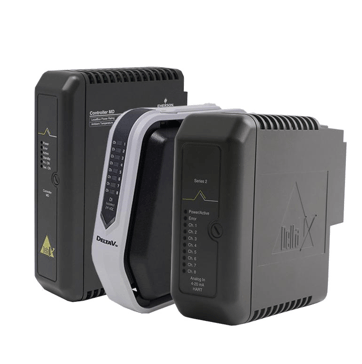
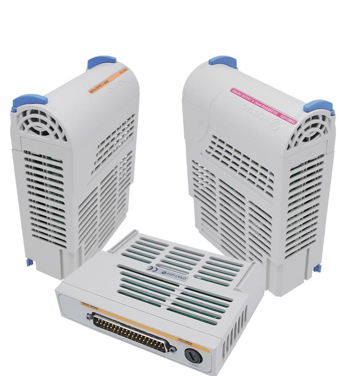
The Emerson 7379A31G04 power module exemplifies what industrial-grade design looks like in practice. Built to operate within demanding automation environments, this module delivers stable, regulated DC output under conditions that would compromise lesser components. Its architecture reflects Emerson’s engineering philosophy: prioritize continuous availability, protect downstream devices from electrical disturbances, and minimize the maintenance burden on operations teams. The 7379A31G04 is engineered for deployment in control panels where space is constrained, thermal conditions are challenging, and the cost of unexpected failure is unacceptably high. Its robust construction handles the vibration, temperature variation, and electrical noise common in manufacturing facilities without performance degradation over extended service periods.
Real-World Applications and Success Stories
In automotive assembly operations, the 7379A31G04 has been deployed to power PLC control nodes along high-speed conveyor systems where voltage instability previously caused intermittent faults and unplanned stoppages. After integration, facilities reported measurable reductions in nuisance trips and a significant extension of scheduled maintenance intervals. In process manufacturing—specifically chemical blending facilities where continuous operation is non-negotiable—this module’s stable output protected sensitive instrumentation from voltage excursions that had previously caused erratic sensor readings and false alarms. Water treatment automation installations have similarly benefited, with operators citing improved system confidence and reduced emergency callouts. These deployments share a common thread: the 7379A31G04 delivered consistent performance where reliability directly translated into operational continuity and reduced total cost of ownership across the system lifecycle.
Practical Guide: How to Select the Right Power Supply for Your Automation System
Selecting the right power supply is a structured engineering decision, not a catalog exercise. Start by documenting your system’s total power demand, accounting for both steady-state loads and inrush currents during startup sequences. Undersized supplies fail prematurely; oversized ones waste capital and panel space. Factor in derating—if your installation environment regularly reaches elevated temperatures, a module rated at full capacity under standard conditions may deliver meaningfully less usable output in practice. Emerson’s technical datasheets include derating curves that make this calculation straightforward. Environmental constraints such as ingress protection requirements, vibration exposure, and humidity ranges should eliminate unsuitable candidates early in the selection process, before you spend time evaluating electrical specifications.
Assessing Your Automation System Requirements
Begin with four concrete parameters: required output voltage and tolerance band, maximum continuous current draw, redundancy architecture, and physical footprint constraints within the control enclosure. Redundancy decisions deserve particular attention—determine whether N+1 parallel operation is required or whether a single high-reliability module is acceptable given your process’s risk tolerance. Document input voltage range at the installation point, including worst-case sag conditions, to ensure the selected module remains within specification during utility disturbances. Compile these parameters into a specification sheet before approaching product selection.
Matching Modules to Specific Needs Using Emerson’s Range
With requirements documented, cross-reference Emerson’s component portfolio against each parameter systematically. The 7379A31G04, for instance, suits applications demanding stable DC output in thermally challenging enclosures where space is limited. For applications requiring parallel redundancy, Emerson offers dedicated redundancy modules that pair with their power supplies to create fault-tolerant architectures without custom engineering. Prioritize modules where Emerson’s specifications exceed your requirements by a reasonable margin—this headroom translates directly into longer service life and fewer stress-related failures over the system’s operational lifetime.
Ensuring Long-Term Performance: Implementation and Maintenance Best Practices
Even the most capable power module delivers its full value only when installed correctly and maintained consistently. During installation, begin by verifying that input wiring gauge matches the module’s current rating and that terminal connections are torqued to manufacturer specifications—loose connections are a leading cause of premature failure in industrial power systems. Mount modules with adequate clearance on all sides to allow the airflow rates specified in Emerson’s thermal guidelines. Where DIN rail mounting is used, confirm the rail is properly grounded and mechanically secured against vibration. Label all connections clearly before energizing, and perform an initial load test to confirm output voltage falls within the specified tolerance band before connecting sensitive downstream devices.
Installation Best Practices for Reliable Power Modules
Position power modules away from high-heat sources such as braking resistors or transformer cores within the same enclosure. Confirm that enclosure ventilation or forced-air cooling maintains ambient temperature within the module’s rated operating range. Use shielded cable for low-voltage signal wiring routed near power conductors to prevent electromagnetic interference from corrupting control signals. Document the as-installed configuration, including firmware versions and any configuration settings, to accelerate troubleshooting if issues arise later.
Routine Maintenance and Monitoring Strategies
Sustained reliability requires scheduled attention rather than reactive repairs. Establish quarterly inspections that include checking output voltage under load, inspecting terminal connections for signs of heat discoloration or corrosion, and verifying that cooling vents remain unobstructed. Emerson’s diagnostic indicators provide real-time status feedback—integrate these signals into your SCADA or building management system to enable remote monitoring and early fault detection. Track mean time between failures data across your installed base to identify modules approaching end of service life before they fail unexpectedly. Replacing aging components during planned maintenance windows costs a fraction of what an unplanned production stoppage demands.
Building a Resilient Automation Operation Through Power Reliability
Reliable power supply is not a background consideration in industrial automation—it is the foundation on which every other system decision rests. When power falters, productivity stops, safety risks emerge, and the financial consequences compound quickly. Getting power right from the outset is one of the most consequential engineering decisions a team can make.
Emerson’s equipment components bring the engineering depth and real-world validation that demanding automation environments require. From their broad portfolio of power modules to purpose-built redundancy solutions, Emerson delivers reliability, efficiency, and scalability that engineers can depend on across a system’s full operational lifetime. The Emerson 7379A31G04 illustrates this commitment concretely—a module engineered to perform where failure is not an option, backed by documented success across automotive, process, and utility applications.
The selection and maintenance principles covered in this guide provide a practical framework: document your requirements rigorously, match modules to those requirements with appropriate headroom, install according to manufacturer specifications, and maintain proactively rather than reactively. Each step compounds into measurably better uptime, lower total cost of ownership, and a more resilient automation operation. Prioritizing power reliability is not merely good engineering practice—it is the strategic foundation for automation systems that deliver consistent, competitive performance over the long term.