Picture a special operations team moving through dense urban terrain at 0200 hours. Visibility is near zero, threats are unpredictable, and every ounce of gear on an operator’s head directly affects how fast they can react, how long they can sustain focus, and whether they make it home. In these moments, the helmet mounted sight system isn’t just equipment — it’s a lifeline.
Yet for years, operators have faced a frustrating tradeoff: the more capable the night vision system, the heavier and more power-hungry it tends to be. Bulk and battery drain translate directly into fatigue, reduced mobility, and mission risk. Solving this balance between lightweight design and extended battery life has become one of the defining challenges in modern tactical gear development.
Night vision technology has evolved dramatically — from bulky image intensifier tubes to compact digital systems capable of zero-latency performance. Today’s helmet mounted sights are smarter, smaller, and more efficient than ever before. This article explores how modern systems achieve that critical balance, covering the fundamentals of helmet mounted sights, the importance of lightweight construction, battery life strategies, advanced feature integration, and a practical setup guide for tactical operators looking to optimize their kit.



Understanding Helmet Mounted Sight Systems: An Overview
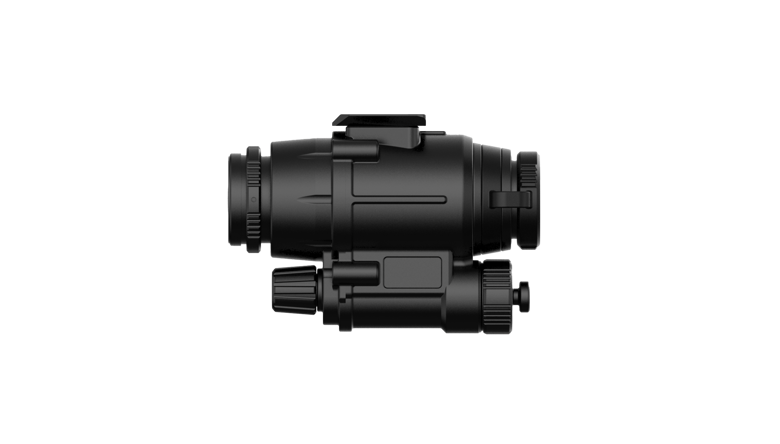
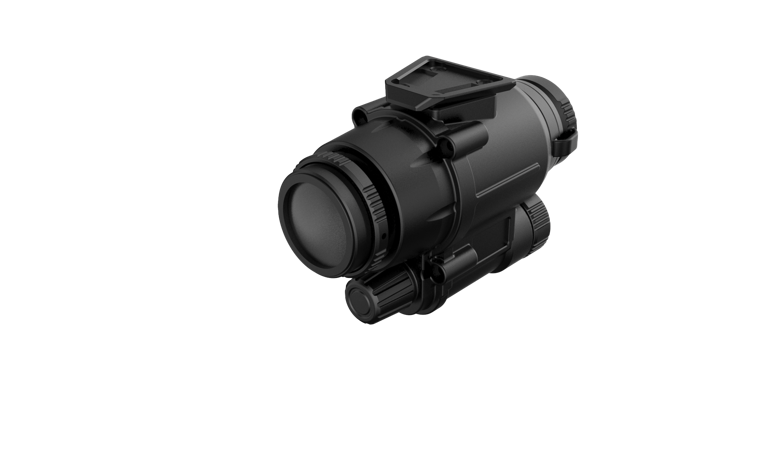
A helmet mounted sight system is a head-worn optical or digital device that gives operators enhanced visual capability in low-light or no-light environments. At its core, the system consists of an imaging unit — typically a night vision monocular or dual-tube assembly — paired with a tactical helmet mount that positions the optic precisely in front of one or both eyes. Power supply, image intensification or digital sensor arrays, and adjustment mechanisms round out the primary components.
In military and law enforcement operations, these systems are fundamental to mission execution after dark. They allow personnel to navigate, identify threats, and engage targets without relying on white light that would immediately compromise their position. Early generations relied on bulky Generation 1 image intensifier tubes with significant distortion and limited gain. Successive generations brought improved resolution, better low-light sensitivity, and reduced form factors. Today’s helmet mounted sight platforms integrate seamlessly with weapon-mounted lasers, thermal clip-ons, and digital data overlays — making the modern system far more than a simple night vision device and a genuine force-multiplying tool for any tactical operator.
The Critical Need for Lightweight and Durable Night Vision Equipment
Every gram mounted above an operator’s center of gravity compounds over hours of sustained movement. A helmet mounted sight system that adds excessive weight doesn’t just cause discomfort — it fundamentally degrades performance. Neck fatigue sets in faster, head movement slows, and the micro-decisions that define survival in close-quarters combat become fractionally slower. In high-stakes operations, those fractions matter enormously. This is why the push toward ultra-lightweight night vision has moved from a preference to a tactical imperative.
Modern manufacturers have responded by replacing traditional aluminum housings with aerospace-grade composites and magnesium alloys that deliver equivalent structural rigidity at a fraction of the weight. Polymer components engineered for impact resistance now appear throughout helmet mounted sight assemblies without sacrificing the durability required to survive drops, submersion, and extreme temperature swings. The result is gear that can absorb the punishment of a demanding operational environment while keeping the load on an operator’s head to a minimum. Tactical helmet mounts themselves have also evolved — precision-machined quick-release interfaces, including those found in purpose-built systems from manufacturers like INFITAC, now allow operators to flip devices up instantly and reattach them without tools, maintaining secure, zero-wobble positioning throughout a mission.
Benefits of Reduced Weight in Prolonged Operations
The physiological case for lightweight systems is well-documented. Studies conducted within military research communities have found that head-mounted loads exceeding 1.5 kg measurably increase cervical muscle strain and accelerate the onset of fatigue during patrols lasting beyond four hours. Reducing that load by even 200–300 grams produces noticeable improvements in head mobility and sustained alertness. For operators running 8- to 12-hour missions, those gains translate directly into sharper situational awareness during the final hours when exhaustion typically peaks and threat response is most compromised. A lighter system keeps the operator in the fight longer, more accurately, and with greater physical resilience when it counts most.
Ensuring Long Battery Life in Tactical Scenarios
An operator who runs out of power mid-mission faces the same fundamental problem as one who left their night vision at the base — they’re effectively blind. Extended battery life isn’t a convenience feature; it’s an operational necessity. Modern helmet mounted sight systems must sustain reliable performance across mission windows that routinely stretch eight to twelve hours, often in temperature extremes that accelerate power drain and degrade conventional battery chemistry.
The industry has moved decisively toward lithium-based power solutions as the standard for tactical applications. Lithium AA and CR123A cells deliver superior energy density compared to alkaline alternatives, maintaining stable voltage output across a wider temperature range — a critical advantage when operating in arctic conditions or desert environments where temperature swings can exceed 60°C between day and night cycles. Some advanced systems now incorporate rechargeable lithium-ion battery packs with USB-C compatibility, allowing operators to top off power using field-portable solar chargers or vehicle-based charging systems without carrying large quantities of disposable cells. Integrated power management circuits within the sight unit itself monitor consumption in real time, automatically reducing sensor gain or display brightness during low-threat periods to extend operational time without requiring manual intervention.
Low-energy consumption design has become a core engineering priority alongside battery chemistry improvements. Digital night vision monocular platforms built on CMOS sensor arrays draw significantly less current than legacy image intensifier tube systems under comparable operating conditions, directly translating to longer runtime per charge cycle. Automatic shutoff timers, motion-activated wake functions, and intelligent brightness scaling all contribute to a system that conserves power without forcing the operator to manage settings manually under stress.
Strategies for Maximizing Operational Time
Practical battery management starts before the mission launches. Operators should always begin with fresh or fully charged cells and carry a standardized spare set secured in an accessible pouch — not buried in a pack. Matching battery type to environmental conditions matters: in sub-zero environments, keeping spare batteries in an inner pocket against body heat preserves capacity that cold temperatures would otherwise strip away. When running zero-latency NVG configurations with digital overlays or wireless data links active, those additional subsystems draw meaningful current, so disabling non-essential features during extended movement phases rather than active engagement windows meaningfully extends total runtime. Field-portable power banks with regulated output have become a practical backup option, and systems with dual-power compatibility — accepting both disposable primaries and rechargeable packs — give operators maximum flexibility when resupply timelines are uncertain.
See also: Discover the Best Tech Guitars with Detachable Neck
Integrating Advanced Features: From Night Vision Monocular to Zero-Latency NVG
The modern helmet mounted sight has evolved well beyond a single imaging tube strapped to a mount. Today’s systems function as modular platforms where individual components — night vision monoculars, dual-tube assemblies, thermal clip-ons, and digital data overlays — can be configured and reconfigured to match specific mission profiles. A night vision monocular serves as the foundational element, providing a compact, single-eye imaging solution that minimizes weight while delivering the situational awareness operators need in darkness. When paired with precision tactical helmet mounts featuring tool-free adjustment and rock-solid retention, these monoculars integrate seamlessly into a broader kit without introducing the instability that degrades targeting accuracy and depth perception during movement.
Zero-latency NVG capability represents perhaps the most operationally significant advancement in recent years. Legacy analog image intensifier systems introduced measurable lag between real-world movement and the image reaching the operator’s eye — a fraction of a second that nonetheless creates disorientation during fast-paced engagements. Modern digital platforms have effectively eliminated that gap, delivering real-time image transmission that keeps pace with rapid head movement, vehicle operations, and close-quarters combat without the visual stutter that compromised earlier digital attempts. Compatibility and modularity are equally important: current generation systems accept standardized accessory interfaces that allow operators to attach IR illuminators, thermal imaging clip-ons, and wireless data receivers without replacing the core unit, protecting the investment while expanding capability as mission requirements evolve.
Technological Innovations Driving Performance
The performance gap between traditional analog and modern digital night vision systems has narrowed dramatically — and in several key areas, digital has surpassed its predecessor. CMOS sensor arrays now capture low-light imagery with sensitivity approaching Generation 3 image intensifier tubes while consuming a fraction of the power and adding negligible weight. Digital architecture also enables capabilities impossible in analog systems: variable zoom without optical lens changes, onboard video recording, wireless image sharing to command elements, and augmented reality overlays that project targeting data or navigation cues directly into the operator’s field of view. Thermal imaging integration, once requiring a separate and bulky device, now arrives as a lightweight clip-on module that mounts directly to the front of the primary night vision unit — a configuration supported by mounting solutions from companies like INFITAC — giving operators simultaneous image-intensified and thermal imagery through a single eyepiece. These converging technologies have produced systems that are simultaneously lighter, more capable, and more power-efficient than anything available a decade ago.
Practical Solutions and Setup Steps for Tactical Operators
Optimizing a helmet mounted sight system isn’t simply a matter of purchasing capable hardware — it requires deliberate configuration, component selection, and maintenance discipline to extract maximum performance in the field. The goal is a setup that minimizes head load, sustains power through the full mission window, and integrates cleanly with existing kit without creating new points of failure. Selecting the right night vision monocular starts with matching the device’s weight and form factor to the operational profile. For most dismounted operations, a monocular under 200 grams mounted on a low-profile tactical helmet mount delivers the best balance of capability and reduced neck strain. Dual-tube configurations add depth perception but also add weight — that tradeoff should be evaluated against mission-specific requirements rather than defaulted to automatically.
Tactical helmet mount selection deserves equal attention. A mount with tool-free adjustment, positive locking retention, and a verified zero-wobble interface is non-negotiable. Loose mounts introduce vibration artifacts during movement and degrade targeting precision when transitioning to weapon-mounted laser systems. Fit the mount to the helmet before the mission, confirm the flip-up and flip-down motion is smooth under gloves, and verify the optic returns to the same position after each cycle. For battery care, establish a pre-mission protocol: inspect contacts for corrosion, install fresh cells or fully charged packs, and stow standardized spares in a consistent, accessible location every time. Maintenance between missions should include lens cleaning with appropriate optical-safe materials, housing inspection for cracks or seal degradation, and firmware updates on digital platforms when available.
Step-by-Step Implementation Guide
Step 1 — Assess mission requirements and gear compatibility: Define expected duration, environmental conditions, and threat profile before touching any hardware. A twelve-hour cold-weather patrol demands different power and weight decisions than a two-hour direct-action raid. Confirm that the night vision monocular, mount, and any accessory modules are mechanically and electronically compatible before deployment.
Step 2 — Choose the right ultra-lightweight night vision components: Prioritize digital platforms with CMOS sensors when weight reduction is the primary driver. Verify housing materials — magnesium alloy or composite construction delivers durability without the mass penalty of traditional aluminum. Confirm the device meets minimum IP rating requirements for expected submersion or precipitation exposure.
Step 3 — Install and calibrate tactical helmet mounts for stability: Attach the mount to the helmet rail system according to manufacturer torque specifications. Adjust the diopter and interpupillary distance settings with the helmet worn and chinstrap fastened — not on a bench. Conduct a movement test including low crawls and rapid direction changes to confirm zero positional shift under dynamic load.
Step 4 — Configure zero-latency NVG settings for optimal performance: Access the device’s power management menu and disable non-essential features — wireless data links, onboard recording, and supplemental IR illuminators — unless the current phase requires them. Set auto-shutoff timers appropriate to the mission tempo and confirm the wake-from-motion sensitivity is calibrated to avoid false activations.
Step 5 — Test battery life and implement power-saving protocols: Run a full-duration bench test under simulated load before fielding any new configuration. Log actual runtime against manufacturer specifications and adjust spare battery quantities accordingly. Brief all team members on the power-saving protocol so the entire element conserves capacity consistently during movement phases.
Building a Mission-Ready Night Vision Setup
The evolution of helmet mounted sight systems reflects a clear operational truth: capability means nothing if the operator carrying it is too fatigued to use it effectively. Lightweight construction and extended battery life aren’t secondary considerations — they are the foundation on which every other performance advantage is built. When a system sheds unnecessary weight through magnesium alloy housings and composite materials, operators move faster, sustain focus longer, and arrive at the decisive moment with more left in reserve. When power management is engineered intelligently and battery selection is matched to environmental conditions, the system remains a reliable asset through the entire mission window rather than becoming a liability in the final hours.
Advanced features like zero-latency NVG, modular thermal clip-ons, and digital data overlays have transformed the night vision monocular from a simple imaging device into a genuine force multiplier — one that continues to grow more capable while simultaneously growing lighter and more efficient. The five-step implementation framework outlined here gives tactical operators a practical starting point for building a setup that performs consistently under real-world conditions.
Looking ahead, continued advances in CMOS sensor efficiency, solid-state battery technology, and augmented reality integration will push these systems further still. The operators who invest time now in understanding their equipment, configuring it deliberately, and maintaining it rigorously will be best positioned to leverage whatever comes next. Apply these solutions, refine them through training, and build the operational readiness that demanding missions require.