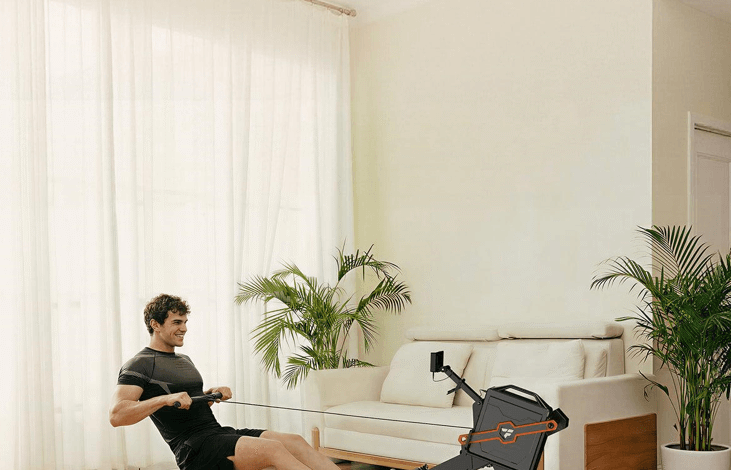
Between back-to-back meetings, family commitments, and the constant pull of a packed inbox, finding time to exercise feels less like a challenge and more like an impossible equation. Most professionals know they should work out consistently, yet the gym sits unused because a 90-minute session simply doesn’t fit into a life already running at full capacity.
The rowing machine changes that equation entirely. In a single, fluid movement, it delivers what most gym routines take twice as long to achieve — a full-body workout that builds real strength while pushing your cardiovascular system to its limits. It’s genuinely one of the most time-efficient tools in any fitness arsenal, and it’s far more accessible than it looks.
This article is your practical roadmap. You’ll discover exactly why the rower outperforms almost every other piece of equipment for time-pressed individuals, how to structure a powerful 30-minute session that fits before work or during lunch, and how to use built-in tracking technology to stay motivated and measure real progress. Whether you’re returning to fitness or looking to sharpen an existing routine, the strategies ahead will help you stop fighting the clock — and start winning.




Why the Rower Machine is the Perfect Efficiency Engine
Most gym machines are specialists. The leg press works your quads. The lat pulldown targets your back. The treadmill challenges your cardiovascular system while leaving your upper body largely untouched. Each has its place, but for someone with 30 minutes to spare, bouncing between isolated machines is a losing strategy. The rowing machine operates on an entirely different principle — every single stroke recruits your legs, core, back, and arms simultaneously, making it one of the few pieces of equipment that delivers a genuinely complete workout in a single session.
The mechanics matter here. Each stroke begins with a powerful leg drive, activating your quadriceps, hamstrings, and glutes — the largest muscle groups in your body. As you push through, your core engages to stabilize and transfer that force. The finish of the stroke brings your back muscles, including the lats, rhomboids, and erector spinae, fully into play, while your biceps and forearms complete the pull. That sequence repeats dozens of times per minute, creating a compound strength training stimulus that isolated machines simply cannot replicate in the same timeframe.
Simultaneously, rowing drives your heart rate into meaningful cardiovascular training zones. Research consistently shows that compound, multi-joint movements burn more calories and build broader fitness than isolated exercises — and rowing is the compound movement taken to its logical extreme. You’re building functional strength and aerobic capacity within the same 30-minute window.
What makes the rower particularly approachable is its low-impact design. Unlike running, there’s no jarring force on your joints, which means it’s equally effective whether you’re returning from a long break or maintaining a sharp fitness baseline. Adjustable resistance lets you scale intensity instantly — push harder and the machine pushes back, making it genuinely suitable for every fitness level without any complicated setup.
Conquering a Busy Schedule: Your 30-Minute Rower Exercise Routine
The beauty of rowing is that 30 minutes is genuinely enough — not a compromise, but a complete session. Structured correctly, three to four sessions per week will build measurable strength and cardiovascular fitness without consuming your morning or eating into your evening. The key is treating each session as a deliberate block rather than an open-ended gym visit. Know exactly what you’re doing before you sit down, and you’ll never waste a minute.
Building Your Session: From Warm-up to High-Intensity Intervals
Start every session with a five-minute warm-up at a relaxed, conversational pace — aim for a stroke rate of around 18 to 20 strokes per minute. This isn’t optional padding; it prepares your joints, activates the muscle chain you’re about to load heavily, and prevents the kind of lower back strain that comes from pulling hard on cold muscles. Use this time to focus on form: legs drive first, core braces, then the back opens up and arms finish the stroke cleanly.
From there, interval training is your most powerful tool for maximizing results in limited time. Two structures work particularly well for busy schedules. The first is 500-meter sprint intervals: row 500 meters at near-maximum effort, rest for 90 seconds, and repeat four to six times. The second is time-based: one minute hard at a split time roughly 15 seconds faster than your comfortable pace, followed by one minute easy. Repeat this cycle eight times for a punishing 16-minute block. Both approaches spike your heart rate, stimulate muscle adaptation, and burn significantly more calories than a flat, moderate-paced row of the same duration.
The Power of the Steady-State: Building Endurance Efficiently
Not every session needs to be intense. One steady-state row per week — 20 to 22 minutes at a consistent, moderate effort after your warm-up — builds your aerobic base, accelerates recovery between harder sessions, and teaches your body to sustain efficient technique under fatigue. Target a stroke rate between 22 and 24 strokes per minute and find a split time you can hold without drifting. If your split creeps slower by more than five seconds over the session, you’ve started too fast. Steady-state work feels deceptively easy, but it’s quietly building the engine that makes your interval sessions stronger over time.
Whether you row before work, during a lunch break, or after the kids are in bed, this structure adapts without losing its effectiveness. A five-minute warm-up, 20 to 22 minutes of focused work, and a three-minute easy cool-down fits cleanly into any 30-minute window — no commute, no waiting for equipment, no wasted transitions.
Leveraging Technology: Motivational Tracking for Sustained Success
Data transforms effort into evidence. One of the most underappreciated advantages of modern rowing machines is the sophistication packed into their onboard consoles — displays that give you real-time feedback on exactly how hard you’re working and how your fitness is changing over time. For professionals who thrive on measurable outcomes at work, this same logic applies powerfully to training. When you can see your numbers improving week over week, motivation stops depending on willpower alone.
Key Metrics to Watch and Improve
Three metrics deserve your consistent attention. The first is your split time, expressed as your pace per 500 meters. This is the rowing equivalent of a running pace and your single most useful indicator of effort and improvement — a split dropping from 2:10 to 2:00 over several weeks represents a concrete, undeniable fitness gain. The second is stroke rate, measured in strokes per minute. Beginners often assume rowing faster means pulling more strokes, but elite rowers understand that power per stroke matters far more than stroke frequency. Keeping your rate controlled — around 22 to 26 strokes per minute for most workouts — while improving your split tells you that each stroke is becoming more powerful. The third metric is total meters logged per session and per week. Watching this number climb over a month provides a satisfying, cumulative picture of your consistency.
Beyond the console itself, most modern rowers sync with dedicated apps and third-party fitness platforms. Apps like Concept2’s ErgData or platforms such as Garmin Connect and Apple Health allow you to log every session, visualize trends, and set progressive goals. Many platforms also offer virtual races and community challenges — timed events where you compete against others rowing the same distance remotely. These features introduce a competitive, game-like layer that turns a solitary morning session into something genuinely engaging. Setting a personal best on a 2,000-meter time trial, then chasing that number down three weeks later, creates the kind of short-term target that keeps long-term habits alive.
See also: Securing Your Future: Understanding Life Insurance in Australia
Building a Sustainable, Long-Term Exercise Routine
Starting a routine is one thing — sustaining it across months and years is where most professionals eventually stumble. The good news is that the rowing machine is uniquely suited to long-term commitment because it grows with you. As your fitness improves, the same 30-minute window can deliver progressively greater challenges simply by adjusting how you structure your effort, not by demanding more of your time.
Periodization is the professional’s secret weapon here. Rather than rowing the same session repeatedly until boredom wins, organize your training in deliberate blocks. Spend two to three weeks prioritizing endurance — longer steady-state rows at controlled intensity — then shift into a power-focused block where shorter, explosive intervals dominate. This cycling approach prevents plateaus, reduces overuse fatigue, and keeps each week feeling distinctly different from the last. Your body adapts to new stimuli, and your mind stays engaged because the goal keeps shifting.
Variety within sessions matters just as much. Set a monthly distance challenge — 50,000 meters across four weeks, for example — and watch how that single accumulating number reframes every session from an isolated effort into a piece of something larger. Occasionally, drop all structure entirely and just row for 20 minutes at whatever pace feels right. These unstructured sessions reduce mental load while maintaining the habit, which matters enormously during high-pressure work periods when rigid plans tend to collapse.
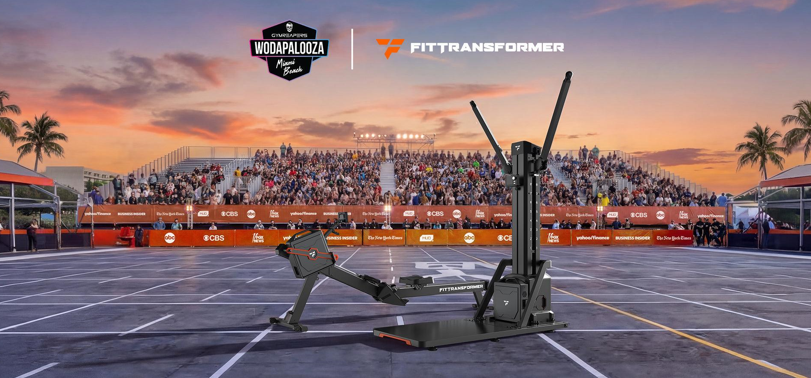
Over time, the rower earns its place as the cornerstone of a minimalist home gym. It requires no additional equipment to deliver genuine strength and cardiovascular results, occupies a fraction of the space that a full rack-and-treadmill setup demands, and eliminates commute time entirely. For professionals building a fitness habit that actually survives real life, equipment brands like FitTransformer have leaned into exactly this philosophy — designing home gym solutions around the reality that space, time, and simplicity are just as important as performance. That combination of versatility, compactness, and consistent return on time invested is difficult to beat.
Row Smarter, Not Longer: Making Every Minute Count
The rowing machine doesn’t ask you to rearrange your life around your workouts — it fits into the life you already have. In 30 focused minutes, it delivers what most fitness routines require twice the time to achieve: genuine full-body strength training, meaningful cardiovascular conditioning, and a measurable record of progress that keeps you coming back. For professionals who live and die by efficiency, that return on time invested is simply unmatched.
The framework is clear. Structure your sessions with purpose — alternate between interval work and steady-state rows, track your split times and total meters, and use the technology available to turn raw effort into visible, motivating data. Progress in intervals, cycle your training focus across weeks, and let the numbers tell the story your willpower sometimes can’t.
The hardest part isn’t the workout itself — it’s starting. So start small. Commit to three sessions next week using the routines outlined here. Watch your split time. Log your meters. Show up again the following week. The clock has always been your constraint; the rower is how you finally beat it. Your fittest, most efficient self is exactly 30 minutes away.