Inside the California Sanctuary Where Ann Lesley Smith and a Purebred Arabian Horse are Helping People Find Peace

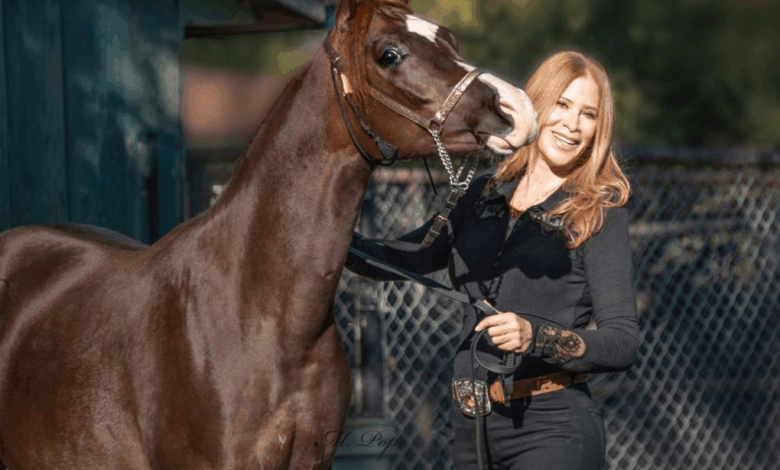
Like most people, former radio host and philanthropist Ann Lesley Smith’s life has been defined by highs and lows. Like any human journey, hers has had incredible triumphs and pitfalls that threatened to derail her. However, Smith has dedicated herself to building a resilience that has carried her through the low points and allowed her to celebrate the highs, personally and with others she has brought into her life.
In recent years, Smith has turned the sprawling California estate that she once shared with her late husband, musician and mogul Chester Smith, into a sanctuary of sorts — not only for horses but also for people seeking a reset, redemption, or just rest. The centerpiece of this new vision is her prized Arabian stallion, Amir Fadjur Salaam.
“His name means ‘Prince of Peace,’ and he has been a pathway to peace for me,” explains Smith. “Now, I hope to help others find the serenity that I have found, with Amir’s help.”



A sanctuary with purpose
Smith’s estate is set among the rolling hills and vineyards of California’s wine country, and the beauty of that landscape set the stage for renewal for Smith. Following the death of her husband, she retreated to the estate and surrounded herself with her horses.
Amir and the other Arabian horses were particularly healing. “They have a human-like ability to empathize,” Smith says.
That empathy and kindness coming from a horse may be surprising, but it’s something that Smith has come to understand deeply. She decided to share that feeling of connection with others and open her estate to people seeking rest from burnout, a reset after upheaval in their lives, or just a peaceful setting for a moment away from the hustle and bustle of daily life.
What makes Smith’s estate getaway distinctive is the interaction with the Arabian horses — Amir in particular. Amir is a direct descendant of The Fabulous Fadjur, one of the most celebrated and awarded Arabian horses in recent history. He carries the special Arabian personality in his lineage and has been a source of inspiration for Smith.
“People come to the estate, and they ride horses among the free-roaming Arabians,” Smith explains. “You see something in them that just makes you let go. The freedom and presence of the Arabian horses isn’t something people get to experience every day.”
This freedom and openness are all part of the emotional pull of the estate itself, and central to its power to heal.
The unique qualities of Arabian horses
Arabian horses have a long history of being more than just beasts of burden. Bred for their steadfast loyalty and particular intelligence over 4,500 years ago by Bedouin tribes, Arabian horses have maintained their legacy as an empathetic, kind, and unusually perceptive breed.
“Amir carries a message of understanding and peace that generations of Arabian horses have become known for,” Smith explains. “They were once given as gifts symbolizing goodwill, and I believe they have the same power to bring people together today.”
Positioning Amir as a living embodiment of authenticity, Smith has sought to present him not only as an ambassador of peace in times of deep division but also as an example of how qualities such as empathy can be “programmed.” It’s an example she hopes can serve as a workbench for technology development in the near future.
See also: Why Bus Accidents Can Cause Serious Injuries
Lasting change through connection
Though Smith has several ideas with global potential, she considers her work with others who visit her estate her most personal and fulfilling. “I have learned that interaction with horses can be transformative, especially when the horse is as intuitive and empathetic as Amir,” she says.
Smith says she has seen people soften as soon as they are around her horses or given a chance to ride one alongside the others. “They feel less guarded and more present,” she says.
The change in people given the opportunity to rest and reflect can be subtle, yet powerful. “People see the horses and experience their freedom, and they feel that they, too, can be free,” says Smith.
Smith believes horses can help people return to a more honest and authentic version of themselves, and that Arabian horses have an unusual capacity to help people find authenticity in their own lives. She has offered up her own home as a place where people can experience the peace and transformation that she has found through visits, rides, rest, and quiet time with her extraordinary animals.
Today, Smith’s prized Arabian horse, Amir, stands as the embodiment of what she wants others to feel: calm, intelligence, and empathy.
“These aren’t just traits for horses; they are deeply human,” she explains. “It’s why opening up my home to others matters so much to me. I want this private sanctuary where I found so much healing to be something everyone can experience.”