Automation is becoming increasingly important in welding, helping manufacturers boost efficiency, improve weld quality, and enhance workplace safety. Welding cobot or collaborative robots built to work safely alongside humans are now an essential part of modern manufacturing.
Learning how to integrate these cobots into daily workflows enables welders to work more efficiently, maintain consistent, high-quality welds, and fully leverage automation technology. This guide offers practical steps to help welders effectively integrate welding cobots into their daily operations.
Understanding What a Welding Cobot Is
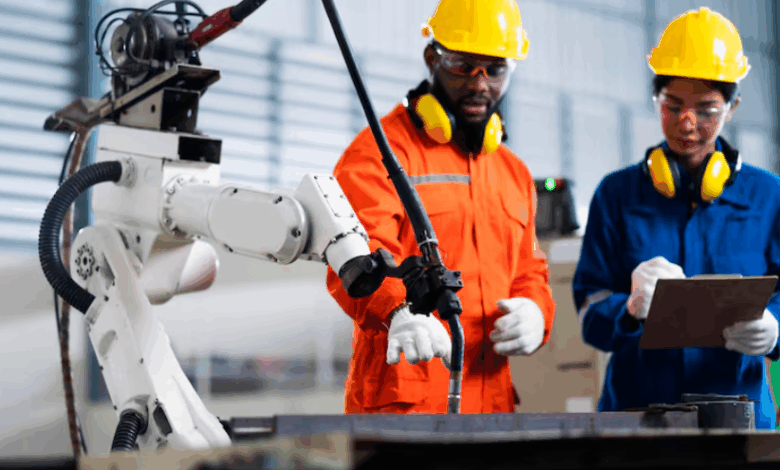
A welding cobot (collaborative robot) is a robot designed to work safely alongside human welders in the same workspace. Unlike traditional industrial robots, cobots have smart sensors and safety features that let them operate without cages or barriers.


How Cobots Differ from Traditional Welding Robots
- Safety & Teamwork: Cobots can work safely right next to people, while traditional robots usually need barriers to keep humans away.
- Flexibility: Cobots are easy to program and can handle different tasks, making them ideal for small to medium production. Traditional robots are better suited for large, repetitive jobs and usually require specialized programming.
- Cost & Setup: Cobots usually cost less upfront and are easier to install than traditional robots.
Industries Using Welding Cobots
- Automotive: Welding and assembling car parts.
- Metal Fabrication: Producing precise welds on custom parts or small batches.
- Construction & Machinery: Welding large or complex structures.
- Aerospace & Defense: Performing specialized welding that requires precision and safety.
Welding cobots help human welders by taking on repetitive or dangerous tasks, making work safer, more efficient, and more consistent.
See also: Gear and Gadgets That Make Life Smarter
Why Welders Should Consider Welding Cobots
Welding cobots (collaborative robots) are changing the welding industry by improving productivity, precision, and safety. Here’s why welders should consider using them:
- Boost Productivity and Efficiency
Cobots can operate continuously on repetitive tasks like tack welding or seam tracking, freeing human welders to handle more complex jobs. This boosts production speed and enhances overall efficiency.
- Improve Precision and Consistency
Cobots create consistent, high-quality welds every time, reducing errors, rework, and material waste.
- Enhance Workplace Safety
By taking on dangerous tasks, cobots reduce human exposure to heat, sparks, and harmful fumes. This creates a safer work environment and lowers the risk of injuries.
- Save Costs
Cobots help lower labor expenses, reduce material waste, and minimize defects, resulting in overall cost savings.
- Easy to Use and Integrate
Modern cobots feature intuitive interfaces and user-friendly programming tools, making them easy to operate with minimal training. This makes them suitable for businesses of all sizes, including small and medium-sized enterprises.
Welding cobots increase efficiency, improve weld quality, enhance safety, reduce costs, and are easy to integrate. Using cobots lets welders focus on complex tasks, boosting efficiency and maintaining competitive production.
Steps to Integrate Welding Cobot into Workflow
To successfully add a welding cobot to your workflow and boost productivity, quality, and safety:
- Evaluate Tasks – Identify repetitive, high-volume tasks and areas where manual work slows production or risks worker safety.
- Choose the Right Cobot – Select a cobot with a suitable size, reach, flexibility, and easy-to-use programming.
- Train Welders – Provide hands-on training, teach safety protocols, and encourage ongoing learning for effective operation.
- Test and Pilot – Set up the cobot and run trial welds to ensure consistent, high-quality performance.
- Full Integration – Assign routine or hazardous tasks to the cobot, monitor output, and continuously refine workflows.
Following these steps ensures efficient cobot integration, higher weld quality, and a safer work environment.
Overcoming Challenges in Welding Cobot Integration
Adding welding cobots to your manufacturing can increase productivity and improve weld quality, but some challenges can come up. Here’s how to handle them in simple terms:
- Technical Integration
- Challenge: It can be tricky to make cobots work smoothly with existing machines and power systems.
- Solution: Select cobots with modular designs and standard connections to make setup easier. Work with automation experts to fit the system to your workspace.
- Workforce Adaptation
- Challenge: Workers might worry about losing their jobs or feel unsure about using new technology.
- Solution: Train workers so they understand that cobots help them, not replace them. Encourage teamwork between humans and cobots to get better results.
- Quality Control and Consistency
- Challenge: It can be difficult to maintain consistent, high-quality welds on different materials and joint types.
- Solution: Use cobots equipped with smart sensors and adaptive welding features, such as seam tracking. Regularly maintain and calibrate the equipment to ensure consistent and reliable performance.
- Safety Concerns
- Challenge: Cobots working near humans can be risky if not properly managed.
- Solution: Set up safe work areas with force sensors, emergency stops, and clear boundaries. Regularly check safety and follow industry rules.
- Cost Considerations
- Challenge: Buying cobots can be expensive upfront.
- Solution: Calculate the return on investment to see long-term savings from higher productivity and lower labor costs. Consider leasing or financing to spread out the cost.
Welding cobots can be challenging to implement, but with planning, training, and teamwork, they boost efficiency, weld quality, and safety.
Best Practices for Smooth Integration
Integrating a welding collaborative robot (cobot) can boost productivity, precision, and safety. Key steps include:
- Assess Needs: Identify repetitive tasks, workflow bottlenecks, and skill gaps where cobots can help.
- Select the Right Cobot: Choose a cobot with the appropriate size, reach, precision, and speed for your tasks. Make sure it works with your existing equipment and can adapt to future changes.
- Train Welders: Provide hands-on training, teach safety protocols, and encourage continuous learning.
- Pilot Program: Begin with a limited setup, carefully observe how the cobot performs, and adjust its settings as needed to ensure optimal results.
- Ensure Safety: Use cobots with built-in safety features, follow industry safety standards, and regularly inspect and maintain all safety equipment to keep the workplace safe.
- Optimize Workflow: Assign repetitive or hazardous tasks to cobots, streamline processes, and continually refine integration.
Following these steps helps manufacturers effectively adopt cobots, improving efficiency, weld quality, and workplace safety.
Future of Welding with Cobots
Collaborative robots, known as welding cobots, are revolutionizing manufacturing by enhancing efficiency, accuracy, and safety in welding operations. Key Trends Shaping Welding Cobots:
- Better Human-Robot Collaboration
Cobots work alongside welders, handling repetitive tasks so humans can focus on more complex and creative work.
- Advanced Technology Integration
Modern welding cobots use AI, machine learning, and IoT to monitor, predict, and adjust welding automatically. This integration boosts efficiency, ensures consistent weld quality, and minimizes downtime.
- More Affordable Automation
Cobots are becoming cost-effective, making automation accessible to small and medium-sized manufacturers, not just large companies.
- Safety and Ergonomics
Cobots come with force sensing, emergency stops, and ergonomic designs, protecting workers and reducing physical strain.
The future of welding is collaborative, intelligent, and automated, with cobots acting as essential partners for human welders.