Payroll errors cost businesses billions annually, yet many organizations still rely on outdated methods that virtually guarantee mistakes. For HR professionals managing workforce compensation, few challenges are as persistent—or as costly—as inaccurate time tracking. Traditional timecard machines, while familiar, introduce a host of problems: buddy punching inflates labor costs, manual data entry creates transcription errors, and delayed reporting makes it nearly impossible to catch discrepancies before paychecks go out. These aren’t minor inconveniences; they erode employee trust, trigger compliance violations, and drain budgets. Smart attendance systems offer a fundamentally different approach. By combining biometric verification, automated data capture, and direct payroll integration, these modern solutions address the root causes of payroll inaccuracy rather than just treating symptoms. This article explores how HR managers can leverage smart attendance technology to achieve precise work hour calculation, eliminate manual bottlenecks, and create a seamless data pipeline from clock-in to paycheck. If you’re responsible for payroll accuracy and operational efficiency, the transition from legacy time tracking to intelligent systems may be the most impactful upgrade available to your department.
The Limitations of Traditional Timecard Machines
Traditional timecard machines operate on a fundamentally flawed premise: they trust that the person punching in is who they claim to be, and they assume manual processes won’t introduce errors. In practice, neither assumption holds. Buddy punching—where one employee clocks in for an absent colleague—affects an estimated 75% of businesses using conventional time clocks. Manual entry compounds the problem; every time an HR staff member transcribes handwritten hours or interprets smudged punch cards, the risk of transposition errors and misread data grows. Data delays present another critical weakness. With traditional systems, discrepancies often surface only during end-of-period processing, leaving HR scrambling to reconstruct accurate records days or weeks after the fact. For professionals who need precise work hour calculation to run compliant, fair payroll, these limitations aren’t just frustrating—they’re structurally embedded in the technology itself. Modern smart attendance systems eliminate these vulnerabilities at the source through automation and identity verification, creating a stark contrast with their mechanical predecessors.
The Cost of Inaccurate Time Tracking
The American Payroll Association estimates that buddy punching alone costs U.S. employers over $373 million annually, while time theft adds up to 4.5 hours per employee per week in some industries. Beyond direct revenue loss, inaccurate tracking exposes organizations to Fair Labor Standards Act violations, which carry penalties reaching tens of thousands of dollars per incident. Employees who notice consistent errors in their paychecks lose confidence in their employer, driving turnover and disengagement that further inflate operational costs.



Understanding Smart Attendance Systems
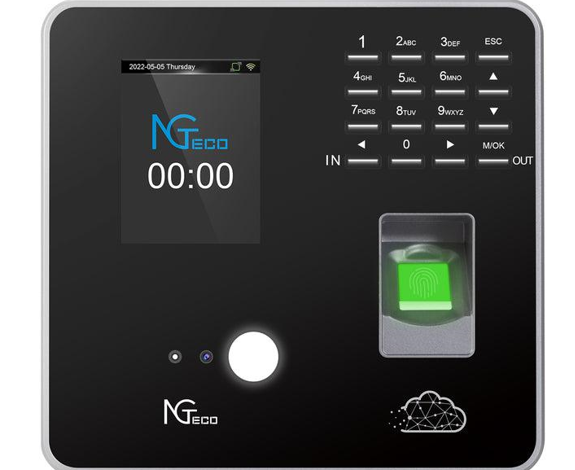
A smart attendance system represents a significant evolution from the mechanical punch clocks that have dominated workplaces for decades. At its core, it’s an integrated solution combining advanced hardware—biometric time clocks capable of verifying identity through unique physical characteristics—with cloud-based software that processes, stores, and transmits attendance data in real time. Unlike traditional timecard machines that simply stamp a time on paper or a magnetic strip, smart systems create a verified digital record the moment an employee clocks in or out. The hardware component typically includes biometric scanners (fingerprint, facial recognition, or iris readers) mounted at entry points, while the software layer handles scheduling rules, overtime calculations, and exception flagging automatically. This automation eliminates the gap between data collection and data availability that plagues manual systems. HR professionals gain immediate visibility into who is working, when shifts started, and whether any anomalies require attention—without waiting for batch processing or manual reconciliation. The result is a continuous, accurate data stream that feeds directly into downstream processes like payroll, removing human touchpoints where errors traditionally accumulate and giving HR teams confidence that every recorded hour reflects actual work performed.
Key Features for Enhanced Accuracy: Biometric Time Clocks and Real-Time Data Access
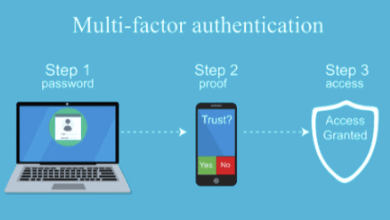
Biometric time clocks solve the identity verification problem that undermines traditional systems. When employees must authenticate using a unique biological characteristic, buddy punching becomes physically impossible—no one can lend their fingerprint or face to a colleague. This single capability eliminates what the American Payroll Association identifies as one of the largest sources of payroll inflation. Beyond identity verification, real-time data access transforms how HR professionals manage attendance. Instead of discovering a missed punch or scheduling conflict days later, managers receive immediate alerts through centralized dashboards. These interfaces display live attendance status across departments, flag exceptions like early departures or missed breaks, and provide running overtime calculations that update with every clock event. For accurate work hour calculation, this immediacy is transformative—corrections happen in the moment rather than retroactively, when memories fade and documentation becomes unreliable.
Types of Biometric Employee Time Clocks
Fingerprint scanners remain the most widely deployed option, offering fast authentication at a relatively accessible investment level. They work well in office environments but can struggle in industrial settings where dirt or moisture affects scan quality. Facial recognition systems have gained significant traction, particularly since the pandemic increased demand for contactless solutions. Hardware manufacturers like NGteco have developed devices that authenticate employees in under a second without physical contact, making them ideal for high-traffic entry points and hygiene-sensitive environments. Iris scanning delivers the highest accuracy rates among commercial biometric options, with false acceptance rates near zero, though it requires more controlled positioning during authentication. For HR decision-makers, the choice depends on workforce size, environmental conditions, and throughput requirements. Many organizations deploy a combination—facial recognition at main entrances for speed, with fingerprint backup at secondary locations—to balance security with operational flow.
Seamless Integration with Payroll Systems
For HR professionals, the ultimate value of a smart attendance system lies not just in accurate time capture but in how effortlessly that data flows into payroll processing. Integration with payroll systems eliminates the manual export-import cycle that introduces errors at the final stage—precisely where mistakes become paychecks. When attendance data transfers automatically through API connections or native integrations, every clock event, overtime hour, and approved absence arrives in your payroll software exactly as recorded, without human reinterpretation.
Modern smart attendance platforms are designed with interoperability in mind. Most offer pre-built connectors for major payroll solutions like ADP, Paychex, QuickBooks, and Workday, while also supporting custom API configurations for proprietary systems. The critical advantage here is bidirectional data sync: not only does attendance data push into payroll, but employee records, pay rules, and schedule changes can flow back to the attendance system, ensuring both platforms operate from identical information. This eliminates the version-control nightmares that plague organizations running disconnected systems. Reduced manual intervention means fewer opportunities for transposition errors, missed entries, or misapplied pay rules—the exact issues that generate payroll disputes and compliance headaches. HR teams reclaim hours previously spent on reconciliation and can redirect that effort toward strategic workforce planning.
Steps to Ensure Successful Payroll Integration
Achieving reliable integration requires deliberate planning rather than simply enabling a connector. Start by assessing your current payroll software’s integration capabilities—identify supported data formats, available APIs, and any middleware requirements. Next, choose an attendance system with native integrations for your specific payroll platform, as pre-built connections dramatically reduce configuration complexity and ongoing maintenance. Once selected, configure data mapping carefully: ensure that attendance fields like regular hours, overtime, PTO, and shift differentials align precisely with corresponding payroll input fields. Before going live, test extensively with sample data across multiple pay scenarios—run parallel payroll cycles using both old and new methods to verify that calculated amounts match. Finally, train HR staff not only on system operation but on exception handling procedures, so they know exactly how to investigate and resolve sync failures or flagged discrepancies when they arise.
See also: How Wearable Tech Is Enhancing Player Performance in Golf
Implementing Your Smart Attendance System: A Step-by-Step Guide
Moving from legacy time tracking to a smart attendance system requires a structured approach that accounts for your organization’s unique workforce dynamics. Start with a thorough needs assessment—document your current pain points, quantify error rates in recent payroll cycles, and identify which accuracy and integration capabilities matter most for your operation. This baseline ensures you select technology that solves actual problems rather than adding features you’ll never use.
Vendor selection should prioritize demonstrated compatibility with your existing payroll infrastructure, scalability to accommodate workforce growth, and responsive support during implementation. Request live demonstrations using scenarios specific to your industry, and ask for references from organizations of similar size and complexity. Once you’ve chosen a platform, resist the temptation to deploy company-wide immediately. Run a pilot program with a single department or location, installing biometric employee time clocks in a controlled environment where you can observe authentication accuracy, measure data sync reliability, and gather employee feedback without risking organization-wide disruption.
After validating results during the pilot phase—confirming that recorded hours match actual schedules and that payroll calculations align with expected outputs—proceed with full deployment. Invest heavily in staff training, covering not just daily clock-in procedures for employees but also exception management workflows for HR administrators. Finally, establish an ongoing optimization cadence: review system reports monthly, audit integration accuracy quarterly, and adjust scheduling rules or alert thresholds as workforce patterns evolve. This iterative approach ensures your smart attendance system continues delivering payroll precision long after initial implementation.
From Legacy Time Tracking to Intelligent Payroll Precision
Smart attendance systems fundamentally resolve the payroll accuracy challenges that have plagued HR departments relying on traditional timecard machines. By replacing error-prone manual processes with biometric verification and automated data capture, these systems ensure that every recorded hour reflects genuine work performed by the correct employee. The benefits compound across the entire payroll workflow: precise work hour calculation eliminates overpayment and underpayment disputes, seamless integration with payroll systems removes the manual touchpoints where transcription errors accumulate, and real-time data access empowers HR professionals to address discrepancies immediately rather than retroactively. For HR managers seeking operational efficiency, the case for adoption is compelling—reduced compliance risk, stronger employee trust, and significant time savings that free your team to focus on strategic initiatives rather than data reconciliation. As workforce management technology continues advancing, organizations that embrace intelligent attendance solutions now position themselves to adapt more readily to future innovations in automated HR operations. The question is no longer whether smart attendance systems improve payroll accuracy, but how quickly your organization can capture those gains.