If you’ve ever worked on a commercial fit-out, you’ll know this: door hardware is not the place to cut corners.
Offices, schools, hospitals, apartment blocks, retail units — they all rely on properly specified ironmongery to keep buildings secure, compliant, and functioning smoothly day after day. Get it wrong and you’re looking at call-backs, compliance failures, or worse.
Let’s break down the core components of commercial door hardware and what really matters when specifying them.



Hinges: The Foundation of Every Door
A commercial door is only as reliable as the hinges carrying its weight.
Ball Bearing Hinges
Ball bearing hinges are designed for high-traffic environments. Unlike standard washered hinges, they use internal bearings to reduce friction between knuckles.
Why they’re preferred in commercial settings:
- Smoother operation
- Reduced wear over time
- Quieter performance
- Better load handling for heavy doors
They’re particularly suited to:
- Office corridors
- Schools
- Apartment communal entrances
- Healthcare facilities
For busy doors opening dozens (or hundreds) of times a day, ball bearing hinges are essentially non-negotiable.
Fire Door Hinges
Fire doors introduce another layer of complexity. Not all hinges are suitable.
Fire-rated hinges must:
- Be tested to BS EN 1935
- Match the fire rating of the door (FD30, FD60 etc.)
- Be CE/UKCA marked
- Be installed with appropriate intumescent pads where required
Most specifications call for Grade 13 ball bearing hinges on fire doors due to their load-bearing and durability performance.
Three hinges per leaf is standard for most fire doors — but always check the door manufacturer’s certification.
Door Closers: Control & Compliance
Door closers aren’t just about convenience — they’re critical for fire safety and energy efficiency.
In commercial environments, closers ensure:
- Fire doors self-close properly
- Access control integrity
- Reduced slamming and damage
- Controlled access in high-traffic areas
Key Types
- Overhead surface-mounted closers (most common)
- Concealed closers
- Floor springs (typically in glass or high-end entrances)
Brands like Briton are widely specified in commercial projects thanks to their performance testing and compliance credentials.
When choosing a closer, consider:
- Door width & weight
- Adjustable closing force (EN power size)
- Backcheck functionality
- Hold-open (where legally permitted)
Remember: fire doors must not be wedged open. A compliant closer is essential.
See also: Maintaining a Cleaner and Healthier Home Environment
Mortice Locks: Security Within the Door Leaf
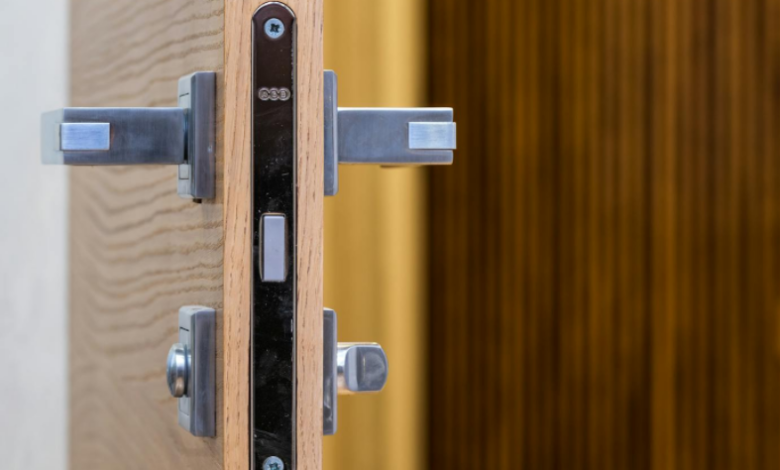
Mortice locks are installed within the door itself, offering robust security and clean aesthetics.
Common Commercial Types:
- Sashlocks (latch + deadbolt)
- Deadlocks (bolt only)
- Euro profile cases (for cylinder systems)
In commercial environments, 5-lever mortice locks remain a popular option, particularly where insurance-rated security is required.
Manufacturers like ERA are known for producing reliable, compliant locking solutions suitable for both commercial and residential applications.
When specifying mortice locks, consider:
- Backset size
- Forend finish (to match ironmongery)
- Fire rating compatibility
- Compatibility with access control systems
Panic Hardware: Emergency Egress Made Simple
In buildings where the public may be present, panic hardware isn’t optional — it’s mandatory.
Designed to allow fast and intuitive escape, panic hardware typically includes:
- Push bars (EN 1125 compliant)
- Emergency push pads (EN 179 compliant)
- External access devices
Panic hardware must:
- Be easy to operate without prior knowledge
- Function under pressure situations
- Integrate correctly with fire-rated doors
Briton is particularly well known for panic exit solutions tested to European standards, making them a strong choice for commercial installations.
Common applications include:
- Schools
- Retail premises
- Office buildings
- Public venues
- Apartment communal exits
Specifying Commercial Door Hardware Correctly
When selecting hinges, closers, locks and panic hardware, always assess:
- Door weight and size
- Fire rating requirements
- Frequency of use
- Security level needed
- Compliance standards (BS EN / UKCA / CE)
- Finish compatibility across hardware sets
Hardware should work as a complete system — not as isolated components.
A properly specified door set improves:
- Building safety
- Longevity of the installation
- User experience
- Maintenance costs over time
Final Thoughts
Commercial ironmongery might not be the flashiest part of a build — but it’s one of the most critical.
From heavy-duty ball bearing hinges to compliant panic hardware, every component plays a role in keeping buildings safe, secure, and operational.
Choosing proven brands such as Briton and ERA ensures performance standards are met without compromise — particularly in environments where safety and compliance are non-negotiable.
Because when it comes to commercial doors, “good enough” simply isn’t good enough.