You’ve just loaded your van after a late-night gig, stacking cases and instruments in the dark. The next morning, you discover a cracked lens on one of your par stage lights — a fixture you rely on for every performance. This scenario plays out far too often for working musicians who transport portable lighting gear from venue to venue without adequate protection. The reality is that stage lighting represents a significant investment, and every chip, scratch, or internal component failure caused by rough handling translates directly into repair costs and potentially cancelled shows. Whether you’re a solo performer managing your own rig or part of a band hauling a full lighting setup, the risks of inadequate protection compound over time. This article breaks down the essential protective equipment and transport strategies that musicians need to keep their par stage lights performing reliably, night after night. From dedicated carry bags to smart packing systems, you’ll find practical solutions tailored to the demands of life on the road.
Why Par Stage Lights Demand Superior Protection
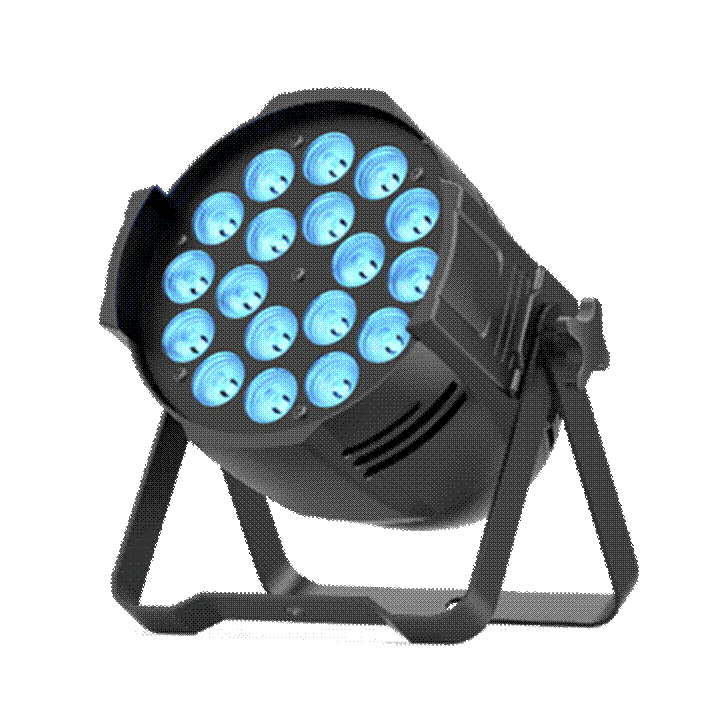
Par stage lights might look rugged from the outside, but their internal components tell a different story. LED arrays, reflectors, lenses, and delicate circuit boards all sit behind housings that were designed to withstand stationary use — not the constant jostling of a touring musician’s vehicle. A single hard impact during loading can crack a lens, misalign an LED cluster, or damage solder joints on a control board, any of which can render a fixture unusable mid-show.
The most common damage scenarios happen during the moments musicians are least focused on their gear. Loading out at 1 AM after a four-hour set, fixtures get stacked without separation, tossed into vans alongside heavy amplifiers, or left exposed to rain during the walk from venue to vehicle. Moisture infiltration corrodes electrical connections over weeks, while accumulated dust clogs ventilation slots and causes overheating failures. Even repeated minor vibrations during long drives can loosen internal mounting hardware gradually.


For working musicians, every damaged par stage light means more than a repair bill. It means compromised performances, last-minute scrambling for replacements, and the professional embarrassment of a half-lit stage. A single fixture failure at the wrong moment can undermine hours of programming and rehearsal. The cost of proper protection is always a fraction of what you’ll spend replacing gear prematurely — and far less than the revenue lost from a show that doesn’t meet your visual standards. Reliable performance starts long before you plug anything in; it starts with how you treat your lights between gigs.
See also: technology trends and analysis
Essential Protective Equipment for Your Gear
Dedicated Carry Bags: The Foundation of Safety
A dedicated carry bag serves as the first line of defense between your par stage lights and the hazards of transit. Unlike repurposed duffel bags or cardboard boxes, purpose-built lighting bags are engineered around the specific dimensions and vulnerabilities of stage fixtures. Padded soft bags constructed from ballistic nylon or reinforced polyester offer lightweight portability with foam-lined interiors that absorb shock during handling. For musicians facing rougher transport conditions, semi-rigid and hard-shell cases provide impact resistance that soft bags cannot match. The best options for working performers feature internal dividers that separate multiple fixtures, preventing metal housings from grinding against each other. Look for bags with reinforced stitching at stress points, water-resistant exteriors, and enough interior depth to accommodate your specific par stage light models with their mounting hardware attached. When selecting a bag, measure your fixtures including any protruding knobs or clamps, and choose a case that allows at least an inch of padding clearance on every side.
Additional Protective Gear for Comprehensive Care
Carry bags handle the big picture, but smaller accessories fill critical gaps in your protection strategy. Lens covers — whether fitted plastic caps or adhesive film — shield the most vulnerable surface of your par stage lights from scratches, fingerprints, and dust accumulation that degrades output over time. Foam padding inserts cut to custom shapes let you adapt generic cases to fit your exact fixture lineup, eliminating internal movement during transport. Cable wraps and velcro ties keep power and DMX cables organized and separated from fixture bodies, preventing connector pins from gouging housings or tangling into knots that stress wiring. Silica gel packets tucked inside closed cases absorb residual moisture that would otherwise condense on cool electronics. Together, these accessories transform a basic carry bag into a comprehensive protection system that addresses impact, abrasion, moisture, and disorganization simultaneously — ensuring your gear arrives at every venue in performance-ready condition.
Effective Transport Solutions for Portable Lighting
Once your par stage lights are individually protected, the next challenge is moving everything efficiently between venues. A single musician might manage two or three fixtures in padded bags, but scaling up to six, eight, or more lights demands a transport system that won’t wreck your back or slow down your load-in. Wheeled cases designed for portable lighting solve the most immediate problem — weight. A rolling rack case fitted with internal shelving lets you stack multiple protected fixtures vertically, then wheel the entire assembly from vehicle to stage without lifting. For musicians working smaller rigs, stackable modular cases with interlocking latches create stable columns that won’t topple during transit, and they break apart into manageable individual units once you arrive.
Ergonomic considerations matter more than most performers realize until fatigue sets in during their third load-out of the week. Cases with telescoping handles, balanced weight distribution, and grab points on multiple sides reduce strain during the awkward angles of van loading. Some musicians build custom cart systems using folding hand trucks with bungee attachment points, creating a portable lighting transport solution that costs far less than professional road cases while still protecting gear from drops and collisions. The key strategy for streamlining setup and teardown is consistency — always packing fixtures in the same order, in the same positions, so muscle memory takes over when you’re exhausted after a show. Label each case with its contents and stage position, and you eliminate the fumbling and guesswork that leads to rushed handling and accidental damage. Lightweight aluminum-frame cases and bags with compression straps keep your total load manageable even as your lighting rig grows, ensuring that protecting your investment never becomes a physical burden that tempts you to cut corners.
Step-by-Step Guide to Implementing Protective Solutions
Putting a protection system in place doesn’t require a massive upfront investment or a complete overhaul of your current workflow. Start by assessing what you already have and where the gaps exist. Pull out every par stage light you own and inspect each one for existing damage — hairline cracks in lenses, loose mounting brackets, corroded connectors, or scuffed housings. Document what you find, because this tells you exactly which fixtures need immediate attention and reveals the types of damage your current storage method fails to prevent. If you’re seeing scratched lenses across multiple units, that points to fixtures rubbing against each other in transit. Corroded pins suggest moisture exposure. This assessment shapes every purchasing decision that follows.
Next, match your protective equipment to your specific situation. A musician running four UKING par stage lights to small club gigs has different needs than someone managing twelve fixtures across weekend festival runs. For smaller rigs, individual padded carry bags with dedicated compartments offer the best balance of protection and portability. Larger setups benefit from wheeled rack cases with internal dividers that consolidate multiple fixtures into fewer transport units. Measure each fixture carefully before ordering — accounting for clamps, safety cables, and any attached barn doors — and prioritize bags or cases that provide snug foam contact on all sides rather than oversized enclosures where lights can shift during movement.
Once your protective equipment arrives, establish a packing routine and stick to it every single time. Assign each fixture a specific slot in its case, label the exterior with stage positions or channel numbers, and always pack in the same sequence. This consistency eliminates the rushed decision-making that causes damage during late-night load-outs. Finally, build a monthly maintenance check into your schedule: inspect foam padding for compression wear, replace silica gel packets, verify that lens covers remain intact, and tighten any loose case hardware. Protective equipment only works when it’s maintained — worn-out foam offers no more cushioning than an empty box. Treat this inspection as non-negotiable routine maintenance, the same way you’d restring a guitar or replace drum heads before they fail on stage.
Invest in Protection to Keep Your Lighting Rig Road-Ready
Protecting your par stage lights isn’t a luxury — it’s a fundamental part of maintaining a professional operation that delivers consistent results. Dedicated carry bags form the foundation of any protection strategy, keeping fixtures cushioned and separated from the chaos of a loaded vehicle. Complementary gear like lens covers, foam inserts, and cable organizers address the smaller threats that accumulate into serious damage over time. Beyond individual fixture protection, thoughtful transport solutions — wheeled cases, modular systems, and consistent packing routines — turn the physical demands of gigging into a manageable process rather than a nightly gamble with expensive equipment. The musicians who invest in these systems upfront spend less on replacements, experience fewer mid-show failures, and arrive at every venue confident that their lighting will perform exactly as programmed. Start where you are: assess your current vulnerabilities, address the most urgent gaps first, and build your protection system incrementally as your rig evolves. Every fixture that arrives intact at the next gig is proof that a small investment in protective equipment pays for itself many times over.