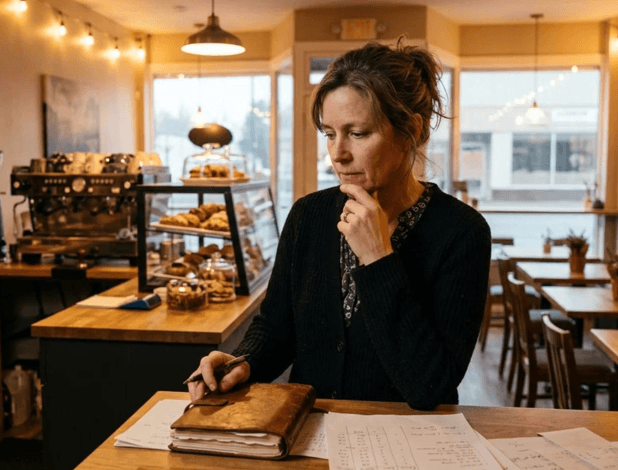
A customer walks into a café, stops mid-step, and pulls out their phone — not to check messages, but to photograph your wall. That split-second reaction is what every modern restaurant owner wants. It’s why restaurants and cafés are picking up wall printing technology faster than almost any other interior design trend right now.
Your walls are no longer just background. They work as silent salespeople, mood-setters, and social media magnets — all at once.
Small coffee shops use custom Wall printing to build a strong, recognizable identity. Busy restaurant chains use it to breathe new life into worn-out interiors. Across the board, hospitality spaces are rethinking how design shapes customer behavior and tells a brand’s story.
The Growing Importance of Visual Dining Experiences
Dining out has changed. Not slow. Not quiet — operators feel this shift every single service.
42% of diners say they’re more interested in experiential dining now than a year ago. Close to 60% of consumers — most of them Gen Z, millennials, and higher-income earners — treat themselves to a premium or unique dining experience at least once a year. These aren’t occasional visitors. They drive reviews, referrals, and repeat visits.
So why does this matter for wall printing? One behavioral truth explains it: customers aren’t just buying food anymore. They’re buying moments worth talking about.
Social Media Turned Your Walls Into Marketing Real Estate
50% of consumers discover new dining experiences through social media. That number alone should change how any operator thinks about interior design.
Smart restaurants now track which tables, corners, and walls show up most in tagged photos. Then they redesign around that data. The playbook is clear:
- Create one or two “hero” visual zones per venue: a statement mural, a neon installation, a high-contrast feature wall
- Design sightlines from the entrance toward photogenic features, so the best shot is impossible to miss
- Use bold color palettes and layered textures that read well on smartphone cameras
87% of diners want to share special moments from unique dining experiences with friends and family. That’s not a vanity metric. That’s earned media — generated at zero extra cost, every single service.
Why Younger Diners Demand This
Gen Z and millennials don’t just prefer visually bold spaces — they use them as personal content. Immersive dining lets them fold the experience into their own social stories. A well-designed feature wall isn’t decoration to this group. It’s a reason to visit, a reason to post, and a reason to come back once the design refreshes.
Budget pressure makes this dynamic even sharper. Black Box Intelligence data shows consumers stay willing to pay for experience while cutting back on almost everything else. For operators, the takeaway is direct: low-cost, high-visual-impact investments — right where wall printing sits — deliver strong returns as budgets tighten.
Why Traditional Wall Decoration Methods Are Becoming Less Practical
Run the numbers on traditional wall decoration. They don’t add up.
A professional muralist covers 15–35 sq ft per day — sketching, layering, waiting for paint to dry, then starting again. That medium feature wall in your dining room, the one you’ve been picturing as a brand statement? A 10m × 3m surface needs 9 to 20 working days of on-site labor. At US$500–1,000 per day for an experienced artist, the bill hits US$4,500–20,000 before anyone touches scaffolding, primers, or sealers. Materials add another 10–20% on top.
And that’s before the disruption starts.
The Hidden Cost Isn’t Always on the Invoice
Murals don’t happen in one clean visit. First comes concept approval. Then wall prep. Then the painting phase — fumes, restricted access, waiting. Then sealing. That’s multiple site visits spread across days.
Schedule night or weekend work to keep the restaurant open? Labor premiums jump 25–50% higher.
For a 100–150 ㎡ restaurant with 40–70 ㎡ of feature walls, a full strip-and-redecorate cycle takes 3–7 working days with a professional crew. At average revenues of US$3,000–6,000 per day, a forced closure doesn’t just cost you the decoration bill. It costs you US$9,000–42,000 in lost trading.
Generic Looks Don’t Drive Loyalty
Off-the-shelf wallpaper creates a different problem: sameness.
Major wallcovering manufacturers push single patterns in minimum runs of 500–1,000 rolls, shipped to buyers across the globe. Popular framed prints on large e-commerce platforms move thousands of units per SKU. That “affordable” design solution you picked on a Tuesday afternoon? It’s already hanging in hundreds of other cafés, hotel lobbies, and co-working spaces.
Standard gallery walls, mirror grids, and framed print arrangements all follow the same playbook. Design guides push identical configurations so often that interiors start to blur together. For restaurants competing on experience and social shareability, a wall that looks like every other café produces fewer distinctive moments — and fewer reasons for customers to photograph it, post it, or return for it.
Renovations Compound the Problem
Restaurants refresh their interiors every 3–5 years for soft updates, every 7–10 years for full refurbishments. Each cycle becomes its own project with traditional methods:
- Wallpaper stripping moves at 10–20 ㎡ per worker per day, plus chemical strippers, steam, and scraping
- Damaged plaster after removal needs 1–2 days of drying before new decoration can start
- Overpainting a detailed mural needs heavy priming to stop old colors bleeding through — that adds 1–3 days before new art can even begin
Stack those costs and closures across a 10-year period, and the traditional approach stops looking like a design choice. It starts looking like a recurring liability.
How Digital Wall Printing Is Changing Restaurant Interior Design
See what this technology does once, and the adoption rate makes complete sense.
Digital wall printing uses vertical inkjet machines that push high-resolution imagery — 720 to 1440 dpi — onto whatever surface is already there. Plaster. Concrete. Tile. Brick. Glass. Wood. The machine doesn’t care. It sits a few millimeters from the wall, runs its passes, and the image lands clean. UV-curable or eco-solvent inks bond to the surface and harden fast.
For restaurants, that surface flexibility changes everything.
Vinyl wraps and custom wallpaper need smooth, even walls. Most dining rooms don’t have them. Textured plaster, exposed brick, concrete columns — these surfaces eat wallpaper budgets alive in prep costs alone. A wall printer moves over all of it without issue. It prints detail across joints, grooves, and surface flaws that would destroy any adhesive-backed alternative.
What Operators Print — and Where
The uses inside a restaurant are more varied than most people expect:
- Bar backs and feature walls — the most visible surfaces, built for large murals and brand storytelling
- Corridor and restroom panels — lower-traffic zones where textural illusions work well: stone, weathered timber, botanical prints
- Open-kitchen backsplashes — non-direct heat and splash zones where branded graphics or food photography tie the visual look together
- Ordering counter walls — high-contrast graphics that double as signage, building brand recall at the exact moment a customer decides what to order
You can cover a full wall — floor to ceiling, side to side — in a single session. Standard wallpaper roll widths can’t match that without visible seams.
The Workflow Behind a Fast Refit
Here’s what a full restaurant transformation looks like on the ground:
- Digital design and proofing (1–5 days) — the team prepares artwork, color-matches it to brand specs, and tests it on sample boards before touching the real wall
- Surface prep (half a day to one day per area) — crack-filling, light sanding, a neutral base coat if needed; the wall must be clean, dry, and grease-free
- Machine setup (1–2 hours) — rail calibration, distance check, registration test
- Printing (2–6 hours per large wall) — one continuous run; the operator watches adhesion and banding the whole time
- Optional topcoat (2–4 hours) — a clear matte or satin sealer for bar zones, POS areas, and anywhere staff clean on a set schedule
- Return to service — UV-cured prints harden on contact; sealed surfaces need 4–24 hours before heavy scrubbing, but light use starts sooner
The result: most restaurants finish a full zone transformation in 1–3 days. The same job using hand painting, wallpaper, and standard repainting runs 1–2 weeks.
Customization That Serves the Brand
Generic art doesn’t build brand recognition. Wall printing does — because every element ties to exact brand values.
Pantone matches go straight into print settings. Logos, typography, and graphic motifs scale to any wall size without distortion. A neighborhood-story mural that roots a chain location in its local area uses the same digital file — whether you print it in one location or thirty.
For operators running multiple sites, that file-based consistency is a real advantage. The same artwork prints the same way across every branch. No hiring separate artists per location. No small differences between venues that chip away at the brand.
Biophilic themes — green-wall illusions, stone backdrops, reclaimed timber looks — give you the visual impact of full cladding or live-plant installations at a fraction of the cost. Plus, there’s zero maintenance. In long-stay dining areas where guests sit for a while, that softer environment affects how comfortable people feel — and how long they stay.
Ready to refresh the concept? Over-print new artwork on a repainted base. No strip-out. No scaffolding. No two-week closure.
Popular Wall Printing Ideas for Restaurants and Cafés
The blank wall behind your bar isn’t neutral. It’s a decision you’ve already made — you just haven’t made it yet.
Here’s how operators are making it count.
Branded Walls That Do Real Marketing Work
The most effective printed walls aren’t decorations. They’re brand infrastructure.
Logo repeat patterns — step-and-repeat grids you recognize from red carpets — work the same way inside fast-casual spaces and café chains. Space logo tiles every 30–60 cm and they stay visible in photos no matter how the shot gets cropped. Position them near the entry or queue line, not above tables, so faces stay front-lit in shots.
Hero logo walls follow a different logic. One large logo, centered on a 2.4–3.5 m wide surface, minimum 1.2–1.8 m wide, so it reads sharp in group shots. The tagline sits at 1.4–1.6 m height — eye level — with letters at least 8–10 cm tall. That size stays legible from across the room.
Menu-story murals run the full length of a wall — often 3–7 m. They show something customers rarely get to see: the coffee roasting process, the noodle-making steps, the cocktail build. Line art with spot color keeps print costs low. These work best along banquette seating, where guests sit long enough to read through the whole wall.
For cuisine-specific themes, tie the image straight to the food. Origin maps printed floor-to-ceiling (2.5–3 m) with key city names at ≥4–5 cm letter height. Local skylines for craft beer bars. Macro ingredient photography — coffee beans, herbs, pasta shapes — scaled large enough to feel immersive, not just decorative.
Designing for the Phone Camera
Some walls are built for the room. The best ones are built for the photo that leaves it.
A good photo spot needs clear engineering. Leave 1.8–2.5 m between wall and subject so a phone camera captures full body plus context. Keep 2–3 m² of open floor — about 1.5 m wide × 1.5–2 m deep — with no furniture blocking the frame. Place it near the exit route, where guests are relaxed, unhurried, and far more willing to stop.
Design patterns that hold up in photos:
- Oversize central icons — a coffee cup, burger silhouette, or cocktail glass at 1.5–2.5 m tall fills a vertical phone shot without cropping
- Printed pattern plus physical neon — the print gives daytime texture and color; the neon sign stays visible in dim evening light
- Illustrated wings or frames sized for a 1.6–1.8 m person standing at a marked floor spot — guests self-direct, no instruction needed
Print these walls at 150–300 dpi at full size. Go with matte or low-sheen finishes — glare from overhead lighting kills phone photos faster than any design flaw. Skip fine lines under 1 mm at scale. They either vanish or produce moiré artifacts when zoomed.
The payoff is real. Venues that plan UGC-optimized walls from the start report 10–30% increases in location tags and story mentions. Add a small hashtag at the base of the mural — 2–3 cm text — and it standardizes tracking without drawing attention to itself.
Seasonal Installs That Rotate Without Gutting the Budget
Permanent murals anchor a space. Seasonal overlays keep it current.
Most restaurants run a simple two-layer system. The base is a neutral core mural — exposed brick illusion, abstract color block, botanical texture — built to hold its value for 3–5 years. On top, removable vinyl or peel-and-stick fabric panels handle campaigns lasting 1–12 weeks. Holiday themes, sports events, local festivals, private dining backdrops — all swapped in and out without touching the base investment.
Tight budget? Swap a single 1–1.5 m wide highlight panel behind the order counter each season. UV wall printers can print straight over the previous graphic once a light background coat goes down. No strip-out, no downtime.
Typical seasonal cadence: 1–4 installs per year. Valentine’s, summer menu launch, Halloween, Christmas. Each refresh costs a fraction of a full reprint, and the wall keeps moving.
How Interior Design Influences Customer Behavior
Design isn’t decoration. It’s instruction.
Every surface, sightline, and seating arrangement tells customers where to go, how long to stay, and what to feel. The best restaurant interiors do this without a trace — guests follow the cues and never notice they’re being guided.
How Space Shapes Movement and Spending
Layout shapes behavior before a single menu gets opened.
Most customers turn right on entry. That’s just what people do. So your highest-value visual moment needs to be right there waiting. A feature wall, a signature mural, a strong branded focal point — whatever it is, it has to stop movement and hold attention.
Eye level is prime real estate. Premium dishes, daily specials, and brand identity elements placed at natural sightlines perform better than the same content sitting lower or higher. This principle drives retail planograms. It works just as well in dining rooms.
Pace matters too. Some interiors slow customers down naturally — textured flooring, a visual focal point mid-room, furniture that breaks a straight sightline. Each of these creates longer dwell time. Longer dwell time means higher spend.
The Emotional Layer
Color does work that great service alone can’t replicate.
Warm tones — reds, oranges, deep yellows — raise energy and build mild urgency. They push people through fast-casual spaces at a good clip. Cool tones — greens, blues, muted neutrals — calm the nervous system down. That’s why long-stay dining rooms keep coming back to them.
Sensory cues stack on top of that. Pleasant background music, a familiar scent, a comfortable room temperature — each one pulls guests to stay longer and leave with a stronger memory of the place.
What Makes a Space Stick in Memory
A distinctive space builds brand recall that advertising struggles to match.
Location-specific motifs, consistent materials throughout, and design details tied to a restaurant’s real story — these give customers something to hold onto. They walk out remembering where they were, not just what they ate.
That memory turns into a recommendation. And a reason to come back.
Why Small Cafés and Independent Restaurants Are Interested in Wall Printing
Independent restaurant owners know the numbers before they unlock the door each morning. Average net profit margins sit at 3–5% for full-service independents. Every capital decision gets measured against that number — and most don’t make the cut.
A full interior refurb for a 30–60 seat restaurant runs $150–$300 per sq ft in the US and UK. That includes construction, finishes, and furniture. That kind of spend doesn’t just strain the budget. For most independents, it’s off the table entirely.
Wall printing lands in a different bracket altogether.
A feature wall — the one behind your counter, the one every customer faces during service — runs 50–150 sq ft. At $7–$15 per sq ft for direct-to-wall printing, that’s a $1,000–$4,500 project. No strip-out costs. No repainting at $1.50–$3.50 per sq ft. No weeks of coordinating contractors.
The Downtime Problem Is Solved Before It Starts
A 40–60 seat café running two to three turns a day at a $15–$25 average ticket loses $1,200–$4,500 in revenue for every day it closes. Traditional redecoration — repainting plus drying, carpentry, inspections — takes one to three weeks. That’s not a renovation schedule. That’s a financial event.
On-site wall printers cover 15–20 m² per hour on smooth indoor surfaces. Most single-feature-wall projects for small cafés finish in two to six hours. Schedule it overnight or on a quiet weekday. The café opens the next morning looking different. No trading days lost.
Brand Expression Without the Agency Budget
Small independents can’t commission full rebranding campaigns. But they can put their brand on their walls.
A logo, brand palette, and a one-sentence visual story — “local sustainable brunch,” “heritage family recipes,” “minimalist specialty coffee” — printed across a $500–$2,000 feature wall does what a $20,000 agency rebrand is supposed to do. It tells customers who you are before they read a single word of the menu.
For tenants on 3–5 year urban leases, this matters even more. Permanent carpentry and built fixtures become a liability at the end of a lease. Wall printing is semi-permanent and refreshable. You don’t need a contractor to undo it.
The Revenue Case Closes Fast
A well-designed backdrop drives 10–30 extra guests per month through tagged posts and story mentions. At $15–$25 per check, the wall starts paying for itself within six to eighteen months. That’s before you count dwell time. Cafés that give customers something to look at see 5–15% higher check averages — guests order an extra coffee, a second pastry, one more round.
For an independent running on thin margins, that’s not a design benefit. That’s the whole argument.
The Future of Personalized Restaurant Spaces
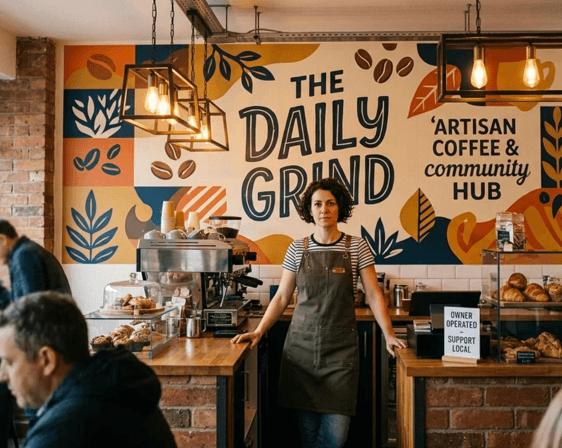
Personalization is already the second leading driver of restaurant reorders — sitting right behind food quality. That’s not a soft trend. That’s a revenue signal.
Restaurant design is moving into new territory. The next phase changes what “interior design” means at its core. By 2030, top operators won’t be asking what should our walls look like. They’ll be asking what should this guest’s walls look like, tonight, in this zone, for this occasion.
Spaces That Know Who’s Walking In
Platforms like OpenTable and Upserve already share guest data across bookings — allergies, preferred seating, occasion type. The next step connects that data to the physical room itself.
Here’s what the operational stack looks like:
- Data capture at booking: guests choose light level preference (a 1–5 slider), music genre, noise tolerance, and privacy level
- Profile tagging: the system flags each guest — “remote worker,” “date night,” “family with stroller,” “low-light preference”
- Micro-zone mapping: the restaurant splits into set zones by decibel range, lux level, table spacing, and distance from the kitchen or bar
- Dynamic allocation: a host app matches guest profiles to best-fit tables in real time
- Feedback refinement: re-seating requests, tip data, and complaints update the tags and zone definitions on an ongoing basis
This isn’t futurism. It’s operational logic applied to physical space.
The Digital Wall as a Personalization Tool
Static murals are fixed — no matter how well printed they are. The next step layers dynamic content on top.
Projection mapping uses 8,000 to 12,000 lumen projectors to cast 3D content across walls and tabletops. Visual themes shift per seating, per course, or per guest segment. High-resolution LED walls (pixel pitch P1.5 to P2.6) display forest scenes in a quiet corner and city energy near the bar.
AI-driven art generation pushes this further:
- A Gen Z group gets NYC street-art aesthetics. A fine-dining couple gets slow, minimal landscapes
- Scene changes trigger every 20–40 minutes, or sync with tasting-menu courses
- Decibel sensors push calmer, lower-contrast visuals once noise passes 75 dB
- Guests can scan a QR code and buy the AI-generated “visual memory” from their table — a revenue stream that grows straight out of the ambiance
By 2030, LOSAI Studio forecasts that restaurant spaces will be smart, flexible, and deeply experiential — with quiet zones running at 50–60 dB and 150–300 lux at lunch, stepping down to 50–150 lux at dinner, all adjusted per guest segment without manual input.
What This Means for Operators Investing Now
The groundwork for personalized spaces starts with choices made today. Wall printing sits at the practical entry point of that shift.
A printed feature wall sets the visual baseline. Modular furniture handles physical reconfiguration. Track-mounted partitions turn a space from open-plan to semi-private in 15–30 minutes. Stackable seating adjusts capacity by 20–30% at peak times. Smart zoned LEDs cut energy use while shaping ambiance per table.
Restaurants that treat these investments as separate decorating choices will face costly retrofits later. Those that build them as one connected system — visual identity, spatial zoning, guest data, dynamic ambiance — are building the standard that takes hold industry-wide between 2026 and 2030.
The wall is where that system becomes visible. It’s worth treating it that way.
Conclusion
Your restaurant walls are already sending a message to every customer who walks in. The real question is — what are they saying?
Restaurants and cafés using wall printing technology aren’t just redecorating. They’re making a real investment in atmosphere, identity, and guest experience. That experience is what brings someone back before they’ve even finished their first visit. From small independent cafés going up against chain brands to established dining rooms ready for a fresh look, digital wall printing delivers what traditional paint and prefab décor can’t — a space that feels like yours and no one else’s.
The research backs this up. Ambiance shapes how customers behave, how much they spend, and whether they return. No menu change can do that on its own.
Still relying on bare walls or outdated décor? That’s worth reconsidering. See what modern wall printing can do for your space. Start building an environment your customers want to photograph, talk about, and return to again and again.