Artificial intelligence is transforming industries around the world, and the construction sector is no exception. While much of the attention has focused on AI in construction design, project management, and automation, the legal side of the industry is also changing rapidly.
Construction law has traditionally involved extensive paperwork, complex contracts, compliance requirements, disputes, and risk management. AI is now helping legal professionals, contractors, and developers handle many of these tasks more quickly and efficiently.
Although AI will not replace construction lawyers anytime soon, it is changing how construction law is practiced and how legal risks are managed throughout a project.



AI is improving contract review
Construction projects involve large amounts of contracts between contractors, subcontractors, suppliers, developers, and property owners. Reviewing these documents manually can take significant time, especially on large commercial developments where even small contract errors can lead to costly disputes.
AI-powered legal tools are now helping simplify this process by quickly scanning contracts and identifying missing clauses, risky wording, inconsistencies, compliance concerns, and potential legal liabilities.
This allows legal professionals to detect problems earlier and reduce the risk of disputes later in the project.
Many construction lawyers in Sydney are also beginning to use AI-driven legal technology to improve efficiency and manage increasingly complex construction agreements.
As commercial and infrastructure projects continue growing across the city, technology is helping legal teams review documents faster while still focusing on negotiation strategy, risk management, and client protection.
Instead of spending hours reviewing repetitive paperwork manually, lawyers can use AI tools to streamline administrative tasks and focus more on higher-level legal analysis and dispute prevention.
See also: Understanding FTTR Cable and Its Role in Modern Home Connectivity
Faster risk assessment
Construction projects carry significant financial and legal risk.
Delays, budget overruns, safety incidents, design errors, and contract breaches can all lead to disputes and litigation. AI systems are increasingly being used to analyze project data and identify risks before they become major problems.
For example, AI can review historical project information and detect patterns linked to schedule delays, payment disputes, contractor performance issues, or regulatory violations.
This allows construction companies and legal teams to make more informed decisions and improve risk management throughout a project’s lifecycle.
AI and construction disputes
Construction disputes are often complicated because they involve large amounts of documentation, emails, contracts, schedules, inspection reports, and financial records.
AI tools are helping lawyers organize and analyze this information more efficiently.
Some AI systems can search legal documents quickly, summarize evidence, identify inconsistencies, and assist with litigation preparation.
This can reduce the time and cost associated with construction disputes and arbitration.
AI may also help parties resolve conflicts earlier by identifying likely legal outcomes based on previous cases and contract structures.
Better compliance management
Construction projects must comply with a wide range of regulations, including workplace safety laws, environmental regulations, zoning requirements, and building codes.
Keeping track of constantly changing compliance requirements can be difficult, especially on large projects involving multiple contractors and jurisdictions.
AI-powered compliance tools can monitor regulations and automatically flag potential issues. This helps companies stay on top of legal obligations and avoid costly violations.
In highly regulated sectors like commercial construction and infrastructure development, this technology is becoming increasingly valuable.
AI is changing legal research
Legal research has traditionally been one of the most time-consuming parts of practicing law.
AI tools can now analyze large legal databases in seconds, helping lawyers find relevant case law, regulatory updates, legal precedents, and contract standards much faster than traditional research methods.
For construction lawyers handling complex disputes or compliance matters, this can significantly improve efficiency and reduce administrative workload.
As AI-powered research tools become more advanced, legal teams may spend less time searching for information and more time applying legal strategy.
Smart construction technology creates new legal challenges
Interestingly, AI is not only helping with construction law, but it is also creating entirely new legal issues.
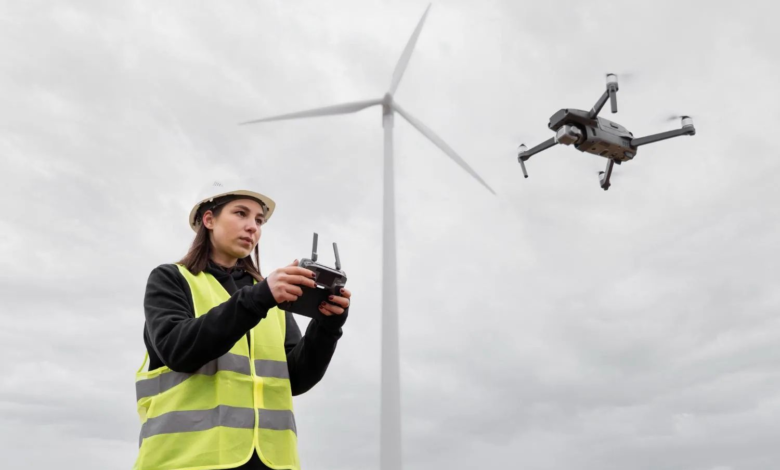
Modern construction projects increasingly rely on AI-powered machinery, drones, automated equipment, smart building systems, and predictive analytics.
As construction technology evolves, questions around legal responsibility are becoming more complicated. For example, who is liable if an AI-controlled machine causes an accident? Or, who owns AI-generated construction data?
Construction law is now expanding to address these emerging technology-related risks.
Human expertise still matters
Despite all these advancements, AI cannot replace experienced construction lawyers.
Construction law often involves negotiation, judgment, interpretation, relationship management, and strategic decision-making.
Many legal disputes also involve complex human factors that AI cannot fully understand, such as business relationships, project dynamics, and negotiation tactics.
Instead of replacing legal professionals, AI is more likely to become a tool that helps lawyers work more efficiently and focus on higher-level legal strategy.
Bottom line
AI is beginning to reshape construction law by improving efficiency, reducing administrative workload, and helping companies identify legal risks earlier. From contract analysis and compliance monitoring to dispute management and legal research, technology is changing how construction law operates across the industry.
However, AI also introduces new legal challenges related to automation, liability, and data management.
Rather than replacing construction lawyers, AI is likely to become a powerful support tool that helps legal professionals navigate increasingly complex construction projects in a faster and more informed way.