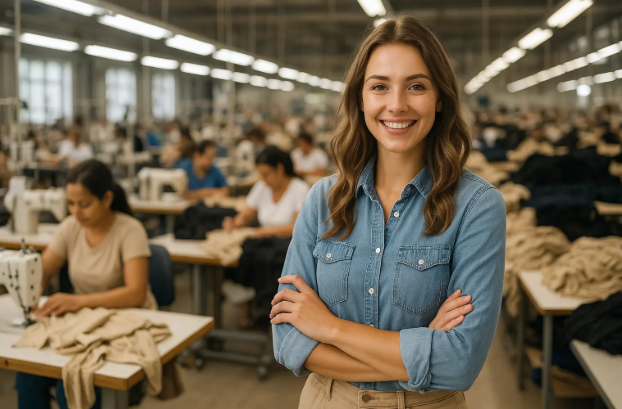
A garment factory is one of the most important components of the global fashion and textile supply chain. It is the place where ideas from designers are transformed into real, wearable products. From everyday clothing to high-end fashion, almost every piece of apparel begins its journey inside a Garment Factory, where raw materials, skilled labor, and industrial machinery come together to create finished garments.
Over the years, garment factories have evolved significantly. What once relied heavily on manual labor and simple tools has now become a highly organized and technology-driven industry. Today’s factories operate with advanced machinery, computer-aided design systems, and strict quality control processes to meet the demands of fast fashion and global markets.
Structure and Departments of a Garment Factory
A typical garment factory is divided into several departments, each responsible for a specific stage of production. These departments work together in a coordinated manner to ensure smooth workflow and timely delivery.




The main departments usually include:
- Design and Sampling Department – This is where garment concepts are developed into samples. Designers and pattern makers create prototypes based on market trends and buyer requirements.
- Cutting Department – Fabric is laid in layers and cut according to patterns. Precision is crucial here, as incorrect cutting can lead to material wastage and poor fitting.
- Sewing or Stitching Department – This is the core of the factory. Workers operate industrial sewing machines to assemble different parts of garments.
- Finishing Department – Includes ironing, trimming threads, adding buttons, labels, and accessories.
- Quality Control Department – Inspectors check garments for defects, measurements, and overall quality.
- Packing and Shipping Department – Finished products are packed, labeled, and prepared for shipment to buyers.
Each department depends on the others, making teamwork and coordination essential for efficient production.
Production Process in a Garment Factory
The production process starts with fabric sourcing and ends with delivery to the customer. The key steps include:
- Fabric inspection and storage
- Pattern making and grading
- Fabric cutting
- Sewing and assembly
- Washing or dyeing (if required)
- Finishing and quality inspection
- Packing and dispatch
Modern factories often follow lean manufacturing principles, aiming to reduce waste, improve productivity, and maintain consistent quality. Some factories also use automation, such as automatic cutting machines and digital pattern systems, to speed up production and reduce errors.
See also: How Energy Broker Services Can Save Your Business Money
Role of Technology in Modern Garment Factories
Technology has transformed how garment factories operate. Computer-aided design (CAD) and computer-aided manufacturing (CAM) systems allow designers and engineers to create precise patterns and layouts. Automated cutting machines can cut hundreds of layers of fabric at once with high accuracy.
Additionally, enterprise resource planning (ERP) systems help manage inventory, production schedules, and workforce allocation. This digital integration improves transparency and helps factory managers track every stage of production in real time.
Robotics and artificial intelligence are also beginning to enter the industry, especially in advanced manufacturing hubs. While full automation is still limited due to the complexity of fabrics and designs, technology continues to reduce dependency on manual labor for repetitive tasks.
Workforce and Skills
The workforce is the heart of any garment factory. Millions of workers around the world, especially in countries like Bangladesh, India, Vietnam, and China, are employed in garment manufacturing. These workers include machine operators, quality inspectors, supervisors, technicians, and managers.
Skills required in a garment factory range from basic sewing techniques to advanced technical knowledge in machinery maintenance and production planning. Training programs and skill development initiatives play a crucial role in improving productivity and worker efficiency.
In recent years, there has been growing attention to workers’ rights, safety, and working conditions. Many international buyers now require factories to follow ethical standards, including fair wages, safe working environments, and reasonable working hours.
Economic Importance of Garment Factories
Garment factories are major contributors to the economies of many developing countries. They generate employment, boost exports, and attract foreign investment. In some nations, the garment industry accounts for a significant portion of total export earnings.
For example, the ready-made garment sector has transformed the economic landscape of countries like Bangladesh and Cambodia, providing income opportunities for millions of people, particularly women. This has also contributed to social development by increasing household income and improving living standards.
On a global scale, garment factories support fashion brands, retailers, and e-commerce platforms by ensuring continuous supply of apparel to meet consumer demand.
Challenges Faced by Garment Factories
Despite their importance, garment factories face several challenges:
- Rising labor costs in some regions
- Pressure from fast fashion brands for lower prices and shorter lead times
- Compliance with environmental regulations
- Worker safety and labor rights issues
- Fluctuating raw material prices
Environmental concerns are becoming especially important. The garment industry is one of the largest consumers of water and energy and generates significant textile waste. As a result, factories are now under pressure to adopt sustainable practices, such as using eco-friendly fabrics, reducing water usage, and recycling waste materials.
Sustainability and the Future of Garment Factories
Sustainability is shaping the future of garment manufacturing. Many factories are investing in green technologies, such as solar energy, water recycling systems, and biodegradable packaging. Certifications like ISO, GOTS, and Fair Trade are becoming important for gaining trust from international buyers.
Another major trend is ethical manufacturing, which focuses on fair labor practices and worker well-being. Brands and consumers are increasingly demanding transparency in supply chains, forcing factories to improve working conditions and adopt responsible business practices.
The future garment factory is likely to be more automated, eco-friendly, and digitally connected. Smart factories using data analytics and AI will be able to predict demand, optimize production, and minimize waste.
Conclusion
The garment factory plays a vital role in transforming raw textiles into finished clothing that people wear every day. It is a complex system that combines labor, technology, management, and global trade. While the industry faces challenges related to sustainability, labor conditions, and market pressure, it continues to evolve through innovation and responsible practices.
In the coming years, the success of a Garment Factory will depend not only on its ability to produce at low cost, but also on how well it adapts to ethical standards, environmental responsibilities, and technological advancements. As fashion continues to grow globally, garment factories will remain the backbone of the apparel industry, shaping how the world dresses and consumes fashion.