In the world of permanent makeup, your ink is your signature. Every stroke, every healed result, and every satisfied client traces back to one fundamental decision: the PMU ink you choose to work with. For tattoo professionals, inconsistent ink quality remains one of the most frustrating challenges in daily practice. Colors that shift unpredictably during healing, pigments that fade unevenly within months, or formulations that trigger adverse skin reactions can undermine years of skill development and damage hard-earned reputations overnight.
The best PMU ink does more than deliver beautiful color—it provides the predictability that professionals need to confidently promise results and the safety standards that protect both artist and client. When your ink performs consistently across different skin types and conditions, you gain precision in your work, trust from your clientele, and peace of mind knowing every procedure meets the highest professional standards. This guide breaks down exactly how to evaluate, select, and test PMU inks so you can eliminate guesswork from your practice and deliver results that speak for themselves.
The Fundamentals of High-Quality PMU Ink
The “best” PMU ink isn’t simply the most expensive option on the shelf—it’s the formulation that delivers predictable color retention, works harmoniously with skin biology, and meets rigorous safety benchmarks. Three core characteristics separate professional-grade inks from unreliable alternatives: pigment composition, viscosity, and color purity. Pigment composition determines how color behaves during healing and over time. Viscosity affects how smoothly ink flows through your needle and deposits into the dermis. Color purity ensures what you implant matches what heals—without unexpected warm or cool shifts that leave clients disappointed.




Ingredient transparency has become non-negotiable in professional practice. Reputable manufacturers disclose full ingredient lists, allowing artists to cross-reference components against known irritants and allergens. This transparency directly impacts skin compatibility; when you know exactly what’s entering your client’s skin, you can anticipate healing responses across different skin types, from oily and thick to thin and sensitive. Inks with undisclosed or vague ingredient profiles introduce unnecessary risk into every procedure.
See also: About Datrihelminen Life
Key Ingredients and Safety Standards
PMU inks contain three primary components: pigments, carriers, and preservatives. Pigments fall into two categories—organic pigments derived from carbon-based molecules that typically produce brighter colors, and inorganic pigments based on mineral oxides like iron oxide that tend to offer greater stability and longevity. Most professional formulations blend both types to balance vibrancy with predictable fading patterns. Carriers, usually distilled water, glycerin, or witch hazel, suspend pigment particles and facilitate smooth needle flow. Preservatives like isopropyl alcohol prevent microbial contamination without causing excessive skin irritation.
Identifying harmful substances requires vigilance. Heavy metals such as mercury, lead, cadmium, and nickel historically appeared in tattoo inks and can trigger severe allergic reactions or granulomas. Always verify that your chosen ink carries FDA compliance documentation (in the United States) or CE marking (in Europe), which indicates the product meets established safety directives. These certifications confirm that manufacturing processes follow Good Manufacturing Practices, batch testing occurs regularly, and formulations exclude prohibited substances. Request safety data sheets from suppliers and verify that independent laboratory testing supports the manufacturer’s claims rather than relying solely on marketing materials.
How PMU Needle Cartridges and Tattoo Machines Influence Ink Performance
Even the best PMU ink will underperform if your equipment works against it rather than with it. The relationship between ink formulation and delivery system is symbiotic—each component must complement the other to produce clean, consistent implantation. When this synergy breaks down, artists encounter frustrating issues like patchy color saturation, traumatized skin, or premature fading that has nothing to do with ink quality itself. Understanding how your PMU needle cartridges and tattoo machines interact with specific ink viscosities and pigment particle sizes allows you to fine-tune your setup for predictable, repeatable results across every procedure.
Ink flow rate depends heavily on the mechanical action of your machine and the capillary dynamics of your needle grouping. A machine that drives needles too aggressively can push ink deeper than the target dermal layer, causing migration and blowouts. Conversely, insufficient penetration depth leaves pigment in the epidermis where it sheds during healing. The professional tattoo equipment you select determines how precisely you control these variables, making equipment choice inseparable from ink selection in achieving consistent outcomes.
Selecting Compatible PMU Needle Cartridges
Needle configuration directly dictates how ink transfers from cartridge to skin. Round liners with tight groupings concentrate pigment into fine lines, requiring inks with thinner viscosity to prevent clogging and ensure steady flow. Magnum configurations spread ink across broader areas for shading work, pairing best with formulations that maintain even suspension without settling during longer passes. The membrane mechanism inside quality PMU needle cartridges creates consistent back-pressure that regulates ink uptake—cheap cartridges with inconsistent membranes produce uneven saturation regardless of technique.
Material quality matters beyond sterility. Surgical-grade stainless steel needles polished to a mirror finish cause less tissue trauma during entry, which means less inflammation interfering with pigment retention. When cartridges have rough needle surfaces or inconsistent taper lengths, they tear rather than puncture the skin, creating irregular pockets where ink pools unpredictably. Always match your cartridge specifications to your ink’s particle size—larger inorganic pigment particles require slightly wider needle gauges to flow without obstruction.
Optimizing Professional Tattoo Equipment
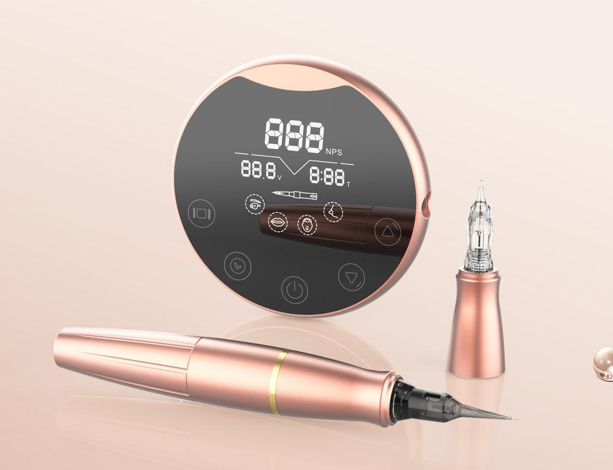
Rotary machines dominate the PMU industry because they offer the precise speed control and gentle stroke patterns that permanent makeup procedures demand. Unlike coil machines that deliver a hammering action suited to body tattooing, rotary mechanisms provide consistent needle travel with adjustable give, allowing artists to work at shallow depths without bouncing. This controlled motion ensures ink deposits uniformly rather than in irregular clusters that heal as spotted or grainy texture. Brands like Biomaser have contributed to making reliable rotary PMU machines more accessible to professionals seeking consistent needle travel and adjustable stroke lengths for different procedure types.
Voltage settings require calibration based on your specific ink and cartridge combination. Running too high causes excessive trauma and ink spatter; too low results in incomplete penetration and poor retention. Start at the manufacturer’s recommended voltage, then adjust incrementally while observing how ink saturates the skin during a procedure. Maintain your machine according to the manufacturer’s schedule—worn motor bearings or degraded power connections introduce micro-variations in needle speed that compound into visible inconsistencies across a single procedure. Clean your device after every session, inspect grip connections for wear, and replace components before they fail rather than after inconsistent results appear.
A Step-by-Step Guide to Selecting the Best PMU Ink
Choosing the right PMU ink requires a systematic approach that accounts for your specific clientele, working style, and quality expectations. Rather than impulse-purchasing based on social media buzz or trade show demonstrations, build a deliberate evaluation process that yields reliable data about how each ink performs in real-world conditions. Begin by assessing the skin types you encounter most frequently in your practice. Artists working primarily with mature clients need inks formulated for thinner, drier skin that retains pigment differently than the oily, thicker skin common in younger demographics. If your clientele spans multiple ethnicities, you need formulations tested across Fitzpatrick skin types I through VI, since melanin density dramatically affects how implanted color appears once healed.
Next, define your procedural priorities. Lip blush work demands inks with exceptional color stability because the lip’s mucosal tissue metabolizes pigment faster than brow skin. Eyeliner procedures require ultra-fine particle sizes that won’t migrate in the delicate periorbital area. Brow work needs formulations offering natural-looking healed results without ashy or orange shifts over time. Once you’ve clarified these requirements, you can evaluate brands against specific performance criteria rather than vague promises of quality.
Researching and Comparing Ink Brands
Start your research by identifying manufacturers with established track records—companies operating for at least five years with verifiable professional endorsements carry lower risk than newcomers with unproven formulations. Contact manufacturers directly and ask pointed questions: What is their batch consistency testing protocol? Do they provide lot numbers for traceability? Can they supply independent lab results confirming pigment particle size uniformity? Manufacturers who hesitate or deflect these inquiries likely lack the quality control infrastructure that produces consistent ink.
Peer recommendations hold significant weight, but qualify them carefully. Ask colleagues about specific procedures, skin types, and healing timelines rather than accepting generic praise. Join professional forums and PMU artist communities where practitioners share healed results at 30, 60, and 90 days post-procedure—these long-term outcomes reveal far more than fresh application photos. Compare at least three to four pigment lines side by side, examining their color range completeness, mixing system logic, and whether the brand provides detailed technical guidance for each shade. Supplier reliability matters equally; consistent availability, responsive technical support, and transparent communication about reformulations or discontinuations prevent disruptions to your practice.
Implementing a Testing Protocol for Consistency
Before committing to any ink line for client work, conduct structured testing that eliminates subjective bias. Begin with synthetic skin applications to evaluate flow characteristics, color density at various needle depths, and drying behavior. Document each test with standardized photography—same lighting, same distance, same white balance—so comparisons remain valid. Note how the ink behaves in your specific machine at your preferred voltage settings, observing whether it splatters, drags, or deposits cleanly.
Progress to patch tests on consenting volunteers or models, applying small swatches in inconspicuous areas. Monitor healing at days 7, 14, 28, and 60, photographing each checkpoint under identical conditions. Record variables including aftercare products used, client skin type, and environmental factors like season and humidity. After testing on at least five different skin types per shade, you’ll have meaningful data about color retention rates, shift tendencies, and healing consistency. Maintain a testing journal or digital database where you log every observation—this documentation becomes invaluable when troubleshooting unexpected results later or when training new team members on your established protocols. Only after an ink consistently meets your standards across multiple controlled tests should it earn a place in your professional toolkit.
Ensuring Client Satisfaction Through Consistent Results
The connection between ink selection and client satisfaction extends far beyond the procedure room. When your PMU ink delivers predictable color retention and natural fading patterns, clients become ambassadors for your work—showing off healed brows at brunch, recommending you to friends, and returning for additional services without hesitation. Conversely, a single inconsistent result can generate negative reviews that reach hundreds of potential clients before you even know there’s a problem. Every decision you make about ink and equipment ultimately manifests in the mirror your client checks each morning.
Post-procedure care plays a critical role in bridging the gap between application quality and healed outcomes. Provide clients with clear, written aftercare instructions tailored to the specific ink system you use, since different formulations may respond differently to common aftercare products. Schedule touch-up appointments at the optimal window for your ink’s healing timeline—typically four to eight weeks—and use these sessions to assess retention patterns and make color adjustments. When clients express concerns about healing progression, respond promptly with educated guidance rather than dismissal. Document every touch-up with photographs and notes about color adjustments made, building a reference library that sharpens your ability to predict outcomes for similar skin types in the future.
Building Trust with High-Quality Equipment and Ink
Professional credibility compounds over time when your results consistently match client expectations. Using the best PMU ink alongside professional tattoo equipment signals to clients that you invest in their safety and satisfaction, not just your profit margins. Educate clients during consultations about why you chose your specific ink line—mentioning safety certifications, ingredient transparency, and your personal testing process demonstrates expertise that justifies premium pricing. When complications arise, and they occasionally will regardless of skill level, having documented protocols and quality-controlled products gives you a defensible position and clear troubleshooting pathway. This professional infrastructure transforms satisfied clients into loyal advocates who generate referrals organically, building sustainable business growth rooted in genuine trust rather than marketing spend.
Building a Consistent PMU Practice Through Intentional Ink Selection
Selecting the best PMU ink isn’t a one-time decision—it’s an ongoing commitment to quality that shapes every aspect of your professional practice. The path to consistent tattoo results runs through three essential pillars: understanding ink composition and safety standards at a fundamental level, ensuring your PMU needle cartridges and professional tattoo equipment work in harmony with your chosen formulations, and implementing rigorous testing protocols that generate real data rather than relying on assumptions or marketing claims.
When you approach ink selection with this level of intentionality, the benefits cascade through your entire business. Clients receive predictable, beautiful results that heal true to expectation. Your confidence grows with each procedure because you’ve eliminated variables that once caused uncertainty. Referrals increase naturally as satisfied clients share their experiences. Invest time now in evaluating your current ink and equipment choices against the criteria outlined here. Test methodically, document thoroughly, and never stop refining your approach as new formulations and technologies emerge. The artists who thrive long-term are those who treat product selection as a professional discipline—not an afterthought—and let their consistently exceptional results become their strongest marketing tool.