Physical therapy helps children with cerebral palsy build usable strength for walking, sitting, reaching, and playing. Muscle stiffness, poor selective control, and joint malalignment can make simple tasks tiring or unsafe. Repeated practice gives the nervous system frequent chances to refine movement. Over time, that work can improve posture, transfers, gait quality, and stamina. Those changes matter because better mobility often expands participation at home, in school, and during community activities.
Why Strength Matters
Weakness affects much more than athletic ability. It can limit stair climbing, floor transitions, dressing, or carrying classroom items across a hallway. Many children also spend extra energy during basic movement because muscles co-contract or fire out of sequence. Physical therapy addresses those limits with guided loading, task practice, and close observation. Even modest gains can reduce fatigue and make daily routines feel more manageable.
Early Signs Need Close Attention
Families may first notice delayed rolling, scissoring legs, persistent toe walking, or trouble sitting upright without support. Clinicians watch those signs closely because growth can magnify asymmetry and muscle shortening over time. Care plans for developmental delays in children with cerebral palsy often focus on trunk control, joint range, and safer mobility, since early motor habits can shape comfort, endurance, and independence across childhood.




How Therapists Assess Strength
Therapists assess more than raw force. They study alignment, sitting balance, foot placement, endurance, and how efficiently a child changes position during activity. A weak hip may show up as trunk lean, knee collapse, or shortened step length. Careful observation helps identify compensations before they become routine. That process keeps treatment goals practical, measurable, and closely tied to everyday function.
Posture Creates a Stable Base
A stable trunk gives the arms and legs something solid to work from. When the pelvis tilts or the chest collapses, movement often becomes less efficient and more tiring. Therapists build postural control through supported sitting, kneeling, and balance challenges that demand steady activation. Better alignment can improve breathing, reaching distance, and transfer safety. Stability often makes every later task easier.
Leg Work Supports Walking
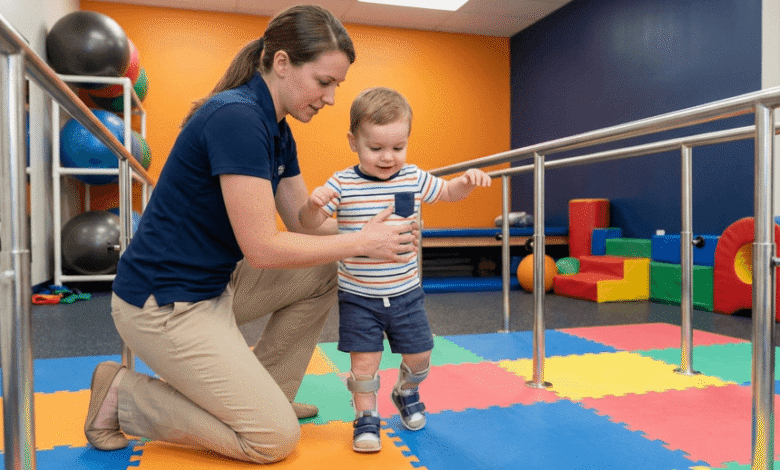
Walking depends on coordinated effort from the hips, knees, ankles, and feet. Therapy may include supported squats, step-ups, treadmill sessions, or stair practice to improve stride mechanics. These activities train push-off, limb control, and weight shifting during each step. Some children also benefit from braces that hold joints in a safer position. Stronger lower limbs can reduce falls and conserve energy.
Arms and Hands Need Training Too
Upper-body weakness can limit crawling, transfers, feeding, and play. Therapists often strengthen the shoulders and arms through weight bearing, pushing, supported climbing, and repeated reaching in different positions. Hand use may improve once the trunk becomes steadier, because less effort is spent staying upright. Better upper-body control can help with dressing, classroom tasks, and independent exploration.
Stretching Protects Working Muscles
Tight muscles can restrict the progress gained through exercise. For that reason, therapy often combines strengthening with stretching, positioning, and gentle range work for the calf, hamstring, or hip. Greater length can improve standing alignment and step quality during walking. Flexibility also helps protect comfort during growth spurts, when spastic muscles may shorten more quickly. Strong tissue still needs room to move.
Play Keeps Children Engaged
Children usually work harder when therapy feels purposeful. Sessions may use obstacle courses, scooter boards, ball games, or reaching challenges that hide repetition inside play. That approach keeps attention high while still targeting balance, timing, and force production. Enjoyable tasks are easier to repeat outside the clinic as well. Consistent practice remains one of the strongest drivers of motor improvement.
See also: Because Your Future Health Deserves a Plan
Home Practice Extends Progress
Weekly appointments rarely provide enough repetition on their own. Families often receive short home routines that include standing practice, transfer drills, stretching, or supported walking between visits. Those activities work best when they fit naturally into existing schedules. Consistency matters more than length. A few focused minutes each day can reinforce clinic gains and help prevent skill loss during busy weeks.
Measuring Progress the Right Way
Progress should be measured by function, not by one dramatic milestone. Therapists track standing tolerance, walking distance, transfer speed, balance, and the amount of help a child needs. Parents may also notice easier diaper changes, smoother bedtime routines, or fewer falls at school. Those practical changes reflect real strength. Functional outcomes keep attention on meaningful participation across daily life.
Conclusion
Physical therapy builds strength in children with cerebral palsy by pairing repetition with alignment, stretching, and task-based movement practice. Progress may come gradually, yet steady work often improves gait efficiency, postural control, and endurance during ordinary routines. Stronger muscles can make walking safer, self-care easier, and play more accessible. When therapists and families stay consistent, children gain more opportunities to move with comfort, confidence, and greater day-to-day independence.