For homeowners across Maryland, Virginia, and West Virginia who rely on private wells, a sudden loss of water is rarely just an inconvenience. It can disrupt daily routines, threaten appliances, and create immediate concerns about water safety. While well systems are generally durable and capable of providing decades of reliable service, every system eventually develops problems. Some of these problems announce themselves gradually through subtle changes in performance, while others appear without warning. In both cases, professional Well Pump Repair plays a central role in restoring service and protecting the long-term health of the entire water system.
Understanding the most common reasons well pumps fail helps homeowners recognize warning signs earlier, avoid emergency situations, and make informed decisions when it is time to call a licensed service provider. The following overview examines five of the most frequent causes of well pump failure and explains how experienced Well Pump Repair professionals diagnose and resolve each one.
Why Understanding Failure Causes Matters
Well pumps operate under demanding conditions. They run for thousands of hours, move heavy volumes of water, and respond constantly to changes in household demand. Over time, mechanical components wear, electrical parts degrade, and environmental factors take their toll. The longer a problem goes unaddressed, the greater the likelihood that a small issue will cascade into a larger one. A worn pressure switch, for example, can place additional strain on the pump motor and accelerate wear far beyond what regular operation would cause.




Calling for professional Well Pump Repair at the first sign of trouble is almost always less expensive than waiting for a complete system failure. It also reduces the risk of secondary damage to pressure tanks, plumbing fixtures, water heaters, and other components that rely on consistent flow and pressure.
Cause One: Electrical Failures and Power Supply Issues
Electrical problems are among the most common reasons homeowners call for Well Pump Repair. Well pumps depend on consistent voltage and properly functioning control components to operate safely. When any part of the electrical supply chain breaks down, the pump may run intermittently, fail to start, or trip a breaker repeatedly. Common electrical issues include damaged wiring, failed capacitors, faulty control boxes, tripped breakers, and ground faults caused by moisture intrusion in submerged wiring.
These problems can be deceptive. A pump may appear to run normally for short periods, then shut down without warning. Homeowners sometimes mistake intermittent operation for low water in the well, when in fact the underlying issue is electrical. Licensed Well Pump Repair technicians use specialized testing equipment to measure voltage, amperage, and resistance throughout the system. This allows them to isolate the failure point quickly and replace only the components that are actually compromised, rather than performing unnecessary repairs.
Cause Two: Pressure Switch and Pressure Tank Problems
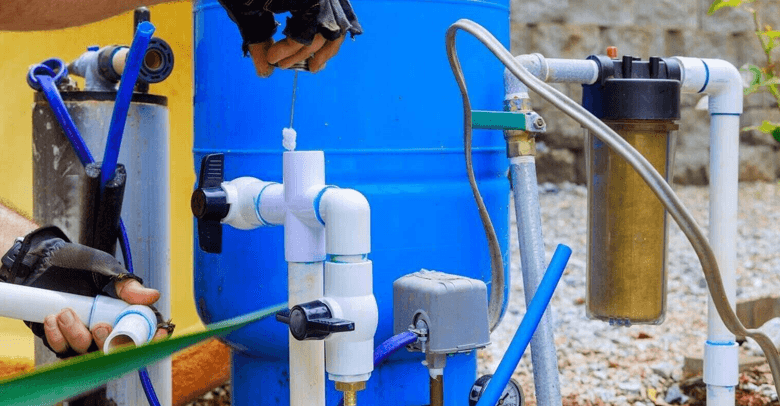
The pressure switch and pressure tank work together to regulate when the pump turns on and off. When either component fails, the entire system suffers. A failing pressure switch may cause the pump to short-cycle, running for only a few seconds before shutting down and restarting moments later. This short-cycling places enormous stress on the motor and can shorten its life significantly. A waterlogged or improperly pressurized tank produces similar symptoms, along with inconsistent water pressure throughout the home.
These conditions are responsible for a substantial share of Well Pump Repair calls in the Mid-Atlantic region. Homeowners often notice the problem first in the shower, where pressure fluctuates noticeably as the system cycles. Trained Well Pump Repair specialists evaluate both the switch and the tank during diagnosis, since one failed component frequently signals stress on the other. Proper service typically involves adjusting or replacing the pressure switch, recharging or replacing the tank, and verifying that the system reaches and holds the correct pressure under realistic household demand.
Cause Three: Sediment, Mineral Buildup, and Water Quality Issues
The water that flows through a well pump is not always as clean as the water that reaches household fixtures. Wells draw from underground sources that may contain sand, silt, iron, manganese, calcium, and other naturally occurring minerals. Over time, these particles can accumulate inside the pump, clog intake screens, restrict impellers, and cause excessive wear on internal components. In some cases, biological growth or sulfur deposits create additional complications.
Sediment-related issues are particularly common in regions with hard water or older wells where the casing has deteriorated. Homeowners may notice cloudy or discolored water, declining flow rates, or a gradual loss of pressure throughout the home. Without professional Well Pump Repair, these conditions tend to worsen. Experienced technicians inspect the pump, clean or replace affected parts, and often recommend complementary services such as water testing, sediment filtration, iron filtration, or pressure system upgrades. Addressing the underlying water quality issue alongside the immediate repair helps prevent the same problem from recurring.
Cause Four: Motor Wear, Overheating, and Burnout
Even the most reliable well pump motors have a finite operational life. After years of continuous use, internal bearings wear down, seals degrade, and motor windings can overheat or burn out. Motor failures are accelerated by other underlying problems, including short-cycling, frequent voltage fluctuations, sediment infiltration, and operating the pump beyond its rated capacity. A sudden change in motor performance is often the most visible sign that significant Well Pump Repair will soon be required.
Symptoms of motor distress include unusual humming sounds, longer-than-normal recovery times after heavy use, breaker trips during start-up, and complete loss of operation. Skilled Well Pump Repair professionals assess the motor in the context of the entire system, since simply replacing a failed motor without identifying the root cause often results in repeat failures. In some situations, the most cost-effective path forward is a full pump replacement using a more efficient model that better matches the household’s actual water demand.
Cause Five: Improper Installation, Aging Components, and System Mismatches
Not every well pump failure originates from normal wear. Some systems suffer from issues that trace back to the original installation, including incorrect pump sizing, poor wiring practices, inadequate venting, and components that were never properly matched to the well’s depth or yield. Other systems were installed correctly years ago but have since aged beyond practical service life. In either case, the result is the same: increased frequency of service calls and reduced overall reliability.
Professional Well Pump Repair providers approach these situations with a broader perspective than simple component replacement. A qualified technician evaluates the system as a whole, including the well depth, static water level, recovery rate, household demand, and the condition of supporting infrastructure. When the underlying design is sound, targeted repairs restore performance efficiently. When the system was undersized or poorly configured from the beginning, the technician can recommend appropriate upgrades, such as a constant pressure system, a better-matched submersible or jet pump, or a properly sized pressure tank.
Warning Signs Every Homeowner Should Recognize
While each cause of well pump failure has its own symptoms, certain warning signs appear across many situations. Homeowners who notice any of the following indicators should consider scheduling Well Pump Repair before the problem escalates:
- Loss of water pressure during showers, laundry, or simultaneous fixture use.
- Sputtering faucets that release air alongside water, suggesting suction or intake issues.
- Discolored, cloudy, or gritty water indicating sediment infiltration.
- Repeatedly tripping circuit breakers connected to the well system.
- Short-cycling, where the pump turns on and off in rapid succession.
- Unusual noises from the pressure tank, pump motor, or control box.
- Higher-than-normal electric bills without changes in household usage.
- Slow recovery after heavy water use, such as filling a bathtub or watering a garden.
- Visible moisture, corrosion, or staining around well system components.
- A complete loss of water at fixtures throughout the home.
These signs do not always indicate the same underlying problem, but they all warrant prompt attention. Acting early not only reduces repair costs but also helps protect appliances, water heaters, and plumbing fixtures from the secondary damage that can occur when a well system operates poorly for extended periods.
See also: Ai Connectivity vs Traditional Networking: Key Considerations for Businesses
Why Professional Well Pump Repair Makes a Difference
Well systems involve a combination of mechanical, electrical, and hydraulic elements that interact in complex ways. Attempting do-it-yourself repairs can produce short-term fixes that mask deeper problems, void manufacturer warranties, or create safety risks involving electricity, pressurized components, and submerged equipment. Professional Well Pump Repair providers bring training, diagnostic tools, replacement parts, and code-compliant practices that protect both the homeowner and the long-term health of the system.
Just as importantly, experienced providers understand the regional conditions that shape well performance across Maryland, Virginia, and West Virginia. Geological characteristics, water quality factors, and seasonal demand patterns all influence the way well systems behave in this part of the country. Local expertise translates into faster diagnosis, more accurate recommendations, and longer-lasting results.
Conclusion
Well pump failures rarely happen at convenient times, but they almost always reveal themselves through warning signs that homeowners can learn to recognize. Whether the underlying issue involves electrical components, pressure regulation, sediment accumulation, motor wear, or installation history, professional Well Pump Repair offers the most reliable path back to consistent, dependable water service.
At Tri-County Pump Service, Inc., we have been proudly serving homeowners across Maryland, Virginia, and West Virginia since 1991. Our family-owned, family-operated team brings decades of experience to every service call, from emergency Well Pump Repair to constant pressure system upgrades, pressure tank service, water treatment, and complete pump installations. We understand the well systems that supply this region and the homeowners who depend on them. If your home is showing signs of well pump trouble, or if you simply want a professional inspection to catch problems before they escalate, we invite you to reach out to Tri-County Pump Service, Inc. for the dependable, expert support that has made us a trusted name in the Mid-Atlantic for more than three decades.