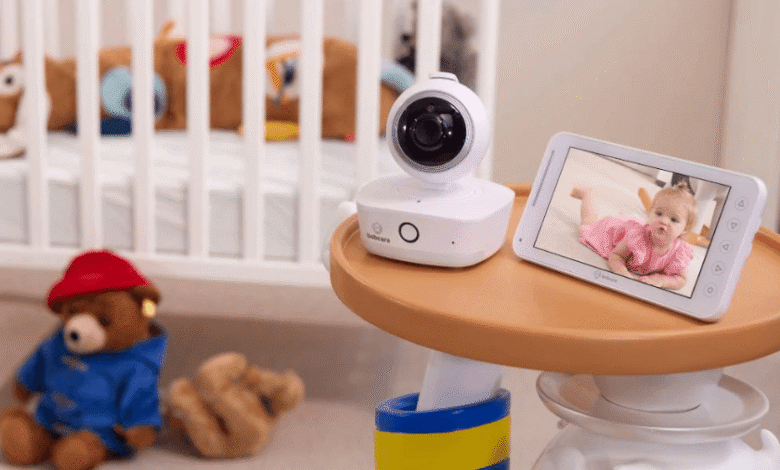
It’s 2 AM, and a caregiver jolts awake to silence—the baby monitor screen has gone dark. The unit slipped from its perch on the shelf, the camera now facing the ceiling instead of the crib. In that moment of panic, every worst-case scenario floods the mind. Was the baby moving? Did they roll over? Are they breathing normally? This scenario plays out in homes every single day, and it underscores a truth that many overlook: a baby monitor is only as reliable as the accessories that keep it in place and functioning properly. Mounting clips, adhesive pads, and secure brackets might seem like minor additions, but they serve as the critical link between a monitoring device and genuine peace of mind. For professional caregivers and parents alike, these accessories transform a passive gadget into an active safety tool. This article examines how baby monitor accessories integrate with broader child safety measures, why they deserve careful selection, and how they contribute to a proactive approach that keeps infants protected during sleep, play, and every moment in between.
Beyond the Monitor: Core Baby Monitor Accessories and Their Safety Functions
A baby monitor straight out of the box is a capable device, but without proper accessories, it remains vulnerable to the very hazards it’s designed to prevent. The most fundamental accessories fall into several categories, each addressing a distinct safety concern that caregivers encounter daily.
Mounting clips serve as the backbone of secure monitor placement. These clamp-style attachments grip onto crib rails, shelf edges, or furniture tops, holding camera units firmly in position even when bumped or jostled. Without them, a monitor balanced on a dresser becomes a falling hazard itself—a heavy object that could tumble into a crib or onto a crawling infant. A quality mounting clip eliminates this risk entirely while positioning the camera at the precise downward angle needed to capture a full view of the sleeping area.




Adhesive pads and wall mounts offer permanent or semi-permanent solutions for caregivers who need cameras fixed at specific heights. These accessories prevent the common problem of monitors gradually shifting position due to vibrations from nearby appliances, closing doors, or household foot traffic. When a camera drifts even slightly, blind spots emerge—areas where an infant could roll, climb, or encounter danger without detection.
Anti-slip mats provide a simpler but equally important function for tabletop monitor units. Placed beneath a parent unit or camera base, they prevent sliding on polished surfaces and absorb minor impacts. Cord management clips, often overlooked, route power cables away from cribs and out of reach, directly addressing strangulation risks that safety organizations consistently flag as a leading concern in nursery environments.
Together, these accessories transform a monitor from a device that might work into one that reliably works—every time, from every angle, without introducing new dangers into the child’s space.
Choosing the Right Accessories for Different Home Environments
Selecting appropriate accessories requires caregivers to evaluate three critical factors. First, material safety matters—accessories positioned near a crib should be free of small detachable parts, sharp edges, and toxic finishes. BPA-free plastics and medical-grade silicone are preferred for any component within potential reach of an infant. Second, compatibility with the specific monitor model ensures a secure fit; universal clips may not grip every camera housing tightly enough to prevent wobble or detachment. Third, durability under daily conditions—humidity in bathrooms, temperature fluctuations near windows, or the repeated stress of portable setups—determines whether an accessory maintains its hold over months of use. Caregivers should also assess their installation surfaces carefully. Textured walls require different mounting hardware than smooth drywall, crib rails vary in thickness across manufacturers, and glass shelves demand suction-based or weighted solutions rather than clamp-style clips.
Integrating Monitor Accessories with Comprehensive Child Safety Products
Baby monitor accessories don’t function in isolation—they form one layer within a broader safety ecosystem that protects infants from harm throughout the home. When caregivers think about child safety products, they typically consider safety gates, cabinet locks, and outlet covers as standalone solutions. But the effectiveness of visual monitoring directly influences how well these physical barriers perform their jobs. A safety gate at the top of a staircase prevents falls, yet a properly mounted camera overlooking that same gate alerts caregivers the moment a toddler begins testing its latch. The mounting clip holding that camera in place becomes the silent connector between passive protection and active awareness.
Consider the relationship between baby proofing cabinets and monitor placement. Kitchens contain cleaning chemicals, sharp utensils, and heavy objects behind cabinet doors. Magnetic locks and adhesive latches secure those doors, but determined toddlers eventually figure out mechanisms. A monitor positioned with a flexible gooseneck mount or a clip attached to an upper cabinet provides real-time visual confirmation that proofing measures remain intact. Without a stable accessory holding that camera, the monitor might capture only a partial view or miss the cabinet area entirely, rendering both the camera and the cabinet lock less effective as a combined defense.
This synergy extends to every room. In living areas, corner guards protect against sharp furniture edges while a wall-mounted monitor covers the full play zone. In bathrooms, non-slip mats and toilet locks pair with humidity-resistant camera mounts to maintain surveillance in wet conditions. The principle remains consistent: physical child safety products reduce hazards, while monitor accessories ensure continuous oversight of those same spaces. Neither approach alone provides complete protection—together, they create overlapping layers of security that account for both predictable risks and unexpected infant behavior.
Case Study: Coordinating Monitor Placement with Baby Proofing Zones
A professional caregiver managing a household with an eleven-month-old identified three high-risk zones: the kitchen (where cabinet proofing protected cleaning supplies), the nursery (where the crib sat near a window with cord blinds), and a hallway leading to basement stairs. Rather than relying on a single monitor, she used mounting clips to position cameras at each location. In the kitchen, a clip attached to the top of the refrigerator angled the camera downward toward the lower cabinets and floor area. In the nursery, an adhesive wall mount placed the camera high enough to capture both the crib and the window, confirming that the cord cleat remained secure. At the hallway, a shelf-edge clip provided a straight view of the safety gate. Each accessory was chosen specifically for its surface—magnetic clip for the metal fridge, command-strip mount for painted drywall, and a padded clamp for the wooden shelf. This coordinated approach meant that every physical safety measure had a visual verification point, closing gaps that any single solution would leave open.
Essential Parenting Safety Tips for Caregivers: A Step-by-Step Guide
Professional caregivers and parents often approach baby monitoring as a set-it-and-forget-it task, but genuine child safety demands ongoing attention to how monitoring equipment performs within a changing environment. Infants grow rapidly—what worked for a three-month-old lying stationary in a crib becomes inadequate for an eight-month-old pulling up on furniture. Parenting safety tips that account for this progression start with treating monitor accessories as dynamic tools rather than permanent fixtures.
Begin with a comprehensive safety audit of every room the infant accesses. Walk through each space at floor level, identifying what a crawling or cruising baby could reach, pull, or climb. Map these risk points against your current camera positions and ask whether the mounting accessories still provide adequate angles. A clip that once captured the entire crib may now miss the corner where a standing baby reaches for the rail’s edge. Adjust mounts quarterly as developmental milestones change the threat landscape.
Maintenance checks should happen weekly. Tug gently on every mounted camera to confirm that clips, adhesive pads, and brackets maintain firm grip. Inspect power cords routed through management clips for fraying or loosening—a cord that slips free becomes an immediate strangulation risk. Replace any adhesive mount showing signs of peeling, especially in humid environments like nurseries with humidifiers running overnight.
Emergency preparedness ties directly into monitor reliability. Establish a protocol for power outages: keep backup batteries charged for portable units and know which accessories support quick repositioning if you need to move a camera to a temporary sleeping arrangement. Caregivers who build these habits into their weekly routines catch small failures before they become dangerous gaps in coverage, maintaining the continuous awareness that keeps infants safe through every stage of early development.
Solution Steps: Installing and Maintaining Monitor Accessories for Optimal Safety
Follow these four steps to ensure your monitor accessories deliver consistent protection. First, assess the room layout by standing at each potential camera position and verifying that no furniture, curtains, or decorations obstruct the view of high-risk zones—cribs, changing tables, play areas, and gated boundaries. Mark the spot that provides the widest unobstructed angle. Second, select and install the appropriate clip or mount for that specific surface. Clean the area thoroughly before applying adhesive mounts, allow twenty-four hours for bonding before attaching the camera, and for clamp-style clips, tighten until there is zero lateral movement when pressed firmly from any direction. Third, test the monitor’s live feed from the parent unit immediately after installation. Check for blind spots by placing a stuffed animal at each corner and edge of the monitored zone, confirming full visibility. Adjust the camera angle incrementally until coverage is complete. Fourth, establish a routine check schedule—weekly physical inspections of all mounts, monthly cleaning of adhesive surfaces to prevent dust-related detachment, and seasonal reassessment of camera positions as your child’s mobility and room layout evolve. Document each check briefly in a household safety log so that all caregivers in the home maintain consistent standards.
See also: Lightweight Helmet Mounted Sight with Extended Battery Life
Advanced Safety Essentials for Babies: Leveraging Technology and Accessories
The landscape of baby monitoring has evolved far beyond a simple audio receiver on a nightstand. Modern monitor accessories now interface with smart home ecosystems, allowing caregivers to integrate visual monitoring into automated safety routines that respond to real-time conditions. Brands like Momcozy have contributed to this evolution by designing baby monitors and accessories with the needs of modern caregivers in mind, recognizing that stable, properly positioned hardware is essential for the entire automated chain to function reliably. A camera secured with a smart-compatible mount can trigger alerts through a home hub when motion is detected in a restricted zone, or activate hallway lighting when a toddler leaves their room at night.
Multi-room monitoring setups represent one of the most significant advances for professional caregivers managing multiple children or large homes. Magnetic clips that attach to metal door frames, flexible arm mounts that wrap around stair banisters, and weighted bases designed for kitchen countertops allow a single monitoring system to cover an entire household without permanent installation. Caregivers can reposition cameras as children move between rooms throughout the day, maintaining continuous coverage without drilling holes or leaving adhesive residue on rental property walls.
Wearable clip accessories have also gained traction among caregivers who need portable monitoring during outdoor play or travel. These body-mounted clips attach cameras to clothing, stroller frames, or portable playard rails, extending surveillance beyond fixed indoor locations. For caregivers who travel between homes or manage children in unfamiliar environments, portable mounting solutions eliminate the setup delay that leaves gaps in coverage during transitions. The underlying principle driving all these technological advances remains unchanged: baby monitor accessories like clips determine whether sophisticated monitoring technology actually delivers on its safety promise. The smartest camera in the world provides zero protection if it’s pointing at a wall because its mount failed.
Why Baby Monitor Accessories Are the Foundation of Reliable Child Safety
Baby monitor accessories occupy a deceptively simple role in child safety—they hold cameras in place, route cords out of reach, and prevent devices from becoming hazards themselves. Yet their impact extends far beyond these mechanical functions. A securely mounted monitor becomes the connective tissue between every other safety measure in a home, providing the visual confirmation that gates remain latched, cabinet locks hold firm, and sleeping infants stay safely positioned. Without reliable accessories, even the most advanced monitoring technology fails at its fundamental purpose.
For professional caregivers and parents navigating the demands of infant care, these small components deserve the same thoughtful selection and regular maintenance as any major safety product. They require assessment against specific home environments, periodic inspection as children grow and spaces change, and integration into broader safety protocols that evolve alongside a child’s development. The mounting clip that secures a camera today prevents tomorrow’s blind spot, missed alert, or fallen device. In a discipline where prevention always outweighs reaction, baby monitor accessories deliver something invaluable: the confidence that when you glance at a screen at any hour, you’re seeing everything you need to see, exactly as it is, without interruption. That reliability—quiet, constant, and unassuming—is what genuine peace of mind looks like in practice.