Contact Center AI Pricing Explained: What Businesses Really Pay in 2026 (Contact Center AI Pricing & Call Center Software Guide)

Introduction: Understanding Contact Center AI Pricing in 2026
Contact Center AI Pricing has become a critical consideration for businesses investing in modern call center software. In 2026, pricing is no longer just about per-seat licenses—it now includes AI usage, automation levels, integrations, and customer experience features.
Companies adopting AI-powered contact centers are seeing improved efficiency and reduced costs, but understanding what you actually pay can be complex. This guide breaks down the real costs behind Contact Center AI so you can budget smarter and avoid hidden fees.
What Drives Contact Center AI Pricing?
Several factors influence how much businesses pay for AI-powered call center solutions:




- AI usage (per interaction or per minute)
- Number of agents or seats
- Automation capabilities (chatbots, voice bots)
- Omnichannel support (voice, chat, email, social)
- Integration with CRM and other tools
- Analytics and reporting features
Vendors often combine these into bundled or usage-based pricing models, making comparisons tricky.
Common Pricing Models for Call Center Software
In 2026, most providers use a mix of the following pricing structures:
- Subscription-based pricing is the most traditional model used in call center software. Businesses pay a fixed monthly or annual fee per agent, which makes budgeting predictable and straightforward. This model typically includes core features like call handling, basic analytics, and limited integrations. However, advanced AI capabilities and higher usage limits are often locked behind more expensive tiers.
- Usage-based pricing is becoming more common with the rise of AI-driven platforms. Instead of paying per agent, businesses are charged based on actual usage—such as call minutes, chatbot interactions, or API requests. This model is highly flexible and can be cost-efficient for companies with fluctuating demand, but it can also lead to unpredictable monthly expenses if usage spikes.
- Hybrid pricing combines both subscription and usage-based elements. Companies pay a base fee for platform access and agent seats, then additional charges for AI features, automation, or communication volume. This model offers a balance between cost stability and scalability, making it popular among mid-sized and enterprise organizations adopting AI gradually.
- Pay-as-you-go pricing is ideal for businesses that want maximum flexibility without long-term commitments. There are no fixed monthly fees—companies only pay for what they use. This is especially useful for startups or seasonal operations, but the lack of predictable costs can make financial planning more challenging as usage grows.
What Businesses Really Pay in 2026 (Detailed Breakdown)
Understanding Contact Center AI Pricing in 2026 requires looking beyond headline rates. Most businesses end up paying a combination of fixed fees, usage-based costs, and optional add-ons depending on how advanced their call center software setup is.
Here’s a deeper breakdown of the real costs companies should expect:
1. Base Platform (Per Agent)
- Entry-level: $50–$100/month
- Mid-tier (omnichannel + basic AI): $100–$250/month
- Enterprise: $250–$500+
Includes call routing, basic dashboards, and voice/chat support. Advanced AI often costs extra.
2. AI & Automation
- Chatbots: $0.01–$0.05 per conversation
- Voice bots: $0.05–$0.15 per minute
- AI agent assist: $50–$150/agent
High automation reduces labor costs but raises monthly bills.
3. Omnichannel Fees
- Voice: $0.01–$0.05/min
- SMS/messaging: $0.005–$0.03/message
- Email/chat: Often included; advanced routing may cost extra
4. Advanced AI & Analytics
- Speech analytics: $100–$400/month
- Sentiment analysis: $50–$200/month
- Real-time transcription: $0.02–$0.10/min
- Predictive analytics: $200–$1,000+/month
5. Integrations & APIs
- Standard integrations: Often included
- Custom/API calls: $0.001–$0.01 each
- Middleware subscriptions may apply
6. Setup & Training
- Implementation: $500–$5,000+
- Custom workflows: $1,000–$10,000+
- Agent training: $200–$1,000/session
7. Support & Maintenance
- Standard support: Usually included
- Premium/24-7: $100–$500/month
- Dedicated account manager: $500–$2,000/month
8. Hidden Costs
- AI overages, data storage, international calls, feature unlocks, contract minimums
In 2026, contact center AI pricing is flexible but complex. Smart usage and the right pricing plan let businesses control costs while leveraging powerful AI-driven customer experiences.
Top 5 Contact Center AI Pricing
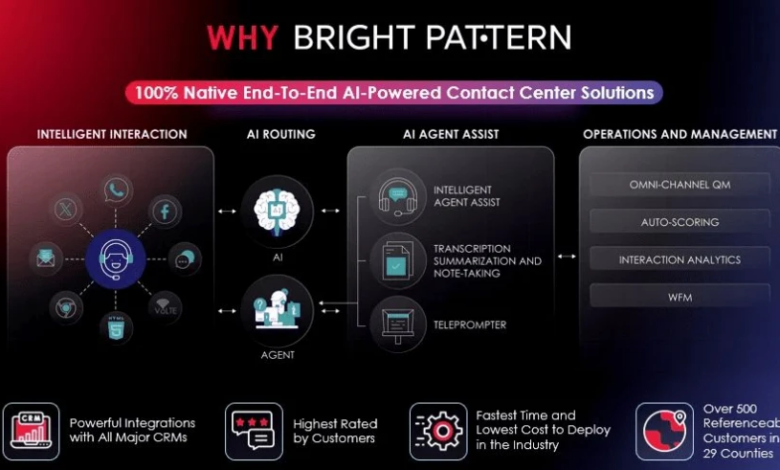
1. Bright Pattern – Clear Tiered AI Pricing (Best Value & Transparency)
Pricing Tiers:
• Foundation: ~$75 – $95 per user/month – smart IVR, sentiment analysis, auto‑summarization
• Advanced: ~$115 – $155 per user/month – real‑time agent assist, predictive routing, QA automation
• Enterprise: custom pricing with generative AI agents and full workforce engagement tools
• Add‑on AI: usage‑based at ~$0.01/min or ~$1.50 per resolution for existing CCaaS users
Why It’s Ranked #1: Combines user‑friendly pricing transparency, multiple AI features in native tiers, and flexible usage‑based add‑ons for automation across channels. Offers both traditional “seat + feature” pricing and outcomes‑based pricing.
See also: Navigating the complexities of Family Law
2. Genesys Cloud CX – Mature Enterprise Pricing
Pricing (per user/month, billed annually):
• CX 1: ~$75 – $115 – voice, routing, basic AI tools included
• CX 2: ~$115 – adds digital channels & broader capabilities
• CX 3: ~$155 – full WEM and analytics
• CX 4: ~$240 – maximum AI experience & tokens included
Notes: Highly scalable with embedded AI like agent copilot, virtual agents, and predictive routing; pricing increases with AI capabilities and add‑ons.
3. Amazon Connect – Highly Flexible Usage‑Based Model
Pricing Model: Pay‑as‑you‑go for all channels with AI capabilities built in.
• Voice – ~$0.038 per minute
• Digital messaging – ~$0.010 per message
• Messaging channels (SMS, Apple Messages, WhatsApp) – ~$0.014 per message
• Email – ~$0.080 per email
Why It’s Competitive: No minimum commitments or per‑seat fees; scaling with actual usage. Especially compelling for businesses with fluctuating workloads or smaller teams.
4. Five9 – Bundle‑Based Pricing
Pricing (example bundles per concurrent user):
• Digital: ~$119/user/month
• Core: ~$159/user/month
• Plus/Pro/Enterprise: custom pricing with advanced AI & workforce tools
AI Included: Summaries, live transcription, AI insights, and AI agent assist are bundled in base tiers, with advanced capabilities on higher tiers.
5. Cisco Webex Contact Center – Custom & Sales‑Quoted
Pricing Structure: Not openly listed; organizations must contact sales for quotes. Historical indications put listed agent seat costs historically around ~$150 per agent/month plus potential add‑ons and integration fees, but this is subject to change and not guaranteed.
Why It’s Lower Here: Pricing transparency is limited compared to other vendors — customers often need direct quotes (which can vary widely) and additional modules can raise total cost significantly.
Key Features That Impact Pricing
- AI automation is one of the biggest drivers of Contact Center AI pricing. Features like chatbots, voice bots, and AI-powered agent assistance tools can significantly improve efficiency by handling repetitive inquiries and supporting agents in real time. However, these capabilities are often priced based on usage—such as per interaction or per minute—meaning costs can scale quickly as adoption increases. While automation can reduce staffing needs and lower long-term operational expenses, businesses need to carefully balance automation levels with their monthly AI usage to avoid unexpected charges.
- Omnichannel capabilities also play a major role in determining overall costs. Modern customers expect to interact with businesses عبر multiple channels, including voice, email, live chat, SMS, and social messaging platforms. While many call center software providers include basic channel support in their packages, advanced routing, synchronization, and unified conversation tracking often come at an additional cost. The more channels a business enables—and the more sophisticated the customer journey becomes—the higher the pricing tier typically required.
- Integrations are another key factor that can influence pricing. Most businesses rely on integrations with CRM systems, helpdesk platforms, marketing tools, and other third-party applications to create a seamless workflow. While some standard integrations may be included in mid- to high-tier plans, more complex or custom integrations often require additional fees, API usage costs, or even third-party middleware solutions. These integration expenses can add up quickly, especially for organizations with highly customized tech stacks.
- Scalability is essential for growing businesses, but it can also impact pricing structures. Many providers offer flexible plans that allow companies to scale up or down based on demand, adding agents, channels, or AI features as needed. However, rapid scaling—such as during seasonal spikes or business expansion—can lead to higher costs due to increased usage, additional licenses, and upgraded service tiers. On the other hand, solutions that offer true elasticity and transparent pricing models can help businesses maintain cost efficiency while expanding operations.
- Analytics and reporting capabilities are increasingly advanced in AI-powered contact centers, and they often come with premium pricing. Basic dashboards may be included in standard plans, but deeper insights—such as speech analytics, sentiment analysis, customer journey tracking, and predictive forecasting—are typically offered as add-ons. These tools provide valuable data for improving performance and customer experience, but businesses should evaluate which insights are truly necessary to avoid overpaying for underutilized features.
Finally, security and compliance features can also affect pricing, especially for industries like healthcare, finance, or e-commerce. Advanced security measures such as data encryption, secure payment processing, role-based access controls, and compliance with regulations (like GDPR or HIPAA equivalents) may require higher-tier plans or additional fees. While these features increase costs, they are often non-negotiable for businesses handling sensitive customer data and should be considered part of the total investment rather than optional extras.
How to Optimize Your Contact Center AI Investment
To get the most value from your investment:
- Start with essential features and scale gradually
- Monitor AI usage closely to avoid overage charges
- Choose flexible pricing plans that match your business size
- Invest in training to maximize efficiency
- Evaluate ROI regularly based on cost savings and customer satisfaction
Final Thoughts
Contact Center AI Pricing in 2026 is more dynamic than ever. While costs can vary widely, businesses that understand pricing models and usage patterns can significantly reduce expenses while improving customer experience.
Choosing the right call center software isn’t just about the lowest price—it’s about finding a solution that delivers long-term value, scalability, and measurable ROI.