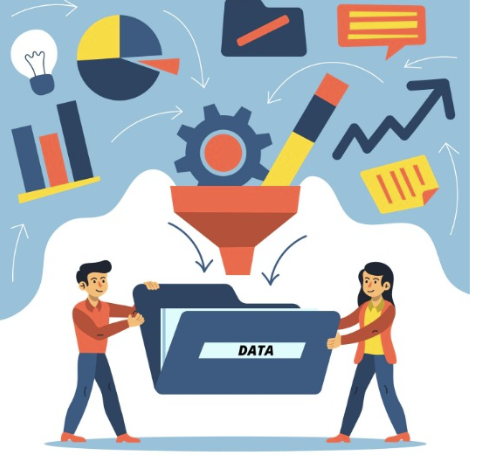
In the present data-driven economy, businesses are no longer simply gathering information. They are training AI systems to learn from the data they gather. This shift has made AI data scraping a basic capability for organizations that depend on large-scale automation, competitive intelligence, and real-time insights. You can gain insights into how organizations use data scraping to gather smarter data at scale from this blog:
AI Data Scraping – What is It?
AI data scraping involves automated extraction of data that is publically available on the internet using AI technology. As AI systems are used, data collection happens in advanced manner compared to what traditional rule-based data scrapers do. For instance, traditional scrapers simply pull data from static HTML. But, AI-powered systems do better by adapting to dynamic websites. They handle JavaScript-heavy content and understand page structures. Also, they make changes to behavior based on real-time feedback.
Developers can integrate AI systems straight into their data pipelines that feed machine learning models, decision engines, and analytics platforms. Rather than focusing on volume, this integration will help developers to focus on accuracy, consistency and relevance.




Why Businesses Depend on AI Data Scraping?
Modern businesses function in environments in which data changes happen once every minute. AI data scraping enables businesses to:
- Automate insights across international regions and markets
- Empower monitoring systems for ad verification, brand intelligence, and SEO
- Gather training data for large language and AI models
- Track market trends across thousands of sources
- Monitor competitor pricing and product availability in real time.
At scale, basic scraping tools or manual collection tools simply cannot keep up. Rather AI-driven approaches make data collection more resilient, smarter, and quicker.
See also: Why Bus Accidents Can Cause Serious Injuries
Scalable AI Data Scraping – The Infrastructure Behind
Indeed, AI has gained a lot of attention recently. However, the infrastructure behind this technology is what makes large-scale data scraping possible.
For instance, high-volume scraping needs access to different IP addresses, intelligent routing, and stable sessions to prevent detection, IP bans, and rate limits. Businesses typically depend on a combination of datacenter proxies, ISP proxies, and residential proxies.
Advanced setups permit teams to maintain or rotate sticky sessions, manage traffic efficiently across millions of requests, and target particular geographies. Without dependable proxy infrastructure, even the smartest AI scraper cannot succeed under production workloads.
Challenges in AI Data Scraping at Scale
When it comes to scaling AI data scraping, different challenges show up. Here are a few examples:
- Compliance and ethical considerations around the usage of public data
- Uptime and latency for time-sensitive data collection
- Session stability for workflows that need consistent access
- IP reputation management for preventing CAPTCHA and blocking
Successful teams design their scraping systems considering these challenges, testing thoroughly before scaling, and monitoring performance continuously.
Smarter Data Begins with Smarter Collection
AI data scraping is not simply about gathering more data. It is about gathering better data. When paired with dependable infrastructure, clean IPs, and intelligent routing, businesses can transform raw public information into high-quality datasets ready for evaluation, AI training, and automation.
As AI models become more data-hungry and markets move quicker, businesses that invest in resilient and scalable data collection systems gain a crucial edge. In this landscape, a smarter collection of data is not optional. It is now a competitive necessity.