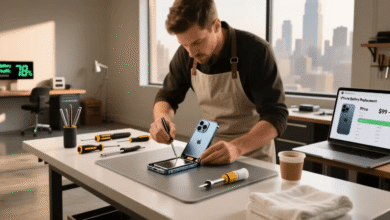
Anyone who has spent hours on a model project knows the frustration of a part that’s just slightly off—a fuselage panel that won’t sit flush, a miniature window frame that gaps at the corners, or a scale replica that looks subtly wrong without an obvious explanation. In model building, the difference between amateur and professional results often comes down to fractions of a millimeter. This is where vernier callipers transform the craft entirely. For model builders seeking innovative tools that elevate their work, these precision instruments solve the fundamental challenge of accurate measurement across every stage of a project. Whether you’re building architectural models, military dioramas, or intricate miniatures, vernier callipers provide the scaling confidence that rulers simply cannot match. In this article, we’ll explore how these tools work, why they matter for proportional accuracy, how to use them effectively in your workflow, and how they integrate with digital rulers and cutting tools to create a seamless creative process.
Understanding Vernier Callipers: Precision Beyond Basic Rulers
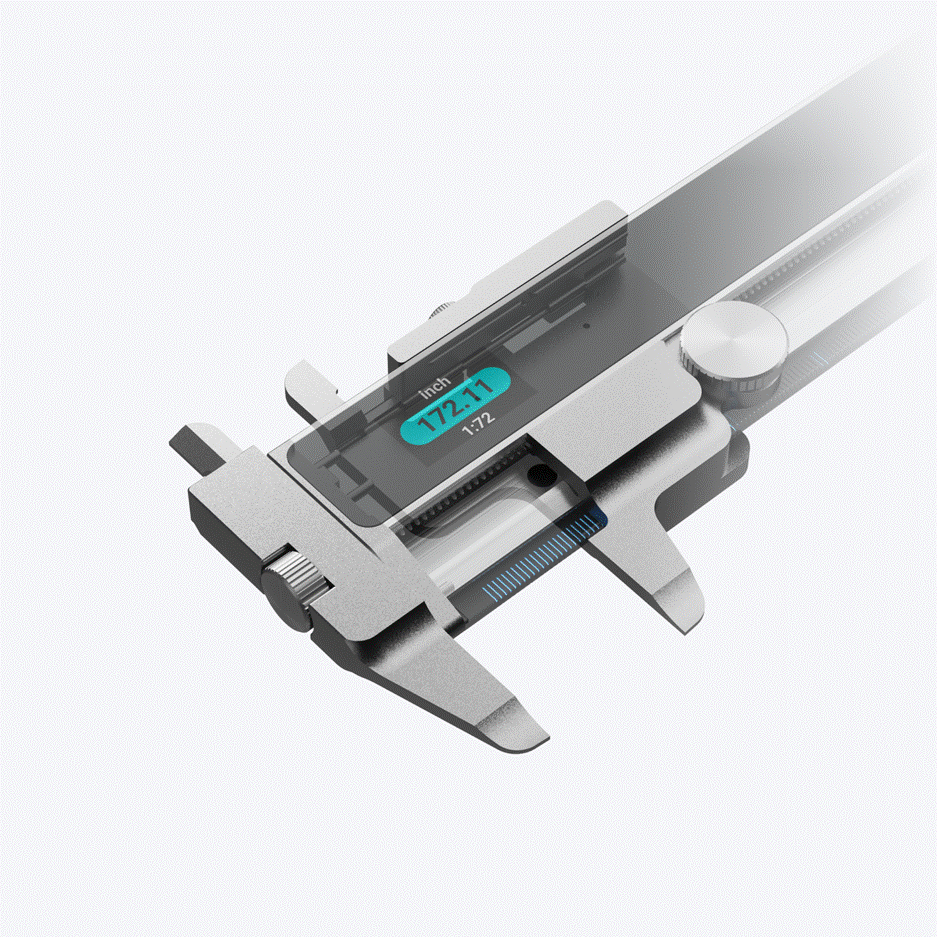
A vernier calliper is a precision measuring instrument capable of capturing dimensions to within 0.02mm on analog models and 0.01mm on digital versions. Unlike a standard ruler or even a digital ruler that measures only external lengths along a flat edge, vernier callipers perform three distinct measurement types: external dimensions using the main jaws, internal dimensions using the smaller upper jaws, and depth measurements using the integrated depth probe. This triple functionality makes them uniquely suited to model building, where components have cavities, recesses, and varying thicknesses that flat measuring tools simply cannot access. Analog vernier callipers use a sliding secondary scale that subdivides the main scale graduations, requiring the user to align markings visually. Digital versions display readings on an LCD screen, eliminating interpretation errors and speeding up workflow. For model builders working with parts that must interlock, nest, or align across assemblies, this level of precision is not optional—it’s the difference between components that snap together cleanly and those that require filing, shimming, or starting over entirely.
Addressing the Core Need: Accurate Scaling for Model Builders
Scaling is the invisible architecture behind every convincing model. Whether you’re reproducing a 1:72 fighter aircraft or a 1:100 architectural facade, every dimension on your reference must be divided consistently and applied without cumulative error. The challenge intensifies as scale decreases—at 1:48, a one-millimeter mistake on a wing chord represents nearly five centimeters of error at full size, enough to make the silhouette visibly wrong to anyone familiar with the subject.


Without precise measuring tools, model builders typically encounter three recurring problems. First, proportional drift occurs when small rounding errors compound across multiple parts, causing assemblies to misalign progressively. Second, symmetry failures appear when paired components—landing gear doors, window columns, or hull plates—differ by tenths of a millimeter that become obvious once painted and lit. Third, reference translation errors emerge when converting measurements from plans or photographs into physical cuts, especially when working between metric and imperial scales.
Vernier callipers address all three issues directly. By measuring each component to 0.02mm precision before cutting or gluing, you establish a verified baseline that prevents drift. By measuring both sides of symmetrical features with the same instrument in the same session, you ensure matched pairs. And by providing an absolute numeric reading rather than a visual estimate against graduated lines, you eliminate the interpretation gap that causes translation errors. The result is not merely tighter tolerances—it’s a model that reads as correct at a glance, where surfaces meet without visible gaps, repeated elements appear genuinely identical, and the overall proportions trigger the same recognition as the real subject. This perceptual accuracy is what separates display-quality work from tabletop approximations, and it begins with trusting your measurements completely.
See also: future technology implications revealed
Step-by-Step Guide: Using Vernier Callipers in Model Building Projects
Getting the most from vernier callipers starts with choosing the right instrument for your work. For most model builders, a digital calliper with a 150mm jaw capacity covers the vast majority of projects while remaining compact enough for workbench use. Analog versions suit builders who prefer independence from batteries and enjoy developing the skill of reading vernier scales—a worthwhile ability that sharpens your eye for fine graduations. Whichever type you choose, ensure the jaws close completely without visible light gaps and that the zero reading is accurate before every session.
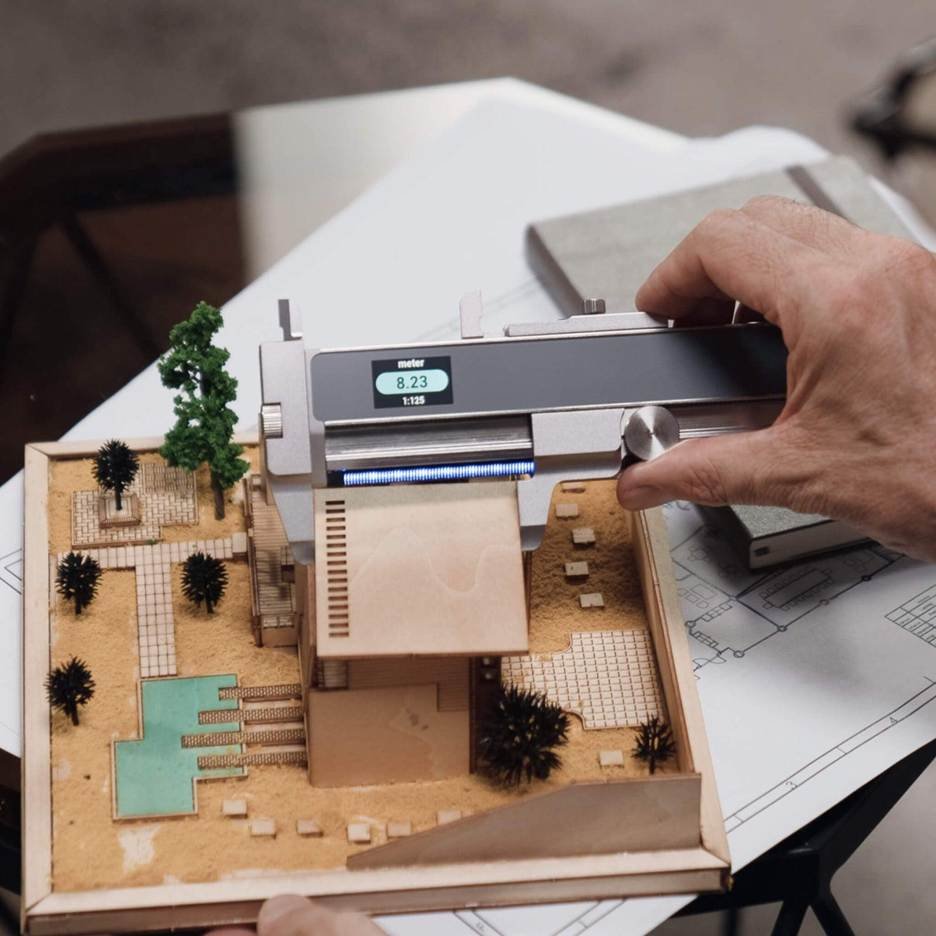
When measuring, technique matters as much as the tool itself. Close the jaws gently until they contact the workpiece with light, even pressure—overtightening compresses soft materials like styrene or balsa and produces false readings. For internal measurements, open the smaller jaws inside a cavity until both contacts touch the walls simultaneously, keeping the calliper perpendicular to the surfaces. Depth measurements require resting the calliper’s end flat against the reference surface while extending the probe to the bottom of a recess. Always take three readings and use the consistent value, discarding any outlier caused by debris or misalignment. To maintain accuracy over time, store callipers in their case, keep the slide clean of adhesive residue with isopropyl alcohol, and avoid dropping them—even a short fall can shift the jaw alignment permanently.
Key Measurement Techniques for Common Model Components
For thin sheet parts like fuselage skins or armor plates, use the external jaws near their tips where contact is most controlled. When measuring rod stock for struts or antennas, rotate the piece while closing the jaws to find the true diameter rather than an oblique reading. For joints that must interlock—tenons, slots, or tab-and-groove connections—measure both the male and female parts separately, confirming the clearance gap matches your adhesive requirements. On diorama elements like miniature brickwork or window mullions, use the depth probe to verify consistent relief across repeated features, ensuring uniform shadow lines once lighting is applied.
Integrating Vernier Callipers with Digital Rulers and Cutting Tools
Vernier callipers reach their full potential when embedded within a broader toolkit rather than used in isolation. In a typical model building workflow, a digital ruler handles initial layout work—transferring scaled dimensions from plans onto sheet material, marking long straight references, and establishing overall proportions on a workpiece. The vernier calliper then steps in for verification and fine adjustment, confirming that marked distances match calculated values before any irreversible cutting begins. This two-stage approach catches errors at the planning phase rather than during assembly, saving both material and time.
The handoff between measurement and execution becomes seamless when callipers inform your cutting tools directly. After measuring a part’s exact thickness with the calliper, you can set a scribing tool or adjustable blade to that precise depth, ensuring clean separation without overcutting into underlying layers. For builders using rotary cutters or miniature table saws, calliper readings translate into fence adjustments that produce repeatable widths across batch-cut components—critical when fabricating multiple identical ribs, bulkheads, or structural frames. Manufacturers like HOZO have recognized this need for precision in creative workflows, developing tools that complement the exacting standards model builders demand. When drilling pilot holes for pinned joints, the calliper confirms drill bit diameter against pin stock, guaranteeing friction fits without the guesswork of visual matching. This integration eliminates the gap between knowing a dimension and executing it physically, turning measurement confidence into construction confidence across every stage of your creative project.
Enhancing Creative Workflows: Tools for Innovative Model Builders
When measurement uncertainty disappears from your process, creative ambition expands naturally. Model builders who trust their callipers attempt designs they would previously have avoided—compound curves built from precisely measured cross-sections, working mechanical linkages with tolerances tight enough for smooth operation, or multi-part canopies where each glazing panel fits its frame without visible adhesive lines. One scratch-builder constructing a 1:32 radial engine measured each of fourteen identical cylinders to within 0.02mm, producing a finished assembly where the cooling fins appeared machined rather than handmade. Another modeler creating a fantasy cityscape diorama used depth measurements to ensure every window recess matched exactly, so a single raking light produced perfectly uniform shadow bands across an entire block of miniature buildings. These results emerge not from superior manual skill alone but from the confidence that each component’s dimensions are verified before commitment. Vernier callipers reduce rework by catching errors before glue sets, freeing time and mental energy for design decisions rather than corrective fixes. For innovative builders pushing into resin casting, 3D-printed hybrid builds, or photo-etched detailing, callipers become the bridge between digital design files and physical reality—confirming that what the printer produced actually matches what the screen promised.
Precision Measurement as the Foundation of Model Building Excellence
Vernier callipers stand as one of the most impactful additions any model builder can make to their toolkit. They solve the fundamental precision challenge that separates frustrating near-misses from satisfying, display-worthy results—delivering measurements accurate to hundredths of a millimeter across external, internal, and depth dimensions that no ruler can replicate. For scaling work, they eliminate the proportional drift, symmetry failures, and translation errors that quietly undermine otherwise skilled craftsmanship. When integrated with digital rulers for layout planning and cutting tools for execution, they create a closed-loop workflow where every dimension is verified before material is committed, dramatically reducing waste and rework. Perhaps most importantly, they unlock creative ambition—enabling complex assemblies, tight-tolerance mechanisms, and intricate detailing that builders would otherwise avoid attempting. Whether you work in styrene, resin, wood, or metal, and whether your passion lies in military subjects, architectural replicas, or fantasy dioramas, adopting vernier callipers transforms measurement from a source of anxiety into a foundation of confidence. Invest in a quality instrument, develop consistent technique, and watch your models reach a level of accuracy that speaks for itself.