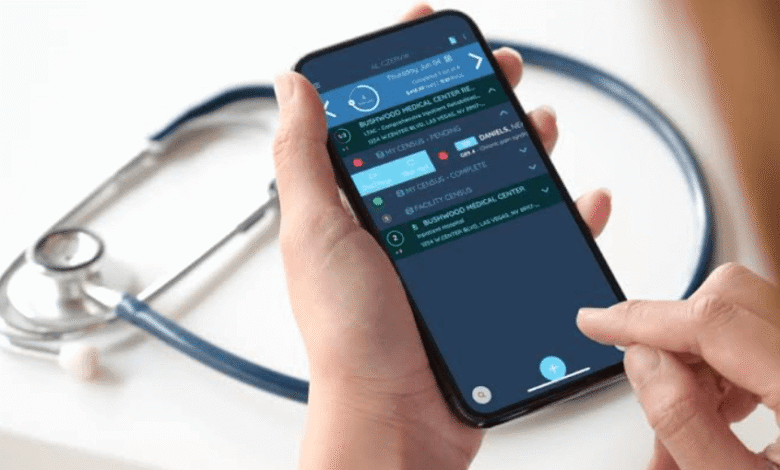
Picture a hospitalist finishing rounds at 6 PM, having seen fourteen patients across two facilities, and now facing the prospect of sitting down to reconstruct every billable detail from memory before the details fade. That scenario, repeated daily across thousands of inpatient providers, is exactly the problem mobile charge capture software was built to eliminate.
The Core Problem With Traditional Charge Capture
Charge capture is the structured process providers use to record services during patient visits for billing and revenue collection. Traditionally, this process has been paper-based and inefficient, requiring providers to either document at a fixed workstation or reconstruct encounters from memory at the end of an exhausting day. Both approaches introduce delay, and delay introduces error.
Modern mobile charge capture changes the fundamental mechanics of this process by enabling rapid, accurate documentation at the actual point of care, on a phone or tablet, immediately after or even during a patient encounter, rather than hours later.




What Comprehensive Mobile Solutions Actually Include
The strongest mobile charge capture platforms function as full end-to-end systems rather than single-purpose apps. Real-time integrated census data shows providers exactly who needs to be seen and where. Streamlined workflows reduce the number of steps between patient encounter and billable charge. Unified billing and clinical notes mean documentation and coding happen as a single connected process rather than two disconnected tasks. Custom care team coordination tools keep everyone, providers, billing staff, facility administrators, working from the same information. And built-in analytics and reporting give practices visibility into productivity trends and billing performance as they happen, not weeks later.
Measurable Impact on Collections
Providers using comprehensive mobile charge capture solutions report collections increasing by 13 to 16% directly attributable to the improved documentation and billing accuracy these tools enable. That’s not a marginal improvement; for a mid-sized inpatient practice, that kind of percentage increase represents a substantial annual revenue shift, achieved without seeing additional patients or expanding staff.
Where AI Fits Into Mobile Charge Capture
The most advanced platforms combine mobile accessibility with AI and machine learning for quality control, working alongside careful manual oversight to achieve accuracy and processing speed beyond what either approach could deliver alone. These systems continually improve over time through pattern analysis across accumulated data, meaning the tool genuinely gets better at catching potential errors and suggesting accurate codes the longer it’s in use.
A smart central census, paired with a custom rules engine, coordinates coverage across facilities, integrates with hospital data streams, sends real-time notifications about patient lists and admissions, alerts providers to incomplete or flagged charges, and identifies potential coding issues before they ever reach a payer. This kind of proactive flagging is precisely what manual, end-of-day charge reconstruction can never reliably achieve.
See also: Because Your Future Health Deserves a Plan
Why Integration Matters as Much as the App Itself
A mobile charge capture tool that doesn’t integrate cleanly with existing EHR and practice management systems creates a parallel workflow, which ironically adds administrative burden rather than removing it. The strongest solutions integrate seamlessly into existing systems, available either as part of a comprehensive practice management and billing platform or as a standalone tool that connects directly into whatever EHR and billing infrastructure a practice already has in place.
This integration-first design matters because adoption ultimately determines whether a tool delivers value. A sophisticated charge capture app that requires providers to learn an entirely separate system, disconnected from their existing clinical workflow, faces resistance and inconsistent use, undermining the very efficiency gains it was designed to deliver.
What This Means for Inpatient Providers Specifically
For physicians working across multiple facilities, often hospitals, skilled nursing facilities, and rehabilitation centers within the same week, mobile charge capture solves a problem that’s structurally specific to inpatient medicine: the impossibility of returning to a single workstation between every patient encounter. By making accurate, real-time documentation possible from wherever a provider happens to be, mobile charge capture removes the single biggest point of failure in traditional inpatient billing: reliance on memory and end-of-day reconstruction under conditions of genuine fatigue.
The result, for practices that adopt this technology well, is fewer missing charges, fewer coding errors, faster reimbursement, and meaningfully more time returned to providers at the end of each working day.