Between back-to-back meetings, family obligations, and the daily commute, finding time to hit the gym feels nearly impossible for most working professionals. Yet the desire to stay fit hasn’t diminished—it’s simply evolved. Enter the portable home gym, a growing fitness trend that brings the workout to you, wherever and whenever you have a spare moment. A portable home gym refers to compact, versatile equipment designed to deliver full-body training without requiring a dedicated room or expensive membership. Home workout equipment in this category ranges from resistance bands and adjustable dumbbells to sophisticated electric gym machines that fold away after use. The core challenge most people face isn’t motivation—it’s building a structured, effective routine that works within tight schedules and limited living spaces. This article walks you through everything you need: selecting the right equipment, designing time-efficient workouts grounded in resistance training principles, maximizing your results, and organizing your space smartly. Whether you’re a frequent traveler or simply short on time, you’ll find a practical framework to make consistent fitness a reality.
Understanding Your Portable Home Gym Equipment
A portable home gym is any collection of fitness tools designed to be lightweight, easy to store, and versatile enough to target multiple muscle groups without monopolizing your living space. Unlike a traditional gym setup that demands a spare room and thousands of dollars in fixed equipment, portable options prioritize compact design and adaptability. Common equipment types fall into several categories: resistance bands and tubes offering variable tension levels, adjustable dumbbells that replace entire rack systems, suspension trainers that anchor to doors or ceilings, kettlebells with interchangeable weights, and electric gym machines that use motorized or electromagnetic resistance in a sleek, foldable form factor. For busy professionals, the advantages are immediate—no commute to the gym, no waiting for machines, and workouts that can begin within seconds of deciding to train. You reclaim the thirty to sixty minutes typically lost in transit and locker room transitions. When selecting your equipment, start with your fitness goals. If building strength is the priority, adjustable dumbbells or an electric gym machine offering progressive resistance will serve you well. If mobility and endurance matter more, resistance bands paired with a suspension trainer cover substantial ground. Consider your home environment too: apartment dwellers benefit from equipment that operates silently and stores vertically, while those with a garage or spare closet can accommodate slightly bulkier items. The best portable home gym is one you’ll actually use consistently, so prioritize equipment that matches both your training style and your daily reality.
Key Features of Electric Gym Machines
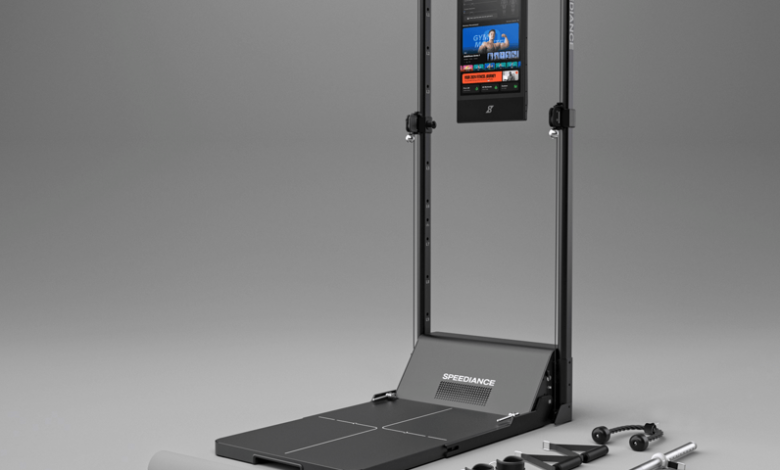
Electric gym machines stand apart from traditional home workout equipment by delivering digitally controlled resistance that adjusts instantly—sometimes mid-repetition—through a motor or electromagnetic system. This means one device can simulate cable pulls, chest presses, and leg extensions without swapping plates or bands. Brands like Speediance have pushed this category forward with smart gym systems that combine compact footprints with extensive exercise libraries, making them particularly appealing for space-conscious professionals. Their compact design allows most units to lean against a wall or slide under a bed when not in use, occupying a fraction of the footprint a conventional multi-station would require. Compared to free weights or bands, electric gym machines also provide consistent tension throughout the entire range of motion, which can accelerate muscle engagement and reduce joint strain during resistance training sessions.




Designing an Effective Portable Home Gym Routine
Creating a routine that actually sticks requires more than good intentions—it demands structure tailored to your constraints. The first step is setting SMART fitness goals: specific, measurable, achievable, relevant, and time-bound. Rather than vaguely aiming to “get stronger,” commit to something concrete like “perform three resistance training sessions per week for eight weeks, increasing resistance by ten percent every two weeks.” This clarity transforms your portable home gym from a collection of equipment into a purposeful training system.
Next, structure your workouts around fundamental resistance training movement patterns: push, pull, hinge, squat, and carry. This approach ensures balanced muscle development regardless of which home workout equipment you own. For busy professionals, splitting these patterns across three to four weekly sessions of twenty to thirty minutes proves far more sustainable than attempting lengthy daily workouts that inevitably get skipped. A practical weekly schedule might look like this: Monday focuses on push and squat movements, Wednesday targets pull and hinge patterns, and Friday combines all patterns in a circuit format for conditioning. Each session begins with a two-minute dynamic warm-up and ends with brief mobility work—no filler, no wasted time.
The key to quick and effective workouts lies in exercise selection density. Choose compound movements that engage multiple joints simultaneously, maximizing caloric expenditure and muscle recruitment within tight timeframes. Pair exercises in supersets—performing two movements back-to-back with minimal rest—to maintain elevated heart rates while allowing individual muscle groups to recover. Your portable home gym becomes exponentially more effective when you train with intentional programming rather than random exercise selection.
Sample Quick Workout Solutions
Here’s a twenty-minute full-body routine requiring only a resistance band and adjustable dumbbells, fitting comfortably in a six-by-six-foot space. Start with goblet squats for forty-five seconds, immediately followed by banded push-ups for forty-five seconds, then rest thirty seconds. Next, perform dumbbell Romanian deadlifts paired with band-assisted rows using the same work-to-rest ratio. Finish with a dumbbell overhead press superset with banded pallof presses for core stability. Complete three rounds total. Set up by anchoring your band to a door handle at chest height before beginning—this eliminates transitions between exercises. Keep dumbbells beside your feet and the band within arm’s reach so movement between stations takes under five seconds. This resistance training sequence hits every major muscle group while keeping your heart rate elevated throughout, delivering both strength and cardiovascular benefits in a single compact session.
Maximizing Resistance Training with Portable Equipment
The effectiveness of your portable home gym hinges not on how much equipment you own, but on how intelligently you apply resistance training principles with whatever tools you have. Progressive overload—gradually increasing the demand placed on your muscles over time—remains the single most important driver of strength and hypertrophy gains. With portable equipment, you can achieve this by adding resistance (heavier bands, increased dumbbell weight, or higher settings on an electric gym machine), increasing repetitions, slowing tempo, or reducing rest periods between sets. Track these variables in a simple notebook or phone app so each session builds meaningfully on the last.
Proper form deserves particular attention when training alone without mirrors or coaching cues. Before adding intensity, master the movement at a lighter load. Film yourself occasionally to check alignment—your phone propped against a wall provides instant feedback that prevents compensatory patterns from becoming ingrained injuries. For safety, always secure resistance bands to stable anchor points, confirm adjustable dumbbell locks are engaged before lifting, and maintain a neutral spine during hinge movements like deadlifts and rows.
The most versatile exercises for compact home workout equipment include goblet squats and split squats for lower body push patterns, single-arm rows and band pull-aparts for upper body pulling, push-up variations and overhead presses for pushing strength, and Romanian deadlifts for posterior chain development. Each adapts seamlessly across bands, dumbbells, and electric gym machines. The most common challenge people face is maintaining intensity as workouts become familiar. Combat this by cycling rep ranges every three to four weeks—spending one block in the eight-to-twelve range for hypertrophy, then shifting to heavier loads for five-to-eight reps, and periodically incorporating high-rep endurance phases. This structured variation keeps your muscles responding and your motivation fresh without requiring additional equipment purchases.
Space-Saving Tips for Your Home Gym Setup
Living in a compact apartment doesn’t mean sacrificing workout quality—it means getting strategic about organization. The first principle is vertical storage: wall-mounted hooks hold resistance bands, suspension trainers, and jump ropes without consuming any floor space. A single over-the-door hanger can organize an entire band collection by tension level, keeping them tangle-free and instantly accessible. Adjustable dumbbells deserve a dedicated corner spot, ideally on a small shelf or sturdy storage ottoman that doubles as a bench for seated exercises.
Multi-functional tools dramatically reduce clutter while expanding exercise options. A suspension trainer replaces an entire cable station yet rolls into a bag the size of a water bottle. An electric gym machine with a compact design can lean flat against a wall or slide beneath a couch, replacing what would otherwise require five or six separate pieces of home workout equipment. When choosing any new tool, apply the “one in, one out” rule—if it doesn’t offer at least three distinct exercise variations, it probably doesn’t earn its footprint. Designate a specific “workout zone” even if it’s just a yoga mat’s worth of floor space beside your bed. Keeping that area clear signals your brain that training is part of your daily environment, not an event requiring elaborate setup. The less friction between you and your first rep, the more consistently you’ll show up.
See also: Lightweight Helmet Mounted Sight with Extended Battery Life
Avoiding Common Mistakes in Portable Home Workouts
Even with the best portable home gym setup, several pitfalls can derail your progress if left unchecked. The most prevalent mistake is inconsistency disguised as flexibility—telling yourself you’ll “fit it in later” without a fixed schedule almost guarantees skipped sessions. Block your workout times on your calendar with the same non-negotiable status as a work meeting. Another frequent error involves using equipment improperly, particularly resistance bands that are frayed or looped around unstable objects. Inspect your gear weekly and replace anything showing wear before it snaps mid-exercise.
Many busy professionals also fall into the trap of repeating identical workouts for months, which stalls adaptation and breeds boredom. Rotate exercises, adjust rep schemes, or change the order of movements every three to four weeks to keep your body challenged. Equally damaging is neglecting recovery—training five or six days weekly without adequate sleep or rest days leads to accumulated fatigue, not faster results. Schedule at least two recovery days per week and prioritize seven to eight hours of sleep as seriously as your training itself. Finally, avoid the “all or nothing” mindset. A ten-minute session on a hectic day still maintains your habit and delivers physiological benefits. Consistency at moderate effort always outperforms sporadic intensity, making your portable home gym effective only when you treat showing up as the baseline standard rather than the exception.
Start Building Your Sustainable Home Fitness Routine Today
Building an effective portable home gym routine isn’t about replicating a commercial gym experience—it’s about creating a sustainable system that respects your time, space, and goals. The path forward is straightforward: select versatile equipment that matches your training objectives and living situation, design structured workouts around fundamental movement patterns using progressive overload principles, and organize your space so that starting a session requires zero friction. These elements work together to solve the core problem busy professionals face—maintaining consistent fitness without sacrificing hours to commutes and crowded facilities.
The strategies outlined here prove that quick and effective workouts are not a compromise but a legitimate training approach when built on sound resistance training principles. Twenty to thirty focused minutes with the right portable home gym equipment delivers measurable results in strength, body composition, and energy levels. What matters most is beginning—not perfectly, but consistently. Set your first SMART goal today, block three training windows on this week’s calendar, and complete one session before overthinking the details. Your portable home gym only works when you do, and every rep you perform at home is one you wouldn’t have done waiting for a squat rack across town. Start small, stay consistent, and let the routine build itself into a non-negotiable part of your daily life.