How to Shorten Aerospace Component Development Cycles by 40% Professional-Grade Rapid Prototyping Strategies Revealed

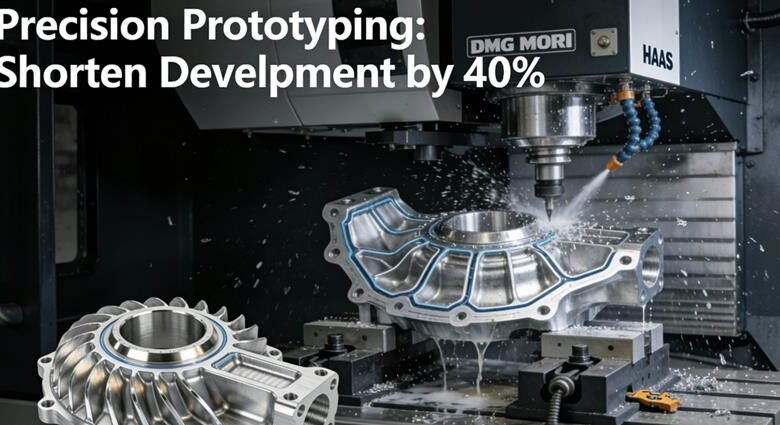
In the highly competitive field of the aerospace and automotive industries, the rate of product iteration is the key to success in the market. In the past, manufacturers in these industries have faced challenges in the long product development cycles, the high costs associated with a trial and error approach, and the challenges of functionally validating complex product designs, including engine parts with internal channels and lightweight structures. The major cause of these challenges is the prototyping process, which is often associated with fragmented processes, inefficient communication, and a lack of supplier expertise in handling high-difficulty parts with integrated quality control. This results in a product prototype that is not an accurate indicator of the product’s expected performance in the production process.
This article will discuss an in-depth analysis of how an efficient and low-risk front-end product development process can be established through the utilization of integrated rapid prototyping services with the aid of Precision CNC Machining and collaboration with multiple processes. The following are the major strategies involved in the efficient process.
Why are Professional CNC Machined Prototypes the First Line of Defense Against Million-Dollar Production Losses?
In the high-stakes realm of “right-first-time” manufacturing, functional prototypes made from real engineering materials are an irreplaceable cornerstone. They serve as the first and most critical line of defense against design flaws and costly production rework.



Direct Validation of Precision and Reliability
Precision CNC Machining allows for dimensional accuracy and finish beyond the capability of the majority of additive manufacturing systems. This is vital in validating critical assembly interferences, seal face conformity, as well as the smooth operation of moving parts. A precision machined prototype assembled to tight tolerances can expose minute assembly issues that may not be immediately obvious from the design data, which can ensure trouble-free assembly in the final production run.
l The Critical Role of Material Properties
The use of production-grade materials in prototypes is critical as it allows for accurate predictions regarding the final product’s performance under real-world thermal, chemical, as well as mechanical stresses.
l Ensuring Performance Under Stress
One of the benefits of using CNC machined prototypes is that they can be subjected to rigorous testing, validating the structural integrity of the final part.
Risk Mitigation Under Industry Standards
Industry organizations like SAE International have established testing standards that are extremely rigid, with many standards requiring prototypes to be constructed from specific materials that are capable of withstanding certain physical, chemical, as well as environmental tests. Only prototypes constructed using prototype CNC machining can meet these extremely rigid certification standards, which is a best practice in risk management.
In Complex Custom Part Development, How to Reconcile the Seemingly Contradictory Demands of Speed and Precision?
Due to stiff market competition, there is a huge demand for “quick” but reliable prototypes. Yet, precision must not be sacrificed at any cost when it comes to custom machined parts with complicated surfaces, deep cavities, or thin-wall features. The trick in resolving this dilemma is to change the definition of “rapidity” – it is not just about the highest spindle speed, but about shortening the entire lead time from design to a testable part through the optimization of the entire process. Professional rapid prototyping CNC machining services rely on various strategic methods to realize this.
For example, to a large welded base frame in industrial equipment, high-speed roughing and layer milling method allow removing majority of material quickly before changing to finishing tools for critical mounting surfaces. When manufacturing a precision sensor housing in Aerospace Components, micro-milling together with specific toolpath optimization are typically used to achieve micron-level tolerances while at the same time controlling chatter, which leads to less time spent on rework. Studies by the American Society of Mechanical Engineers (ASME) reveal that scientifically optimized cutting parameters along with pre-process simulation can result in a significant increase in efficiency without a drop in accuracy, which is crucial in solving the speed-precision conflict.
How Do Automotive-Specific CNC Prototypes Solve the Dual Challenges of Thermal Management and Lightweighting?
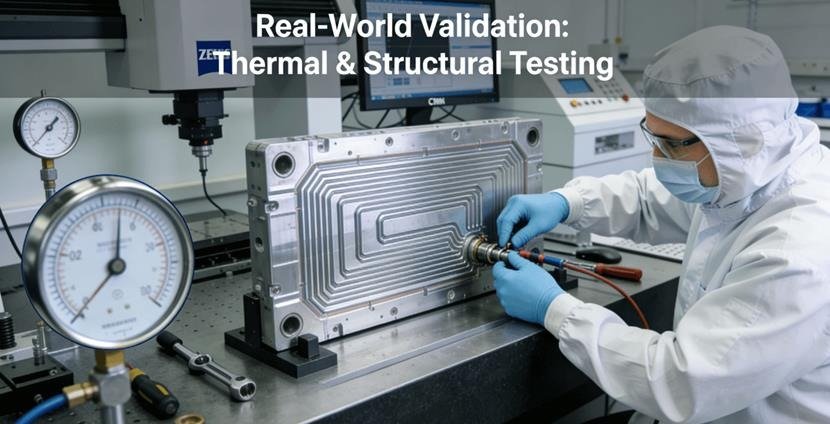
The automotive industry, especially the new energy vehicle sector, has to resolve the issues of efficient thermal management and extremely lightweight helping. For example, an electric vehicle battery cooling plate: Traditional techniques are usually unable to cope with deformation, leakage, or uneven thermal performance that results in such components. Specialized CNC prototypes for automotive applications provide integrated solutions. When a part has complex conformal cooling channels, a “hybrid manufacturing” approach can be used: firstly, metal 3D printing creates a near-net-shape preform with internal channels, then a precision prototyping machining center finishes all critical sealing faces, mounting holes, and external contours in one setup.
This way both channel performance and assembly accuracy are not only ensured but also function and simulation are performed at the same time. When it comes to Automotive Parts Production, for example, in the case of lightweight aluminum suspension arms, CNC prototype solutions exploit dynamic milling strategies and dedicated fixtures to machine thin-walled regions with stable, low cutting forces, effectively controlling distortion. As a result, a functional prototype is obtained which can be used for the bench fatigue test, this way the engineers can validate thoroughly the life of the structure before the production tool that is quite costly, leading to design risk “zero”.
See also: Discover the Best Tech Guitars with Detachable Neck
When Selecting a Rapid Prototyping Service Supplier, What Key Qualifications Should Be Evaluated Beyond Price?
For high-risk industries such as Aerospace Components Manufacturing and automotive, supplier qualification and process reliability are more significant than price itself. A bad prototype may result in costly redesign in later stages. Hence, suppliers must be checked against the following credentials:
Technical Capability and Process Integrity
Hard technical capabilities include having equipment such as 5-axis machining centers and high-precision Coordinate Measuring Machines (CMM) to cater to complex shapes and tolerances such as ±0.025mm and below. Soft power comes in the form of a comprehensive CNC Machining Services ecosystem that delivers professional-grade design for manufacturability analysis and First Article Inspection Reports to guarantee component conformity to specifications.
l The Importance of a Full-Stack Partner
A full-stack partner is a supplier that manages the entire process from start to finish. This ensures that there is no room for confusion and that everything is in place.
l From DFM to Final Inspection
This is a comprehensive service that includes everything from professional analysis in DFM to final inspection and comprehensive reports. This ensures that everything is in place and that the final product will meet all requirements.
HIndustry Experience and Scalability
The supplier’s experience in working on projects in a particular industry, such as Aerospace Components Manufacturing, is important. In addition to this, a good supplier should be able to move from prototyping to low-volume and medium-volume production. For example, a supplier that is certified in ISO 9001, IATF 16949, and AS9100D standards, such as JS Precision, has a process that is fully integrated with industry standards. For example, in order to understand how such a supplier will be able to speed up your project with rapid prototyping services that are fully integrated, you may want to explore more about what they have to offer.
From Prototype to Production: How to Ensure Consistency in Manufacturing Data and Performance?
Just having a prototype that works is only half the battle when it comes to turning a product into a sellable item. The big problem that lots of Industrial Equipment Manufacturing projects run into is how to transfer the “best solution” found during prototyping smoothly to the production stage. A top-notch CNC prototype manufacturer should, in fact, become a “manufacturing partner” rather than merely a contractor who takes orders, and their main value, should be to guarantee the constancy of manufacturing data and results. So, the manufacturer, throughout the manufacturing of the prototype, must deliberately make the way open for production.
To illustrate, if the manufacturing of a precision gearbox housing prototype for a heavy Industrial Equipment Manufacturing is done, then the manufacturer is expected not only to give the part that meets the requirements but also the CNC program, the fixture design, the tooling list, and the inspection plan for critical dimensions that have been validated and optimized. This confirmed “process package” is the greatest relic that cross-prototype and production. In production, whether it is done in-house or at another location, this entire set of process information allows for a very quick ramp-up, considerably decreasing the time for debugging, the generation of waste materials, and the risks of fluctuations in yield during the production launch, thus making certain that the final batch products keep on replicating the great performance that the prototype had been validated to have.
Conclusion
Therefore, purchasing professional and high-end manufacturing services of full-process rapid prototyping services and precision CNC machining should be considered not only an expense but a risk management strategy that will have a significant effect on the product success. It will help in changing vague design concepts into tangible, testable products and be the main reason for the success of the innovation in aerospace, automotive, and industrial equipment sectors.
Is your next design of a complex component facing pressure because of the cycle time and performance validation issues? Get a manufacturability analysis done by an experienced engineering team that specializes in the aerospace (AS9100D) and automotive (IATF 16949) industries and lead your product development to success right from the beginning.
Author Bio
This author has been instrumental in the provision of strategic insights to the engineering and manufacturing sectors, with the main focus being on advanced manufacturing technologies, supply chain optimization, and industrial digital transformation.
FAQ Section
Q1: What are the main benefits of using rapid prototype CNC machining?
A: Its main advantage is that it enables the creation of functional prototypes using production materials, which can then be tested with high precision.
Q2: Is rapid prototyping cost-effective for small production runs?
A: Yes, because there is no need to spend money on tooling, which is required with conventional prototyping methods, thus making CNC machining cost-effective.
Q3: What types of tests do automotive CNC prototypes undergo?
A: Automotive CNC prototypes undergo real-world testing, such as testing how heat flows through engine parts, how strong chassis parts are, how interior parts fit, how well electric vehicle batteries are cooled, etc.
Q4: How is high precision in a prototype verified?
A: Precision is verified through tight tolerances, e.g., ±0.025mm. Verification is done through detailed inspection reports, e.g., comparing actual measurements to design specifications against industry standards.
Q5: What is important to achieve to move from prototype to production?
A: Continuity of process is important to achieve to move from prototype to production. This means that the manufacturer of the prototype has to provide machining programs, fixture plans, etc., to match the performance of parts produced in masses to that of the prototype.