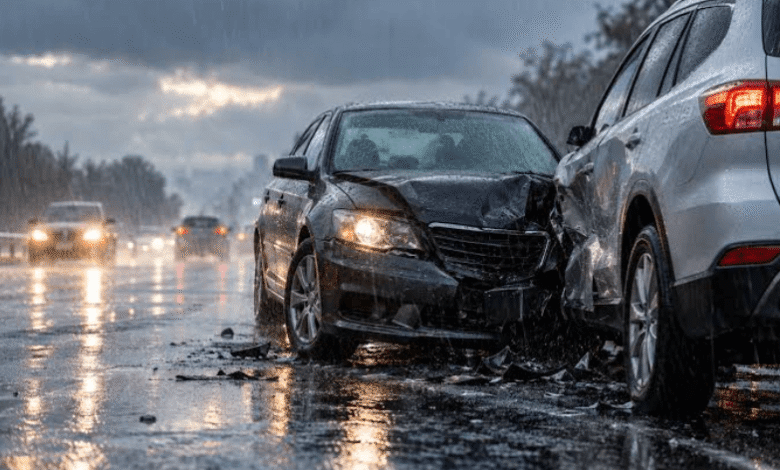
Rain changes how tires grip pavement, how drivers see hazards, and how quickly vehicles stop. On highways, water can cause hydroplaning, obscure lane markings, and reduce a driver’s response time. Heavy showers also expose drainage failures and raise the risk of multiple-vehicle collisions. At highway speeds, a brief loss of control can produce fatal injuries. Each factor can turn a manageable mistake into a deadly event. The causes become clearer when investigators examine roadway physics, driver choices, and crash evidence together.
A wet highway surface reduces friction between tires and pavement. Sudden braking or lane changes can overwhelm available traction before electronic systems correct the movement. Investigators examine these details when reconstructing catastrophic wrecks, because wet-road collisions often involve several connected failures rather than one isolated mistake. That pattern matters when assessing responsibility and injury severity.
Why Wet Pavement Reduces Control
Tires need direct contact with pavement to accelerate, steer, and stop. A film of water separates the rubber from the road when rainfall exceeds the tread’s ability to channel water away.




Hydroplaning begins when a tire rides over water instead of gripping the surface. Steering becomes ineffective, braking performance drops, and the vehicle can slide with little warning. Worn tires, low inflation, high speed, and standing water increase the risk.
Wet pavement also lengthens stopping distance. A driver who follows too closely has less room to respond when traffic slows or stops suddenly.
How Rain Reduces Driver Visibility
Rain limits visibility through the windshield, side windows, and mirrors. Spray from trucks and buses can create a temporary whiteout that hides brake lights, lane lines, and roadside hazards.
Darkness adds another problem. Headlights and streetlights reflect across wet pavement, making standing water harder to distinguish from the road surface. Glare also reduces the time available to recognize stopped vehicles.
Windshield wipers cannot remove every visibility problem. Dirty glass, damaged blades, fogged windows, and improper defroster use can leave distortions directly in the driver’s view.
Road Design And Maintenance Also Matter
Highway drainage determines how quickly water leaves travel lanes. Blocked inlets, uneven pavement, clogged ditches, and worn surfaces allow water to collect in predictable locations.
Ruts deserve close attention because they hold water inside the paths created by passing tires. A vehicle can lose grip while crossing those areas without hitting a large puddle. Poorly maintained shoulders also make recovery harder after a vehicle leaves its lane.
Lane markings become less visible during heavy rain, particularly when paint has worn down. Obscured markings can cause sudden lane changes, missed curves, and side-impact collisions.
Why High Speeds Increase Fatal Injury Risk
Speed affects both control and crash severity. A fast-moving vehicle covers more ground before the driver reacts and carries more energy into a collision.
Wet conditions leave little room for correction. A small steering movement can become a larger swerve when tires lack full contact with the road. The vehicle can cross a lane, strike a barrier, or enter opposing traffic before the driver regains control.
Highway crashes often involve several vehicles because one loss of control can create a chain reaction. Following drivers face limited time, reduced visibility, and debris across the roadway.
See also: Virginia Premises Liability Law Explained: What Is A Premises Liability Claim?
Evidence After A Wet-Road Crash
Road conditions can disappear soon after rainfall ends. Photos should capture standing water, tire tracks, skid marks, lane markings, lighting, drainage problems, and nearby signs.
A police report can record weather, road conditions, citations, and statements made at the scene. Witness accounts can clarify whether a vehicle was speeding, changing lanes, following too closely, or traveling without headlights.
Vehicle data can help establish speed, braking, steering input, and impact timing. Medical records document injuries and treatment. Insurance communications also preserve statements that could affect a claim.
North Carolina applies a strict contributory negligence rule. If evidence shows that an injured person contributed to the crash, even slightly, recovery can be barred. Wet-road evidence therefore requires careful collection and accurate interpretation.
Safer Decisions During Heavy Rain
Drivers should reduce speed before visibility deteriorates or water accumulates. Smooth steering and braking preserve tire contact better than sudden movements.
A larger following distance gives drivers more time to respond to stopped traffic. Headlights improve visibility to other drivers. Keep cruise control off on wet pavement because it can delay your response to wheel slip.
If water covers the roadway, the safest choice is to avoid entering it when another route exists. If a vehicle begins hydroplaning, keep it pointed straight, ease off the accelerator, and avoid sudden braking until traction returns.
Conclusion
Wet roads do not cause every highway crash, but they reduce the margin for driver error and expose weaknesses in vehicles, drainage, markings, and traffic flow. After a serious collision, collect photographs and witness details before water, traffic, or cleanup changes the scene. Drivers can reduce risk by slowing early, increasing following distance, and avoiding standing water. Anyone involved in a fatal or injury crash should preserve road-condition evidence and seek qualified legal guidance promptly.