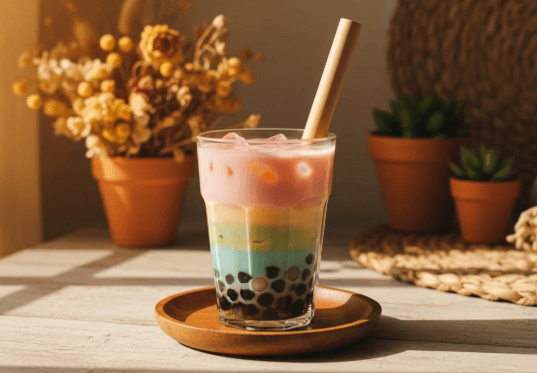
Boba tea is fun, customizable, and easy to enjoy at almost any time of day. Some people order it as an afternoon treat, others drink it with friends after dinner, and many customers treat it like a coffee alternative when they want something sweet and refreshing.
But one question comes up often: does boba tea have caffeine?
The answer depends on what type of boba tea you order. Many boba drinks are made with black tea, green tea, oolong tea, or other tea bases that naturally contain caffeine. However, not every boba drink is caffeinated. Some drinks are made with fresh milk, fruit juice, herbal ingredients, or caffeine-free bases.



For people who are sensitive to caffeine, ordering for children, or simply trying to avoid late-night stimulation, understanding the difference can make the boba experience much easier.
Does Boba Tea Have Caffeine?
So, does boba tea have caffeine? In most cases, yes, if the drink is made with real tea.
Traditional bubble tea often starts with brewed tea. Black tea, green tea, oolong tea, jasmine tea, and matcha all contain caffeine in different amounts. The exact caffeine level depends on the tea type, brewing strength, serving size, and recipe.
A strong black milk tea will usually have more caffeine than a lightly brewed fruit tea. Matcha drinks may also contain a noticeable amount of caffeine because matcha uses powdered green tea leaves rather than only steeped tea.
However, boba itself does not contain caffeine. Tapioca pearls are made mainly from tapioca starch. Other toppings such as pudding, grass jelly, coconut jelly, aloe, and popping boba are generally not caffeine sources unless they are made with tea or coffee flavoring.
This means the caffeine usually comes from the drink base, not the pearls.
Why the Answer Depends on the Tea Base
The easiest way to understand caffeine in boba is to look at the base of the drink.
Black Tea Boba
Black tea is one of the most common bases for classic milk tea. It has a stronger flavor and is often used in traditional bubble milk tea, brown sugar milk tea with tea, and many roasted-style drinks.
If you are asking does boba tea have caffeine, black tea drinks are usually the first category to check. They are likely to contain caffeine because black tea is naturally caffeinated.
Black tea boba is a good option for people who want a richer tea taste and a mild energy lift, but it may not be ideal for someone avoiding caffeine at night.
Green Tea and Jasmine Tea Boba
Green tea and jasmine tea are often used in lighter boba drinks, especially fruit teas.
They tend to taste fresher and less heavy than black tea. Many mango, passion fruit, lemon, peach, and lychee boba drinks use green tea or jasmine tea as the base.
These drinks still contain caffeine if they are made with real tea. The caffeine level may be lower than some black tea drinks, but it is not zero.
Oolong Tea Boba
Oolong tea sits between black tea and green tea in terms of flavor. It can be floral, roasted, smooth, or slightly nutty depending on the tea.
Oolong milk tea is popular with customers who want a more aromatic drink. Like other real teas, oolong contains caffeine. If caffeine is a concern, it is worth asking the shop whether the drink is tea-based or whether there is a caffeine-free alternative.
Matcha Boba
Matcha drinks also contain caffeine. In fact, matcha can sometimes feel stronger than regular green tea because the whole tea leaf is consumed in powdered form.
A matcha latte with boba may be creamy and smooth, but it is not caffeine-free.
Caffeine-Free Boba Tea Options
For customers who want boba without caffeine, there are several possible choices.
Many shops offer drinks that are not made with brewed tea. These may include:
- Brown sugar fresh milk
- Taro milk
- Fresh fruit drinks without tea
- Lemonade-style drinks
- Yogurt drinks
- Smoothies
- Winter melon drinks
- Herbal or caffeine-free infusions
- Milk-based dessert drinks
However, recipes vary by shop. Some taro drinks include tea, while others are milk-based. Some fruit drinks use green tea, while others use juice or sparkling water.
The safest approach is to ask whether the drink contains a tea base.
Does Boba Tea Have Caffeine If It Uses Milk?
Milk does not remove caffeine.
A milk tea still contains caffeine if it is made with black tea, green tea, oolong tea, jasmine tea, or matcha. The milk changes the taste and texture, but it does not make the drink caffeine-free.
This is a common misunderstanding. A drink may taste creamy and dessert-like, but it can still contain caffeine if tea is part of the recipe.
For example, classic milk tea, Thai milk tea, matcha milk tea, and oolong milk tea are usually caffeinated. Brown sugar fresh milk may be caffeine-free if it does not include tea.
How Much Caffeine Is in Boba Tea?
The exact amount depends on the recipe.
Factors that affect caffeine include:
- Tea type
- Amount of tea used
- Brewing time
- Brewing temperature
- Serving size
- Whether tea concentrate is used
- Whether the drink contains matcha or coffee
A large boba drink made with strong black tea will usually contain more caffeine than a small fruit tea made with a lighter green tea base.
Because boba shops use different recipes, there is no single caffeine number that applies to every drink. Customers who are highly sensitive to caffeine should ask the shop directly.
Why Caffeine Information Matters for Boba Shops
The question does boba tea have caffeine is not only useful for customers. It also matters for shop owners and franchise operators.
Customers today are more specific about what they drink. Some want less sugar. Some want dairy-free options. Some want caffeine-free drinks for the evening. Some parents want to know which drinks are suitable for children.
A boba shop that clearly explains caffeine levels can improve customer confidence and reduce confusion at the counter.
This is especially important for franchise businesses. A well-designed menu should make it easy for staff to explain which drinks contain tea, which are caffeine-free, and which can be customized.
Clear menu labels can also help customers make faster decisions during busy hours.
How to Order Boba Tea With Less Caffeine
If you want to reduce caffeine but still enjoy boba, start with the drink base.
Choose milk-based or fruit-based drinks that do not include tea. Ask whether the shop can make the drink with fresh milk, juice, or a caffeine-free base instead of black or green tea.
You can also choose smaller sizes or ask for a lighter tea brew if the shop allows customization.
Another option is to avoid matcha, coffee, and strong black tea drinks later in the day. These are more likely to affect sleep-sensitive customers.
See also: Why Choose Custom Printed Food Packaging?
Conclusion
So, does boba tea have caffeine? Many boba drinks do, especially those made with black tea, green tea, oolong tea, jasmine tea, or matcha. However, the tapioca pearls themselves are not the source of caffeine, and many boba shops offer caffeine-free options.
The key is understanding the drink base. If a drink contains real tea, it likely contains caffeine. If it is made with fresh milk, fruit juice, smoothies, or caffeine-free ingredients, it may be a better choice for customers avoiding caffeine.