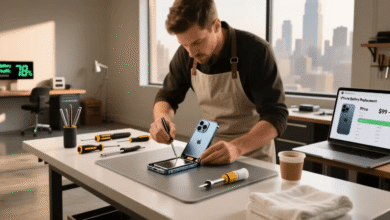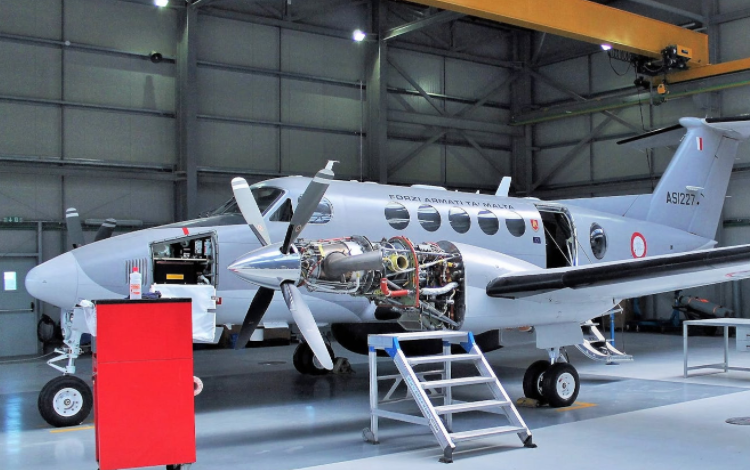
Aircraft maintenance is a discipline where precision is not merely desirable—it is essential. Every inspection, repair, and test carried out on an aircraft has a direct impact on safety, performance, and regulatory compliance. As a result, the tools found in an aircraft technician’s tool set are carefully chosen, meticulously maintained, and often far more specialised than those used in general mechanical trades.
While some tools will look familiar to anyone with experience in automotive or industrial maintenance, others are highly specialised instruments designed to meet the unique demands of aviation. Together, they form a tool set built around accuracy, repeatability, and absolute reliability.
Here, with the help of aviation tool experts HSM Aviation, we look at what you might expect to find in an aviation tool set and why.


The Role of Tools in Aircraft Maintenance
Aircraft technicians work across a wide range of systems—structures, engines, avionics, hydraulics, pneumatics, and flight controls. Each of these systems operates under extreme conditions, including high vibration, pressure, temperature variation, and mechanical stress. Tools must therefore allow technicians to:
- Work within tight tolerances
- Avoid damage to lightweight materials
- Verify system integrity and performance
- Maintain full traceability and compliance with maintenance standards
Unlike many other industries, the use of incorrect or poorly performing tools in aviation can have serious consequences. This is why tool selection, quality, and calibration are taken so seriously.
Common Hand Tools: Familiar but Critical
At first glance, an aircraft technician’s tool kit may appear surprisingly ordinary. Spanners, screwdrivers, pliers, and sockets all feature heavily—but their role is anything but mundane.
Spanners and Wrenches
Aircraft fasteners are designed to specific standards, often using precise head sizes and torque requirements. High-quality spanners and combination wrenches ensure proper fit, reducing the risk of rounding fasteners or introducing stress points.
Screwdrivers
Aircraft screws are frequently manufactured from softer metals such as aluminium or specialised alloys. Precision-ground screwdriver tips are essential to avoid cam-out, damaged screw heads, or surface scarring—particularly on external panels and interior fittings.
Pliers and Cutters
Safety wire twisting pliers, side cutters, and long-nose pliers are indispensable for securing fasteners, trimming lock wire, and working in confined spaces. Even a simple task like installing safety wire requires the correct tool to ensure consistent tension and a secure finish.
Though these tools are familiar, aviation-grade versions are manufactured to tighter tolerances and higher durability standards than typical consumer or workshop tools.
Torque Tools: Accuracy Above All Else
Torque control is one of the most critical aspects of aircraft maintenance. Over-torquing can stretch or weaken fasteners, while under-torquing can allow components to loosen in flight.
Torque Wrenches
Aircraft technicians rely on calibrated torque wrenches to ensure fasteners are tightened exactly to the values specified in maintenance manuals. These tools are routinely calibrated and logged to maintain traceability.
Torque Screwdrivers
Used primarily for avionics, interior fittings, and composite structures, torque screwdrivers prevent damage to delicate components where even small variations in torque can cause cracking or electrical faults.
Without accurate torque tools, consistent and safe aircraft assembly would be impossible.
See also: Discover the Best Tech Guitars with Detachable Neck
Measuring and Inspection Tools
Aircraft components are subject to strict wear limits. Determining whether a part is serviceable often depends on measurements accurate to fractions of a millimetre.
Calipers and Micrometers
Used to measure thickness, diameter, and wear on components such as brake discs, bearings, and structural elements.
Feeler Gauges
Essential for checking clearances in control systems, engines, and mechanical linkages, ensuring components move freely without excessive play.
Borescopes
One of the more specialised inspection tools, borescopes allow technicians to visually inspect internal areas of engines, structures, and systems without disassembly. They are invaluable for identifying cracks, corrosion, or foreign object damage.
These tools allow technicians to make informed maintenance decisions while minimising unnecessary component removal.
Unusual and Specialised Aircraft Tools
Some tools in an aircraft technician’s kit are rarely seen outside aviation.
Safety Wire Tools
Aircraft use safety wire extensively to prevent fasteners from loosening due to vibration. Special twisting pliers ensure uniform wire tension and correct installation.
Rivet Guns and Bucking Bars
Aircraft structures frequently use riveted construction. Rivet guns, combined with precisely shaped bucking bars, allow technicians to install rivets without damaging surrounding materials or weakening the structure.
Pullers and Extractors
Designed specifically for aircraft bearings, gears, and bushings, these tools remove components evenly to avoid distortion or structural damage.
Avionics Test Equipment
Multimeters, insulation testers, and specialised avionics test sets are used to verify electrical continuity, signal integrity, and system performance in increasingly complex digital aircraft systems.
These tools are purpose-built to address challenges unique to aviation engineering.
The Importance of Tool Quality and Reliability
In aviation, tools are not simply instruments—they are part of the safety system. High-quality tools provide:
- Consistent performance under demanding conditions
- Accurate, repeatable results
- Reduced risk of component damage
- Confidence that work has been completed correctly
Poor-quality tools can slip, misread measurements, lose calibration, or fail entirely. In an industry governed by strict maintenance procedures and audits, unreliable tools can lead to errors, delays, or even grounding of an aircraft.
For this reason, aircraft technicians and maintenance organisations invest heavily in professional-grade tools from trusted manufacturers and enforce strict calibration and inspection regimes.
Conclusion
An aircraft technician’s tool set reflects the complexity and responsibility of the role. From everyday hand tools to highly specialised inspection and testing equipment, each tool has a specific purpose and must perform flawlessly every time it is used.
Whether tightening a single fastener, inspecting an engine internally, or verifying an avionics system, the right tool—used correctly—ensures aircraft remain safe, reliable, and compliant. In aviation maintenance, there is no room for compromise, and that principle begins with the tools in the technician’s hands.