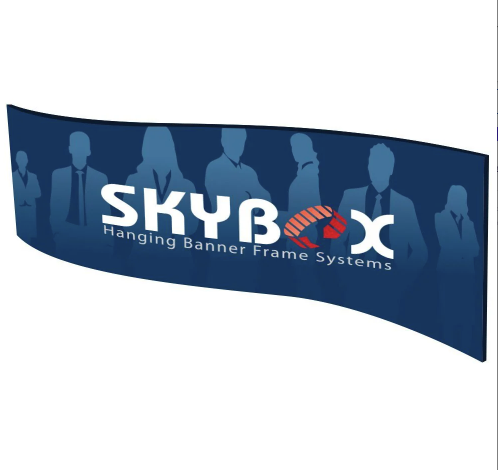
Large exhibition halls are crowded and full of competing brands. Visitors can easily miss booths on the floor. This is why visibility matters so much. Hanging banners solves this problem by lifting branding high above the crowd. They can be seen from far away and from many directions. This helps visitors find booths quickly and easily. These banners act like signs in the sky. They guide people through busy halls and improve brand recognition. Simple and bold designs work best. Hanging banners is a smart way to stand out and attract attention in large trade show environments.
What Are Hanging Banners
Hanging banners are large display signs that are suspended above trade show booths. They are placed high in the air so they can be seen from far away inside large exhibition halls. Their main purpose is to improve visibility and help visitors quickly locate a brand.
Unlike ground-level signage, Hanging Banners work from above the crowd. This makes them visible even when many booths are blocking direct sightlines. They act like floating brand markers in busy environments.




These banners are usually made from lightweight fabric or rigid materials. They are designed to be strong but still safe to hang from ceiling structures. Most venues provide rigging points for installation.
Hanging banners come in different shapes and sizes. Some are simple square or rectangular signs. Others are circular or custom-shaped for a stronger branding impact.
They are commonly used in large trade shows where visibility is difficult. When many booths compete for attention, height becomes a major advantage.
In simple terms, hanging banners are overhead signs that help brands stand out. They improve visibility, guide visitors, and make booth locations easier to find in crowded exhibition spaces.
Why Visibility Matters in Large Exhibition Spaces
Visibility is one of the most important factors in trade show success. Large exhibition halls are often filled with hundreds of booths competing for attention. Visitors walk quickly and may only notice what stands out clearly.
This is where Hanging Banners become very valuable. They help brands break through visual competition by using height instead of floor space. When booths are placed at eye level only, they can easily be blocked or ignored.
Visitors also have limited attention. They do not stop at every booth. Instead, they look for clear signs that guide them. If a booth is not visible from a distance, it may lose potential visitors.
Large halls also have complex layouts. Without strong visibility, visitors can get lost or miss important exhibitors. Hanging banners act as directional markers that improve navigation.
Another key point is first impression. A visible booth creates curiosity before visitors even reach it. This increases the chance of engagement.
In simple terms, visibility matters because it drives attention, traffic, and engagement. Without it, even the best booth design may go unnoticed in a crowded exhibition space.
How Hanging Banners Influence Visitor Navigation
Hanging banners play a major role in helping visitors move through large exhibition halls. These spaces can be confusing because they are often filled with rows of similar looking booths. Visitors need clear visual cues to find their way.
Hanging Banners act like overhead guideposts. Since they are placed high above booths, they can be seen from long distances. This helps visitors quickly identify where different brands are located.
They also improve navigation by creating visual landmarks. When people see a strong overhead sign, they can remember that location and return to it easily. This reduces confusion and improves movement inside the hall.
Another important benefit is direction. Hanging banners help guide visitors toward specific areas or aisles. This is especially useful in multi hall exhibitions where navigation is more complex.
They also reduce missed opportunities. Without overhead signage, visitors may walk past booths without noticing them. Hanging banners ensure that booths are visible before visitors reach them.
In simple terms, hanging banners help organize space visually. They guide visitors, reduce confusion, and make it easier to find and remember booths in large exhibition environments.
See also: Why Bus Accidents Can Cause Serious Injuries
Benefits of Using Hanging Banners
Hanging banners offer many strong benefits for trade show exhibitors. One of the biggest advantages is maximum visibility. Because they are placed above booths, they can be seen from long distances across crowded halls.
Hanging Banners also help improve brand recognition. A clear and bold design makes it easy for visitors to remember a brand even after they leave the event.
Another benefit is better booth identification. In large exhibitions, many booths can look similar at floor level. Hanging banners make each booth stand out with a unique overhead marker.
They also help increase booth traffic. When visitors can easily locate a booth from a distance, they are more likely to visit it. This improves engagement and interaction.
Hanging banners also support marketing consistency. They reinforce branding from above while other displays work at ground level. This creates a complete visual system.
They are also reusable. Many banner systems can be used across multiple events, making them a cost effective solution over time.
In simple terms, hanging banners improve visibility, attract visitors, and strengthen brand presence. They are a powerful tool for success in large exhibition environments.
How Hanging Banners Improve Booth Traffic
Booth traffic is one of the most important goals at any trade show. Without visitors, even the best booth design cannot be effective. This is where hanging banners play a key role.
Hanging Banners attract attention from a distance. Their elevated position allows them to be seen over other booths, making it easier for visitors to locate a brand quickly.
When people can identify a booth early, they are more likely to plan a visit. This increases foot traffic and improves engagement opportunities for the business.
Hanging banners also act as visual invitations. A strong design creates curiosity and encourages visitors to explore the booth. This helps bring in both planned and spontaneous traffic.
They also support navigation inside crowded halls. Visitors often follow visual cues to decide where to go next. A clear overhead banner helps guide them directly to the booth.
Another benefit is repeat visibility. As visitors move through the hall, they may see the banner multiple times from different angles. This reinforces brand memory and increases interest.
In simple terms, hanging banners help turn visibility into real booth visits. They increase awareness, attract attention, and improve overall traffic flow at exhibitions.
Types of Hanging Banners
There are several types of hanging banners used in trade show environments, and each type serves a different purpose. Choosing the right one depends on booth size, branding needs, and event type.
One common type is fabric hanging banners. These are lightweight, smooth, and provide a clean modern look. They are easy to transport and install.
Another type is rigid hanging signs. These are made from stronger materials and offer a more solid and structured appearance. They are often used for long term branding.
Circular hanging banners are also popular. Their round shape helps them stand out visually and allows visibility from multiple directions. They are ideal for large exhibition halls.
Custom shaped banners are another option. These are designed to match brand identity or logos. They create a unique and memorable visual impact.
Some advanced systems even include modular hanging banners. These can be adjusted or reused for different booth setups.
Each type offers different benefits. Fabric banners focus on portability, rigid signs focus on durability, circular designs improve visibility, and custom shapes enhance branding.
In simple terms, hanging banners come in different styles to match different marketing needs. The right choice helps improve visibility and brand impact.
Design Tips for Effective Hanging Banners
Good design is very important for hanging banners. Even the best positioned banner will not work well if the design is unclear or confusing.
One important tip is to keep the message simple. Hanging Banners should be easy to read from a distance. Short words and clear phrases work best.
Font size is also very important. Large and bold fonts help improve readability in crowded exhibition halls. Small text should be avoided because it is hard to see from far away.
Color contrast plays a big role. High contrast between background and text helps improve visibility. Bright and bold combinations are often more effective.
Branding should be clear and consistent. Logos should be placed in a visible area so visitors can quickly recognize the brand.
Another tip is to avoid clutter. Too many graphics or messages can make the banner hard to understand. Simple designs create stronger impact.
Shape and layout should also match the booth design. A well aligned banner supports the overall brand presentation.
In simple terms, good design makes hanging banners clear, visible, and memorable. It ensures the message is understood quickly in busy environments.
How to Choose the Right Hanging Banner for Your Booth
Choosing the right hanging banner is important for maximizing visibility and impact. Different exhibitions and booth setups require different types of banners.
The first factor to consider is booth size. Larger booths in big halls need bigger and more visible Hanging Banners to stand out. Smaller booths may require simpler designs.
Another factor is venue type. Some exhibition centers have strict rules about size, weight, and rigging systems. It is important to match the banner with venue requirements.
Material choice is also important. Fabric banners are lightweight and easy to transport. Rigid banners offer more durability and structure. The right choice depends on how often the banner will be used.
Budget is another key factor. Some banners are more affordable, while custom designs may cost more. Businesses should choose based on long term use and branding goals.
Visibility needs should also be considered. If the hall is very large, brighter and larger banners may be necessary for better impact.
In simple terms, choosing the right hanging banner depends on size, material, venue, and budget. The right choice ensures better visibility and stronger branding.
Hanging Banner Installation and Safety Guidelines
Installing hanging banners safely is very important in exhibition environments. Since these banners are placed above booths, proper setup ensures both visibility and safety.
Most Hanging Banners are installed using rigging systems provided by the venue. These systems are designed to support weight safely and securely.
One key guideline is proper weight balance. The banner must be evenly distributed to avoid tilting or instability. Incorrect balance can affect both safety and appearance.
Professional installation is highly recommended. Experts understand venue rules and ensure the banner is secured correctly. This reduces risk and improves setup quality.
Another important factor is compliance with venue regulations. Every exhibition hall has specific rules about size, height, and installation methods. These must always be followed.
Safety checks are also important before the event begins. Ensuring that all connections are secure helps prevent accidents during the show.
Proper lifting equipment should be used during installation. This ensures banners are raised safely without damage.
In simple terms, safe installation protects both people and displays. It ensures hanging banners are stable, secure, and effective throughout the event.
Hanging Banners vs Traditional Signage
Hanging banners and traditional signage serve similar purposes but work in very different ways. The biggest difference is placement. Traditional signage is placed at eye level or on the floor, while Hanging Banners are suspended above booths.
Because of their height, hanging banners offer better visibility in large exhibition halls. They can be seen from far away, even when other booths block the view.
Traditional signage is useful for close range communication. It helps visitors read detailed information once they are near the booth. However, it is less effective for attracting attention from a distance.
Another difference is navigation. Hanging banners act as visual markers that help visitors find booths quickly. Traditional signage does not support navigation as effectively in large spaces.
Space usage is also different. Hanging banners do not take up floor space, making them ideal for crowded exhibitions. Traditional signage requires booth-level placement.
In simple terms, hanging banners are better for visibility and direction, while traditional signage is better for detailed communication at close range.
How Hanging Banners Support Brand Recognition
Brand recognition is very important in trade shows, and hanging banners play a strong role in building it. When visitors enter a large exhibition hall, they first notice what stands out from a distance.
Hanging Banners help brands create strong visual identity because they are visible from multiple directions. This makes it easier for visitors to remember the brand location.
A clear and consistent design also improves recognition. When logos, colors, and messaging are placed correctly, visitors can quickly identify the brand even in crowded spaces.
Height also plays an important role. Since hanging banners are above other displays, they remain visible even when people or structures block booths.
Repeated visibility is another benefit. Visitors may see the banner several times as they move through the hall, which strengthens memory and recognition.
They also help differentiate brands. In exhibitions where many booths look similar, overhead banners create a unique identity.
In simple terms, hanging banners help brands become more visible, more memorable, and easier to recognize in large and busy exhibition environments.
Common Mistakes in Hanging Banner Design
Even though hanging banners are powerful tools, design mistakes can reduce their effectiveness. One common mistake is overcrowding the design. Too much text or too many visuals can make the banner hard to read.
Another mistake is poor font choice. Small or complex fonts are difficult to see from a distance. Hanging Banners should always use bold and clear typography.
Weak color contrast is also a problem. If the background and text blend together, visibility is reduced. Strong contrast is necessary for clear communication.
Incorrect sizing is another issue. A banner that is too small may not be visible in large halls, while one that is too large may not fit venue requirements.
Poor logo placement can also affect brand recognition. If the logo is not clearly visible, visitors may not remember the brand.
Some businesses also ignore simplicity. Over-designed banners can confuse visitors instead of attracting them.
In simple terms, avoiding these mistakes ensures that hanging banners remain clear, visible, and effective in large exhibition spaces.
Cost vs Value of Hanging Banners
Hanging banners are often seen as a cost-effective marketing tool for trade shows. While there is an initial investment, the value they provide is much higher in large exhibition environments.
The cost includes design, materials, printing, and installation. However, Hanging Banners are usually reusable, which increases their long term value.
One major benefit is visibility return. Because they are placed high above booths, they attract attention from a large audience. This increases booth traffic and engagement.
They also help improve brand recognition, which is valuable beyond the event itself. Strong visibility leads to better marketing results over time.
Another value factor is reusability. Many banners can be used at multiple exhibitions with minimal updates. This reduces long term marketing expenses.
Compared to other large display systems, hanging banners offer strong impact at a lower relative cost. They maximize visibility without taking up booth space.
In simple terms, hanging banners provide high visibility and long term value, making them a smart investment for trade show marketing.
Technology and Innovation in Hanging Banners
Technology is improving the design and performance of hanging banners. Modern Hanging Banners are lighter, stronger, and more visually effective than older versions.
One major innovation is the use of lightweight materials. These make banners easier to transport and safer to install in large exhibition halls.
Advanced printing technology also improves image quality. High resolution prints make graphics sharper and more visible from a distance.
Some banners now include LED lighting systems. These illuminated designs improve visibility even more in crowded environments.
Modular systems are another innovation. These allow banners to be adjusted or reused in different booth setups, making them more flexible.
Digital integration is also emerging. Some banners are designed to work alongside screens or digital displays for hybrid branding experiences.
In simple terms, technology is making hanging banners more efficient, more flexible, and more impactful for modern trade shows.
Best Use Cases for Hanging Banners
Hanging banners are especially useful in large exhibition environments where visibility is a challenge. One of the best use cases is large trade shows. Hanging banners helps brands stand out in crowded halls filled with competitors.
They are also ideal for convention centers. These spaces often have multiple halls and wide layouts, making overhead visibility very important.
Multi hall exhibitions are another strong use case. Hanging banners help visitors locate specific booths quickly across different sections.
Industry expos also benefit from them. Whether it is technology, manufacturing, or healthcare, banners help improve booth recognition.
Brand activation events are another area where they are useful. They help create strong visual identity and attract large audiences.
In simple terms, hanging banners are best used in any environment where visibility from a distance is important and competition is high.
Future of Hanging Banner Displays
The future of hanging banners is moving toward smarter, lighter, and more interactive designs. One major trend is digital integration. Hanging Banners may soon include LED screens or digital messaging systems.
Sustainability is another important trend. Eco-friendly materials are being used to reduce environmental impact while maintaining durability.
Modular systems are also improving. Future banners will be easier to assemble, adjust, and reuse across multiple events.
Lightweight construction is becoming more advanced. This makes installation safer and faster in large exhibition halls.
Customization is also increasing. Brands will have more flexibility in shape, size, and design to create unique visual identities.
In simple terms, hanging banners are evolving to become more efficient, sustainable, and visually advanced for future trade show environments.
Conclusion
Hanging banners are essential for improving visibility in large exhibition halls. They help visitors find booths quickly and strengthen brand recognition from a distance. Their overhead placement makes them highly effective in crowded environments. Trade show hanging banners improve navigation, increase traffic, and create strong brand presence. Businesses looking for professional Trade Show Displays, can rely on Capital Exhibits for high quality solutions that enhance event success.