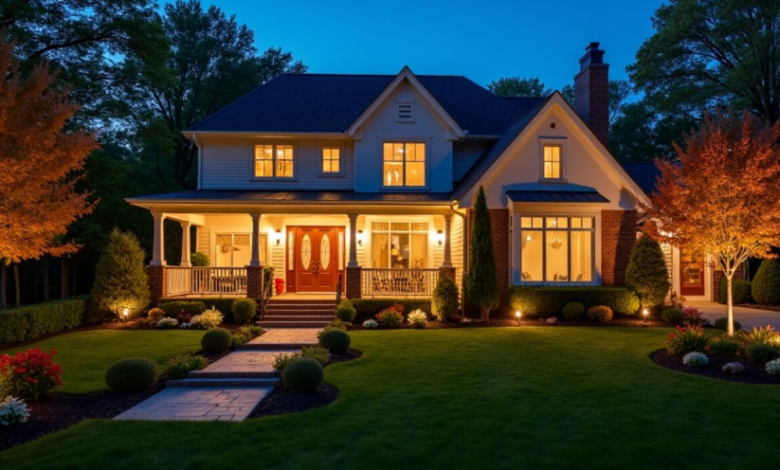
The best time to think about your outdoor lights is not when your yard is already dark. In Marysville, the final stretch of summer can make it easy to overlook weak exterior lighting. Long evenings keep driveways, walkways, porch steps, and backyard paths visible well into the day, so a poorly positioned fixture or a dark side entrance may not seem important yet. That changes as fall approaches and daylight begins disappearing earlier.
Suddenly, the route from the driveway to the front door matters more, deck steps become harder to see, and overgrown landscaping can block light exactly where you need it. Checking your Outdoor Lighting in Marysville before that seasonal shift gives you time to spot these problems and prepare your property for the darker, wetter evenings ahead.
Why Fall Reveals Outdoor Lighting Problems You May Not Notice in Summer?
Long summer evenings can hide weaknesses in a home’s exterior lighting. A pathway that feels perfectly visible at 8 p.m. may look very different when darkness arrives earlier and wet conditions reduce visibility.




In Marysville, that seasonal change is especially worth considering before fall routines begin. A trip from the driveway to the front door, a walk to the garbage bins, or a few steps down to a deck can become a different experience once natural light disappears earlier.
Instead of checking whether each fixture simply turns on, evaluate the routes people actually use after dark.
Look for:
- A driveway that becomes difficult to read near its edges
- Steps where the tread or edge disappears into shadow
- Side entrances that remain dark even when the front porch is illuminated
- Pathway fixtures partially hidden by late-summer vegetation
- Bright fixtures that create glare without lighting the walking surface
- Motion sensors or photocells that no longer respond as expected
This approach changes the inspection from “Do my lights work?” to “Can I clearly see where I need to walk?” That is a much better test of whether the system is ready for fall.
Perform a 10-Minute After-Dark Lighting Test
One of the most useful ways to evaluate outdoor lighting is to experience it from the same positions as the people using your property.
Wait until it is fully dark, then start at the driveway rather than standing beside the light fixtures. Follow your normal route toward the front door. Pay attention to what you can see at each step, turn, change in elevation, and entrance.
Then test the areas that are easy to overlook.
Walk along the side of the house. Open the gate. Approach the garage or secondary entrance. Continue toward the backyard, deck, or patio. If you regularly take out garbage, let pets outside, or use a particular path after dark, include those routes in the test.
At each location, ask three questions:
Can I see the walking surface?
Look for steps, uneven edges, curbs, landscaping borders, and other changes in elevation.
Is the light coming from a useful direction?
A fixture can be bright while still leaving the area beneath it poorly illuminated.
Does anything create glare or a sudden transition from bright to dark?
These changes can make it harder to see surrounding areas clearly.
Testing the property this way reveals problems that may not be obvious when looking at the lighting from a window or during daylight.
Your Lighting Plan May Have Changed Without You Moving a Fixture
Outdoor lighting can become less effective even when the electrical system is working exactly as it should.
The reason may be growth around the fixtures.
By late summer, shrubs can extend farther over pathways, branches can spread across driveways, and climbing plants can cover walls or fences. A fixture that illuminated an open section of walkway earlier in the year may now cast much of its light into foliage.
That does not necessarily mean you need a brighter fixture.
Before replacing or upgrading a light, look at what has changed around it. Check whether:
- Plants are blocking the fixture or its beam
- A branch is creating a shadow across a driveway or walkway
- A fence, shed, or new structure is changing the light pattern
- A fixture has shifted from its original position
- Several fixtures now leave a darker gap between illuminated areas
The useful question is not “How can I add more light?” It is “Why isn’t the existing light reaching the area that needs it?”
Sometimes the answer is placement or landscaping rather than brightness.
Are Your Porch Lights Creating Light or Just Glare?
A common outdoor-lighting mistake is judging a fixture by how bright it looks rather than by what it allows you to see.
Imagine approaching the front door at night. A bright fixture is shining near eye level, but the steps, railing, or edge of the walkway remain difficult to distinguish. The entrance looks illuminated from a distance, yet the person using it still has to watch their footing.
That is a placement problem, not necessarily a brightness problem.
When checking an entrance, stand where a visitor would actually approach from. Look at the steps and walking surface rather than directly at the fixture. If the light feels harsh while the surrounding area remains dark, consider whether the beam direction, mounting height, or fixture position is creating unnecessary glare.
The same principle applies to driveways and side entrances. Outdoor lighting should help people see the surfaces and boundaries around them without producing excessive brightness in their eyes or shining unnecessarily toward neighboring properties.
Good lighting is therefore less about making one fixture brighter and more about creating a comfortable, consistent path through the property.
Will Your Outdoor Fixtures Handle Marysville’s Wetter Months?
Fall brings another concern that summer can temporarily hide: moisture exposure.
Exterior electrical components need to withstand outdoor conditions. Fixtures, wiring connections, electrical boxes, receptacles, and controls all face greater exposure than indoor electrical components.
Water can find weaknesses that remain unnoticed during long stretches of dry weather.
You might first notice something unusual after a rainy evening.
Perhaps one fixture starts flickering. Maybe several landscape lights stop working. A breaker may trip when the exterior lighting operates. A motion sensor might behave unpredictably.
Homeowners should not ignore repeated electrical problems that appear during or after wet weather.
A licensed electrician can inspect the system and identify whether the issue involves the fixture, wiring, connections, controls, circuit, or another electrical component.
Exterior electrical problems often require more than replacing a bulb.
Check the Places Where People Actually Move After Dark
Not every part of a property needs the same type of lighting. Before adding fixtures, consider what people do in each area and what they need to see.
Driveway:
The goal is not simply to make the entire driveway bright. Check whether drivers and passengers can see parking boundaries, nearby landscaping, and the route from the vehicle to the house without facing glare.
Walkways and steps:
These areas require attention to changes in elevation. A light that illuminates the top of a staircase but leaves the lower steps in shadow may not provide useful visibility.
Side entrances and gates:
These are often overlooked because they receive less attention than the front entrance. Yet they may be used regularly for garbage bins, backyard access, storage, or utilities.
Garage and secondary doors:
Do not assume the garage door light covers every nearby entrance. Stand at each door separately and check whether the handle, threshold, and approach are visible.
Decks and patios:
Different activities may require different levels of illumination. Seating areas may benefit from softer ambient light, while stairs and food-preparation areas may need more focused lighting.
The best lighting plan follows movement and activity rather than treating every outdoor area as if it has the same purpose.
Match the Lighting Control to the Way You Use the Space
Earlier sunsets also expose problems with lighting controls. A timer that seemed convenient during summer may no longer match the amount of darkness your household experiences in the evening.
Different controls solve different problems.
Motion sensors are useful where lighting is needed when someone approaches, such as a driveway, side entrance, garage, or gate. They can avoid leaving certain areas illuminated continuously.
Photocells or dusk-to-dawn controls are better suited to locations where you want lighting to respond automatically as natural light fades.
Timers can work when you want a predictable schedule, but they may require seasonal adjustments as sunset times change.
The important question is not which control is most sophisticated. It is whether the control matches how the space is actually used.
A rarely used side path may not need to remain illuminated all evening, while a frequently used entrance may benefit from more consistent lighting. If a sensor activates unpredictably, a light operates at unexpected times, or an exterior control behaves differently during wet weather, the issue may deserve an electrical inspection rather than simply a new setting.
What Are Your Outdoor Lights Trying to Tell You?
Not every lighting problem requires an electrician. A fixture may simply be poorly positioned, blocked by vegetation, or no longer appropriate for a changed part of the property.
Other symptoms deserve more attention.
Consider professional electrical help if you notice:
- Lights that repeatedly flicker or go out
- A breaker that trips when exterior lighting operates
- Fixtures that behave differently after rain
- Outdoor controls that activate unpredictably
- Damaged wiring, connections, or electrical enclosures
- Multiple fixtures failing at the same time
- An exterior light that continues to malfunction after the fixture itself has been checked
These symptoms can have different causes, including problems with the fixture, wiring, connections, controls, or circuit.
The useful first step is diagnosis rather than automatically replacing the light. An electrician can determine whether the problem is electrical and identify the appropriate repair.
For homeowners, that distinction matters: adding brighter fixtures will not solve an underlying wiring or control problem.
See also: Is AI Changing Construction Law?
Your Property Can Outgrow Its Lighting Plan
Outdoor lighting is often installed once and then forgotten. The property around it does not stay the same.
A new fence can change the route to the backyard. Mature landscaping can block a fixture. A new deck can create stairs that did not previously exist. A relocated gate can turn a previously unused section of the yard into a regular walkway.
That is why fall is a useful time to reassess lighting based on how the property is used today, not how it was used when the fixtures were installed.
If people now enter through a different gate, use a new deck, park in a different location, or regularly move through an area that was previously ignored, the lighting plan may need to change with them.
Don’t Wait Until Darkness Reveals the Problem
The first noticeably early sunset often feels like it arrives suddenly.
One week, you finish dinner with plenty of daylight left. A little later in the season, you’re switching on porch lights before the evening routine has even started.
Your home should be ready for that change.
Thoughtfully planned outdoor lighting in Marysville can improve nighttime visibility around walkways, driveways, entrances, stairs, patios, and other areas you use every day. More importantly, a professional evaluation can identify fixture, wiring, control, and placement problems that summer daylight may have allowed you to overlook.
Before shorter fall days make those problems obvious, walk around your property after dark and see your home from a different perspective. If you notice unreliable fixtures, poorly illuminated pathways, excessive glare, or areas that disappear into shadow, schedule an outdoor lighting evaluation with a licensed electrician. A professional can help you prepare your exterior lighting for the darker, wetter months ahead.