
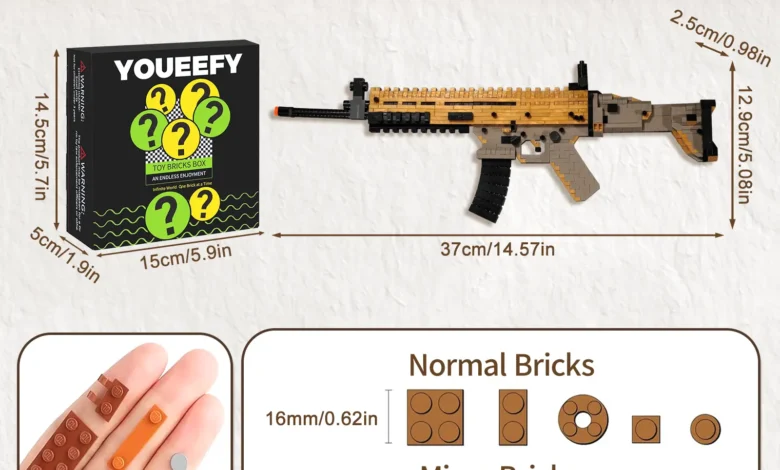
Walk into any toy aisle and you will find plenty of options that promise realism, action, or creative play. Molded plastic pistols, foam dart shooters, and prebuilt action figures all compete for attention, and each has a place in the wider hobby landscape. Yet a growing segment of builders and parents keeps drifting toward a different kind of product: replicas assembled from small interlocking bricks. That shift is not simply about novelty. There are real differences in what each type of product offers, from the moment it comes out of the box to the way it earns a place on a shelf or in a play routine years later. This article compares building block replicas against traditional prebuilt toys across the dimensions that actually matter, including engagement, skill development, durability, and long-term value. Instead of vague marketing claims, you will see concrete points of contrast so you can decide which category fits your goals, budget, and household. The differences are larger than most people expect.
What You Get in the Box
The clearest contrast begins the moment the packaging opens. A traditional toy is a finished product; a brick replica is a project that turns into a product. Neither is inherently better, but they set completely different expectations for the first hour of ownership and everything that follows. Understanding this contrast helps you match the purchase to your intent. A set of building block guns is designed around the assumption that the assembly itself is part of the value, not an obstacle to using it.
The Prebuilt Path
Traditional toys deliver immediate gratification. Open, unwrap, and the item is ready. For younger children or gift scenarios where instant play matters, this is a genuine advantage. The tradeoff is that the experience begins and ends at the same point. There is nothing to earn, no phase where the user has skin in the game, and no natural checkpoint to admire their own progress.



The Assembly Path
Brick-built replicas invert that experience. The box contains sealed bags of parts and an instruction booklet, and the user becomes an active participant. The finished item feels different in the hand because they built it. That sense of ownership scales with the complexity of the project and often survives long after the toy would have been forgotten. It also means the packaging holds a project rather than a product, which suits some households better than others.
Engagement Over Time
Engagement is where the gap widens sharply. Toys are typically enjoyed most in their first weeks, then compete with everything else in the toy box. Brick replicas follow a different curve because the assembly, disassembly, and rebuild cycle is itself repeatable.
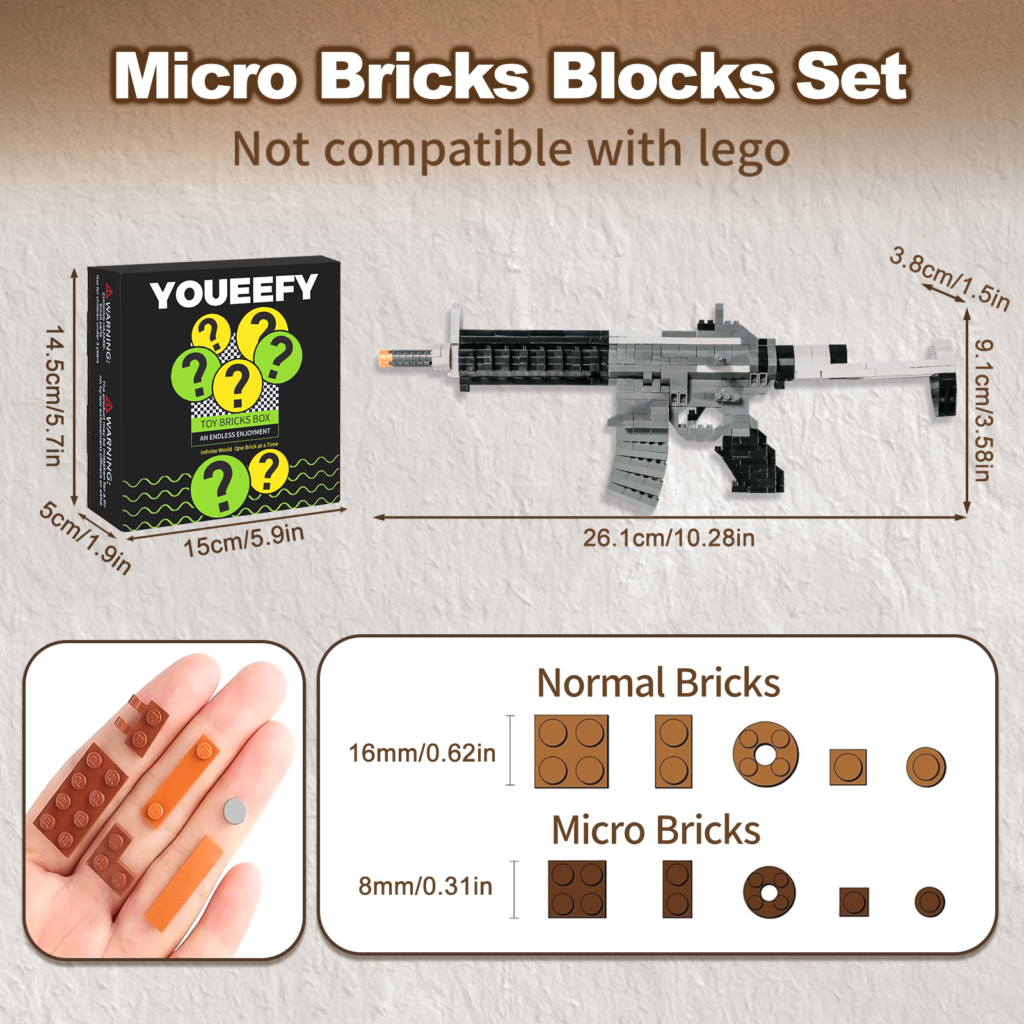
Play Value in the First Month
A prebuilt toy dominates the first weeks because it is ready and familiar. Brick sets typically pull ahead somewhere between week two and week four, once the initial novelty of a molded toy wears off and the finished replica has become the centerpiece of a display shelf, an imagination game, or a modification project. Which model wins depends on the user’s age and preferences, but the crossover point is real.
Play Value in the Following Year
Twelve months later, the picture usually looks different. Traditional toys often show wear, missing accessories, or simple boredom fatigue. Brick replicas have either become part of a display, been disassembled and rebuilt in a variation, or contributed their parts to a personal design. In each of those outcomes, the initial purchase keeps paying off in a way that molded plastic rarely does.
Skill Development and Learning
Beyond the surface fun, the two categories teach very different lessons. Neither is a substitute for structured education, but the informal learning that happens with each is worth comparing.
Motor and Spatial Skills
Assembling a brick replica sharpens fine motor control and spatial reasoning in ways a prebuilt toy cannot. Aligning small parts, interpreting perspective drawings in a manual, and remembering how a subassembly fits into a larger structure all exercise skills that transfer to everything from schoolwork to hobbyist projects later in life. A prebuilt toy offers plenty of imaginative play but does not push those specific muscles.
Problem Solving and Patience
Every builder eventually hits a step that does not work on the first try, and working through it teaches patience and diagnostic thinking. Comparing your build against the manual, backing up two steps, and identifying the misplaced part is a small but real problem-solving loop. Repeated over dozens of projects, it becomes a habit. Traditional toys rarely create that kind of structured challenge on their own.
Durability and Repairability
How each item survives real use matters as much as how it starts. This is where the contrast surprises new buyers most often.
When Something Breaks
Break a plastic detail on a molded toy and the item usually enters retirement. Break the same-scale detail on a brick replica and you replace one piece with an identical one, or you rebuild the affected subassembly in an evening. That difference in repairability quietly extends the useful life of brick sets to years, while traditional toys often move on within months of a first crack. Manufacturers such as YOUEEFY design kits with this repair-friendly philosophy, since replaceable parts are inherent to the medium.
Long-Term Storage
Brick replicas can also be disassembled and stored compactly, then rebuilt when interest returns. Traditional toys occupy the same shelf space whether they are being used or not. For households that rotate items in and out of active use, that difference has practical value beyond the hobby itself.
See also: How Corporate Chauffeur Services Improve Business Productivity
Choosing the Right Fit
Neither category is objectively better. The real question is which one suits the user, the setting, and the goals of the purchase.
Who Traditional Toys Serve Best
Very young children, gift moments that need immediate impact, and casual play scenarios still lean toward prebuilt items. If the intent is a quick, ready-to-use item without a project attached, molded toys deliver exactly that.
Who Building Sets Serve Best
Older children, teens, and adult hobbyists who enjoy a project usually find more lasting satisfaction in brick sets. If the buyer wants an activity that combines construction, display, and repeatability, this category will outperform a comparable prebuilt toy by every practical measure over a twelve-month window.
The Verdict Beyond the Marketing
The differences between brick-built replicas and traditional toys are not cosmetic; they run through the entire experience. The former demands time and rewards it with skill development, personalization, and a display piece that survives handling. The latter delivers immediacy and simplicity, which have their own value in the right setting. Framing this as a competition misses the point, but framing it as a choice does not. Buyers who understand what each category actually delivers can pick the right one for the right occasion instead of comparing them as if they were the same product with different price tags. For anyone whose goals include long-term engagement, hands-on learning, or a finished piece worth displaying, the brick-built path consistently earns its cost. For simpler moments, the traditional path still has a role. Knowing the difference is how you buy well.


