Picture this: it’s hour five of an intense gaming session, and what started as an exciting raid has turned into a battle against your own body. Your lower back aches, your shoulders are tense, and the cold room is making it nearly impossible to stay focused. Sound familiar? For millions of gamers worldwide, physical discomfort isn’t just an occasional annoyance — it’s a persistent barrier to peak performance.
Long gaming sessions place real demands on the body. Poor seating leads to spinal strain, muscle fatigue, and circulation issues that can compound into chronic problems over time. The gaming community has largely accepted discomfort as part of the hobby, but it doesn’t have to be that way.
Enter the heated gaming chair — a purpose-built solution that merges advanced ergonomic design with integrated climate control technology. These chairs go far beyond standard seating, offering lumbar support, temperature regulation, and even massage features tailored specifically to the demands of extended play. This article explores the core benefits, standout features, and practical selection criteria for heated gaming chairs, helping you understand exactly why this upgrade could transform not just your comfort, but your entire gaming experience.




The Foundation of Gaming Comfort: Understanding Ergonomics and Support
Most gamers invest heavily in monitors, GPUs, and peripherals, yet overlook the one piece of equipment that directly impacts their body for every single session — the chair. After two or three hours of play, poor seating stops being a minor inconvenience and starts becoming a genuine health concern. Slouching compresses spinal discs, rounded shoulders strain the neck and upper back, and restricted hip positioning reduces circulation to the legs. Over months and years, these patterns accumulate into chronic pain conditions that no amount of stretching can fully reverse.
An ergonomic gaming chair addresses these risks by engineering the seat around the natural curves of the human body rather than forcing the body to adapt to a flat, generic surface. Proper lumbar support is the cornerstone of this design philosophy. The lumbar region — the lower curve of the spine — bears the majority of seated body weight, and without targeted support, it collapses into a C-shaped slump that strains surrounding muscles and ligaments continuously.
Why Lumbar Support is Non-Negotiable for Gamers
Quality gaming chairs feature adjustable lumbar systems that let you position the support cushion or built-in pad precisely where your lower back curves inward. This active reinforcement keeps the spine in a neutral S-curve alignment, distributing pressure evenly rather than concentrating it at a single point. The practical result is reduced muscle fatigue, fewer tension headaches caused by postural compensation, and a significantly lower risk of developing herniated discs or sciatica over time. For gamers logging four-plus hours daily, this isn’t a luxury feature — it’s foundational protection that directly determines how long you can play comfortably and competitively.
Key Features That Define a Premium Heated Gaming Chair
Not all gaming chairs are created equal, and the gap between a budget seat and a premium heated model becomes obvious the moment you settle in for a four-hour session. A truly high-quality heated gaming chair integrates multiple systems — ergonomic structure, climate control, and therapeutic massage — into a cohesive experience rather than bolting on features as afterthoughts. Understanding what each system contributes helps you identify which combinations genuinely matter for your setup.
Ergonomic Design: More Than Just Adjustability
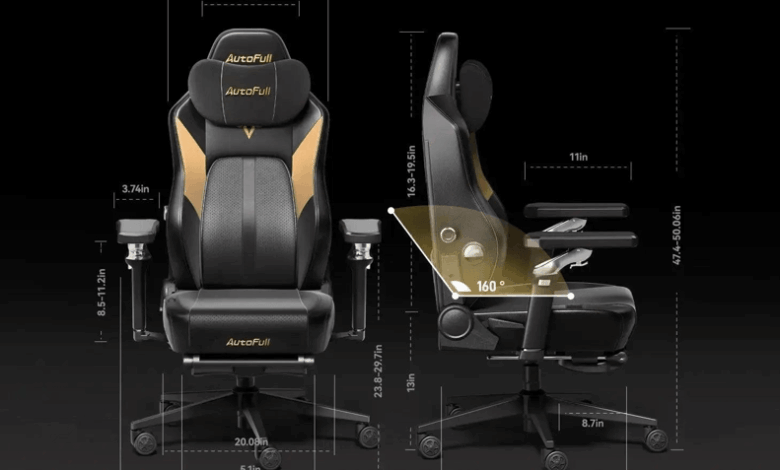
Premium ergonomic design starts with contoured seat pans and high-density foam that resist compression over time. Unlike flat office chairs that flatten within months, quality gaming chairs use multi-layer foam or memory foam that conforms to your body’s shape while maintaining structural integrity. Brands like AutoFull have built their reputation around this approach, engineering chairs with adjustable armrests featuring 4D movement — height, width, depth, and angle — that allow precise positioning to eliminate shoulder elevation and wrist strain. Seat height adjustment and recline range further ensure the chair adapts to your body rather than the reverse, accommodating different heights and preferred playing postures without compromise.
Climate Control: Mastering Temperature for Optimal Comfort
The defining feature of a heated gaming chair is its integrated climate control system. Heating elements embedded in the seat and backrest use carbon fiber or wire-based technology to deliver consistent, adjustable warmth directly to the muscles that need it most. Many premium models also incorporate ventilation or active cooling fans in the seat cushion, preventing the sweaty discomfort that standard chairs cause during intense sessions. Multiple heat intensity levels let you dial in exactly the right temperature for your environment, whether you’re gaming in a cold basement in winter or a warm room in summer.
Massage Features: Adding a Layer of Relaxation
Built-in massage functionality transforms a gaming chair into an active recovery tool. Vibration motors positioned at the lumbar region, upper back, and thighs deliver targeted stimulation that loosens tight muscles during breaks between matches. More sophisticated systems offer multiple massage modes — pulse, wave, and constant vibration — so you can choose between energizing stimulation and gentle relaxation depending on what your body needs at that moment. This feature is particularly valuable for gamers who experience tension headaches or shoulder knots from sustained concentration, providing relief without leaving the chair.
See also: Securing Your Future: Understanding Life Insurance in Australia
How Heating Technology Enhances the Gaming Experience
Cold environments are a silent enemy of gaming performance. When your body is cold, muscles tighten, circulation slows, and your brain diverts cognitive resources toward regulating core temperature rather than processing in-game decisions. A heated gaming chair eliminates this problem at the source by delivering consistent warmth directly to the body’s largest muscle groups — the back, glutes, and thighs — keeping them relaxed and well-perfused throughout even the longest sessions.
The circulatory benefits alone make heating technology worth serious consideration. Warmth causes blood vessels to dilate, improving blood flow to muscles and extremities. For gamers who sit for extended periods, this counteracts the natural circulation slowdown that comes with prolonged stillness, reducing the pins-and-needles sensation in legs and feet that disrupts focus at critical moments. Better circulation also means muscles receive more oxygen and nutrients, delaying the onset of fatigue that typically forces gamers to take breaks earlier than they’d like.
Muscle relaxation is the other major advantage. Heat therapy has been used clinically for decades to reduce muscle tension and alleviate chronic pain, and the same principles apply in a gaming context. When your lower back and shoulder muscles stay warm and loose, you maintain better posture naturally — not through conscious effort, but because relaxed muscles simply function the way they’re designed to. This translates directly into sharper focus and sustained immersion, since you’re no longer fighting physical discomfort alongside in-game challenges. The result is a measurably better gaming experience that extends how long you can play at your best.
Step-by-Step Guide to Choosing the Right Heated Gaming Chair
Choosing the right heated gaming chair isn’t about grabbing the most expensive model or the one with the most features listed on the box. It’s about matching the chair’s capabilities to your specific body, environment, and gaming habits. A systematic approach prevents buyer’s remorse and ensures every dollar spent translates into real, session-to-session comfort.
Prioritizing Ergonomic Fit and Lumbar Support
Step 1 — Assess your ergonomic needs first. Measure your height, weight, and seated torso length before shopping. A chair sized for a 5’6″ frame will position lumbar support in the wrong location for someone who is 6’2″, rendering that feature useless. Look for chairs with adjustable seat depth and lumbar systems that move both vertically and in terms of projection so the support actually meets your lower back’s natural curve. Sit in the chair — or carefully review dimension specifications — and verify that your feet rest flat on the floor with thighs parallel to the ground.
Step 2 — Evaluate climate control options relative to your environment. If you game in a consistently cold basement, prioritize chairs with strong, multi-level heating in both the seat and backrest. If overheating is your primary issue, look for models with active ventilation fans built into the seat cushion. Ideally, choose a chair offering both heating and cooling so the system adapts across seasons rather than solving one problem while creating another.
Selecting Climate Control Features for Your Environment
Step 3 — Audit additional features against genuine needs. Massage functionality is genuinely useful for gamers who experience chronic shoulder or lumbar tension, but only if the motor placement aligns with your problem areas. Check that massage zones cover the lumbar region and upper back specifically. Step 4 — Balance budget with brand reliability. Mid-range chairs from established manufacturers consistently outperform cheaper alternatives that use inferior foam and underpowered heating elements. Read verified user reviews specifically mentioning long-term durability after six to twelve months of use. Step 5 — Test whenever possible. If a local retailer carries the model, spend at least fifteen minutes seated in your normal gaming posture before committing. No specification sheet replaces direct physical feedback from your own body.
Beyond Comfort: Health Benefits and Performance Gains
The case for a heated gaming chair ultimately rests on two interconnected pillars: long-term health protection and measurable performance improvement. These aren’t abstract promises — they’re the direct, cumulative result of every ergonomic and thermal feature working together across hundreds of gaming sessions.
On the health side, consistent lumbar support prevents the gradual spinal deterioration that plagues gamers who spend years in substandard seating. Maintaining a neutral spinal curve reduces the compressive forces on intervertebral discs, significantly lowering the risk of herniated discs, sciatica, and chronic lower back pain. Integrated heating compounds this benefit by keeping surrounding musculature warm and pliable, reducing the micro-tension that accumulates during long periods of stillness. Meanwhile, massage features actively stimulate blood flow during and between sessions, counteracting the circulatory stagnation that contributes to deep vein issues and persistent leg discomfort. Together, these systems shift a gaming chair from passive furniture into an active wellness tool that protects your body as a long-term investment.
Performance gains follow naturally from physical well-being. When discomfort isn’t competing for your attention, cognitive resources stay focused on the game. Reduced muscle fatigue means your reaction times stay sharper deeper into a session, and sustained thermal comfort prevents the mental drift that cold or overheated environments cause. Gamers who make this upgrade consistently report longer sustainable session lengths and a noticeable reduction in the mid-session slumps that previously forced breaks. Comfort, it turns out, is a competitive advantage.
Investing in Your Health and Performance Through Better Seating
A heated gaming chair isn’t a luxury accessory — it’s a practical investment in your health, comfort, and competitive edge. Throughout this article, we’ve seen how ergonomic design protects your spine during the long hours that define serious gaming, how integrated heating technology keeps muscles warm and circulation flowing, and how massage features provide active relief from the tension that builds during intense sessions. Each of these elements addresses a real, recurring problem that standard seating simply cannot solve.
The cumulative effect matters most. Lumbar support prevents the slow-building spinal damage that catches up with gamers years down the line. Climate control keeps your body in an optimal thermal state so your mind stays sharp when it counts. Massage functionality turns your chair into a recovery tool, not just a place to sit. Together, these features don’t just make gaming more comfortable — they make it sustainable.
If you’re serious about gaming, treat your chair with the same intentionality you bring to your hardware setup. Your body is the most important peripheral you own, and protecting it pays dividends in every session. Prioritizing comfort isn’t a concession to weakness — it’s a strategic decision that keeps you playing longer, performing better, and staying healthier for years to come.