The Future of Manufacturing with CNC Precision Milling: Innovation, Accuracy, and Efficiency

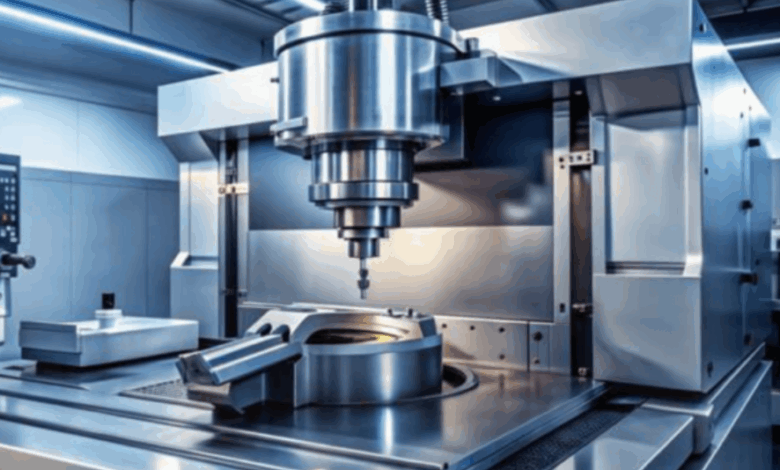
In today’s rapidly evolving industrial world, precision is not just an advantage—it’s a necessity. From aerospace engineering to consumer electronics, every component must meet exacting standards to ensure product performance, safety, and durability. Enter CNC precision milling a game-changing technology that has redefined the boundaries of manufacturing. With unmatched accuracy, efficiency, and adaptability, CNC precision milling continues to be at the forefront of modern machining solutions.
This article explores the transformative impact of CNC precision milling, why industries are increasingly adopting it, and how it can elevate your manufacturing capabilities.
What is CNC Precision Milling?
CNC (Computer Numerical Control) precision milling is a subtractive manufacturing process in which a high-speed rotating cutting tool removes material from a workpiece based on pre-programmed digital instructions. Unlike conventional manual machining, CNC milling utilizes CAD (Computer-Aided Design) and CAM (Computer-Aided Manufacturing) software to produce intricate parts with remarkable accuracy.



The “precision” component refers to the process’s ability to achieve extremely tight tolerances, often within ±0.001 inches or better. Whether working with metals, plastics, or composites, CNC precision milling guarantees consistent repeatability across small prototypes and large production runs alike.
See also: AI for Pest Control: The Smart Tech Solution Revolutionizing Modern Extermination
The Benefits of CNC Precision Milling
Adopting cnc precision milling in your operations opens a host of benefits that traditional methods simply can’t match:
1. Unmatched Accuracy
High-precision CNC mills are capable of machining components with complex geometries and tight tolerances. This is particularly essential in industries where the smallest variation can lead to failure—such as aerospace, automotive, and medical.
2. Repeatability and Consistency
Whether you need one part or one thousand, CNC milling ensures each component is identical. Once programmed, the machine executes with zero deviation, eliminating human error from the equation.
3. Enhanced Efficiency
Modern CNC machines operate at high speeds, with minimal downtime, and can run continuously with little human supervision. This translates to faster production rates and shorter lead times.
4. Versatility Across Materials
From aluminum, stainless steel, and titanium to polymers like PEEK and PTFE, CNC precision milling supports a wide array of materials. Tooling and machine settings can be customized to accommodate different hardness levels and surface finishes.
5. Cost-Effectiveness in the Long Run
Though initial setup costs may be high, the long-term benefits of reduced scrap, faster cycle times, and minimal rework make cnc precision milling an economical choice for mass production.
Industries That Rely on CNC Precision Milling
Many industries now depend on CNC precision milling to maintain global competitiveness and product integrity. Here’s a closer look:
Aerospace
Aerospace components like engine mounts, wing spars, and brackets demand unparalleled precision. CNC milling ensures lightweight materials such as aluminum and titanium are machined accurately to enhance fuel efficiency and safety.
Automotive
From gear housings to transmission systems, CNC-milled parts improve performance and reliability. High-volume production combined with uniform quality makes this technology ideal for automotive manufacturing.
Medical Devices
Surgical instruments, orthopedic implants, and diagnostic tools require strict tolerances and biocompatible materials. CNC precision milling makes it possible to produce custom parts tailored to individual patients.
Electronics
Miniaturization in electronics demands micro-scale machining of parts like heatsinks, connectors, and housing units. CNC machines are equipped to handle extremely detailed work without compromising accuracy.
Defense and Firearms
Defense-grade parts such as optics mounts, weapon receivers, and bullet casings must be durable and precisely machined. CNC precision milling ensures uniformity in critical components.
CNC Precision Milling vs. Conventional Milling
While traditional milling methods rely heavily on manual input and operator skill, CNC precision milling automates the entire process. Here’s how they compare:
| Feature | Conventional Milling | CNC Precision Milling |
| Accuracy | Limited | Ultra-precise (up to ±0.001″) |
| Operator Skill | High dependency | Minimal post-setup |
| Complexity | Basic to moderate | Complex geometries supported |
| Speed | Slower | Rapid, continuous operation |
| Repeatability | Prone to variation | Consistent across batches |
In essence, CNC milling is superior in virtually every performance category, especially when precision and scalability are required.
Innovations in CNC Precision Milling
As technology continues to evolve, so too does cnc precision milling. Below are some of the groundbreaking advancements enhancing this field:
1. 5-Axis CNC Milling
Unlike 3-axis machines, 5-axis mills offer rotational movement along two additional axes, enabling the creation of complex geometries in a single setup. This reduces machining time and increases part accuracy.
2. Digital Twin Technology
Digital twins allow manufacturers to simulate the milling process before the actual cut. This minimizes errors and provides real-time insights into tool wear, vibrations, and thermal expansion.
3. Automated Tool Changers (ATC)
Modern machines are now equipped with ATCs that swiftly switch tools mid-process, significantly boosting efficiency and enabling seamless transitions between different cutting tasks.
4. High-Speed Machining (HSM)
With advanced spindle speeds and enhanced feed rates, HSM allows for quicker removal of material without compromising surface finish—ideal for high-volume production.
5. AI and Machine Learning Integration
Artificial intelligence is being used to optimize cutting paths, predict tool wear, and automatically adjust machining parameters. These smart systems enhance productivity and reduce downtime.
Choosing the Right CNC Precision Milling Partner
When outsourcing to a cnc precision milling service provider, here are key criteria to consider:
- Certifications: Ensure they are ISO 9001 certified or industry-specific (e.g., AS9100 for aerospace).
- Equipment List: Confirm they use 3-, 4-, or 5-axis CNC machines, depending on your project needs.
- Material Expertise: Check if they have experience working with your chosen material.
- Quality Assurance: Inquire about in-process inspections, final part validation, and use of tools like CMM (Coordinate Measuring Machines).
- Lead Times and Support: A reliable provider will maintain clear communication and offer fast turnaround times without compromising quality.
Conclusion: CNC Precision Milling—The Smart Way Forward
CNC precision milling is not just a tool—it’s a foundation for innovation and industrial success. As the global demand for custom, high-quality parts continues to rise, this technology will remain central to modern manufacturing strategies. Whether you’re in aerospace, healthcare, automotive, or consumer electronics, integrating cnc precision milling into your production process ensures you stay ahead of the curve.