Choosing the right brick-built replica is more involved than picking whatever looks impressive on the box. The category has grown quickly, and with growth comes wide variation in engineering, part quality, and finished appearance. A buyer standing in front of ten similar-looking sets often has no idea which one will click together cleanly on the workbench and which will end up as a half-built pile in the closet. This guide walks through the specific decisions that separate a satisfying purchase from a disappointing one. It covers what to look for in the build quality, how to match a kit to the time and space you actually have, how to think about care and display once the model is finished, and the mistakes that trip up first-time buyers most often. By the end, you should be able to walk into a purchase decision with a clear checklist rather than a hopeful guess.
Recognizing Real Build Quality Before You Buy
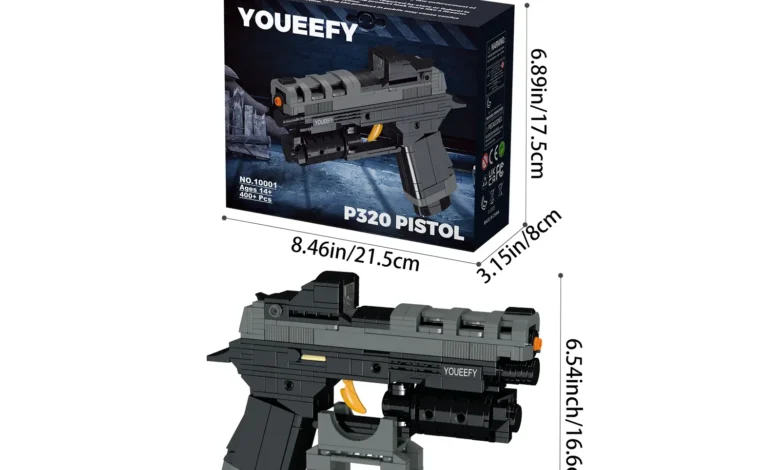
The single biggest predictor of whether you enjoy a build is the quality of the parts themselves. Marketing photographs will always look sharp, so the useful signals come from elsewhere. Independent builder reviews, close-up product photos that show individual studs and connectors, and clear information about the materials used all point to whether a kit is worth the shelf space. Well-engineered model guns from established brands like YOUEEFY tend to hold their shape when handled, keep their mechanical features functioning through repeated use, and avoid the loose seams that plague budget imports.
Clutch Power and Part Tolerance
The technical term for how firmly two bricks hold together is clutch power. Too weak and the model sags under its own weight. Too strong and disassembly becomes a knuckle-scraping ordeal. Reputable manufacturers hit a middle range that lets pieces snap in with a satisfying click and stay put during handling. If a review mentions parts falling apart when the model is picked up, take that seriously.




Color Consistency Across Production Runs
Look for reviews that comment on whether the grays match across the frame, whether the blacks are truly matte, and whether metallic finishes look consistent. A kit that combines three slightly different shades of gray on the same surface will look off no matter how carefully it is built. This is one area where budget sets often disappoint.
Matching the Kit to Your Real Skill Level
Advertised piece counts are a rough proxy for difficulty, but they miss important nuances. A five-hundred-piece kit with unusual mechanisms can be more challenging than a thousand-piece kit that repeats simple patterns. Being honest about your current experience saves money and prevents frustration.
Assessing Prior Experience
If you have never built a technical model before, start with something under a thousand pieces and without exotic mechanical features. This lets you learn how the parts behave and how the instruction style works before tackling anything ambitious. Builders who skip this step often report abandoning their first kit within days.
Building a Progression Path
After a first successful build, the natural next step is a kit with either significantly more parts or a specific new challenge like a working action mechanism. Deliberate progression is more rewarding than jumping directly to the flagship product. Each successful build teaches skills that make the next one smoother.
Time Estimates That Match Reality
Manufacturers occasionally list assembly times that assume expert builders working without breaks. First-time builders should mentally double the listed time, then add extra for the inevitable pauses to make coffee, check on the family, or step away and come back. This is a hobby, not a race.
Care and Display Once the Model Is Complete
Finishing a model is the middle of the story, not the end. How the piece is displayed determines whether it stays a source of pride or becomes a dust-covered clutter item within months. A few small decisions early on make a large difference over time.
Choosing the Right Surface
A stable, flat surface at eye level shows a model best. Avoid placing it somewhere it will be knocked when reaching for a book or where sunlight will fall on it for hours each day. Certain plastics can fade with sustained ultraviolet exposure, and while colors are more stable than they used to be, sunlight remains an enemy of long-term appearance.
Dust Management Without Damage
Soft brushes designed for camera lenses do a better job than any cloth on a detailed brick model. For enclosed cases, silica packets can control humidity in damp climates. Compressed air is tempting but can dislodge small parts, so use it sparingly and from a safe distance if at all.
Keeping Instructions and Spare Parts
Save the instruction booklet even after the build is done. If a piece falls off later, having the reference makes reassembly quick. Most sets include a small number of spare parts too, which are worth keeping in a labeled bag near the model.
See also: How a Locksmith in NYC Helps Secure Small Businesses?
Common Mistakes That Buyers Regret Later
A short list of the missteps that come up most often in builder forums. Avoiding these puts you ahead of a large share of first-time buyers.
Buying on Piece Count Alone
Piece count sells kits but rarely predicts satisfaction. A well-designed six-hundred-piece model with clever engineering delivers more enjoyment than a bloated fifteen-hundred-piece model padded with structural filler.
Ignoring the Design Source
The team behind a kit matters. Established brick model makers hire designers who understand both the source subject and the physical constraints of the medium. Anonymous white-label sets sold under many different names often come from a single factory with inconsistent quality control.
Rushing the Build
Trying to finish in a single sitting leads to mistakes that compound. A step missed early in the build sometimes only becomes visible fifty steps later, forcing a lengthy backtrack. Split your build into planned sessions of ninety minutes or less and check your work at each session’s end.
The Choices That Make a Model Worth Building
A brick-built replica is only as good as the sum of the decisions made before, during, and after the build. Picking a kit with proven part quality, matching its complexity to your genuine skill level, planning a display that protects your work, and steering clear of the well-known first-buyer traps all combine to turn a shelf full of parts into a piece you will look at with satisfaction years from now. Take the time to research options, read reviews from builders who share your experience level, and give yourself permission to grow into the hobby gradually. The best purchase is not the largest set on the shelf or the flashiest box art. It is the one that meets you where you are and lets you enjoy every hour spent bringing it together.