Seedance 2.5 and Wan 3.0 API Access Made Simple: How Atlas Cloud Unifies 400+ AI Models for Developers

AI video generation moved fast this year. Two models pushed it forward more than any others: Seedance 2.5 from ByteDance and Wan 3.0 from Alibaba. Both can now produce 30-second clips in a single pass, something that felt out of reach only a year ago.
For developers, this progress creates a practical problem. Every new model arrives on a different platform, with different documentation, different authentication, and different billing. Teams that want to build with the latest video models end up managing a stack of separate integrations. That is the gap Atlas Cloud was built to close.
Why Seedance 2.5 and Wan 3.0 Matter Right Now
Before looking at the platform side, it helps to understand why these two models are getting so much attention from technical teams.



Seedance 2.5: Longer Videos and Deeper Editing
ByteDance announced Seedance 2.5 in mid-2026, and it marked a clear step up from earlier versions. The model generates native 30-second single-shot videos without stitching shorter clips together. It supports text-to-video, image-to-video, and reference-to-video workflows.
The editing side is just as important. Region-level editing lets creators change a specific area of a frame while keeping lighting and motion consistent. The model also accepts a large set of multimodal reference inputs, which gives production teams far more control over the final output than previous generations allowed.
Wan 3.0: Any Input, One Video
Alibaba’s answer arrived in August 2026. Wan 3.0 also generates up to 30 seconds of video in one pass, but its standout feature is input flexibility. The model accepts text, images, audio, video clips, and even documents as source material. A slide deck or a PDF can become the starting point for a finished video.
Wan 3.0 also focuses on consistency. Characters, props, and visual style stay stable across a clip, which matters for anyone producing branded or narrative content rather than one-off experiments.
The Integration Problem Nobody Talks About
Here is the part that rarely makes it into launch announcements. Using these models in a real product is harder than trying them in a demo app.
Each provider has its own API design. Each has its own rate limits, key management, and payment setup. When a team wants Seedance 2.5 for one feature and Wan 3.0 for another, they are suddenly maintaining two vendor relationships, two SDKs, and two sets of error handling. Add an image model and a speech model, and the integration work multiplies again.
This is where a unified inference layer starts to make sense. Platforms like Atlas Cloud give developers access to more than 400 AI models across text, image, video, and audio generation through a single OpenAI-compatible API. Instead of writing custom code for every provider, teams point their existing OpenAI-style integration at one endpoint and select the model they need by name.
How Atlas Cloud Approaches Unified Model Access
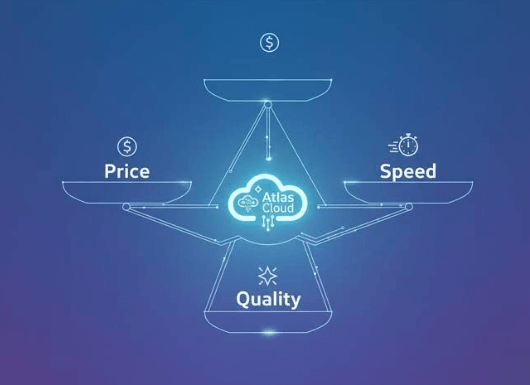
The core idea behind Atlas Cloud is simple: one API, one account, one bill, every major model.
OpenAI-Compatible by Design
Most developers already have code written against the OpenAI API format. Atlas Cloud keeps that format, so switching typically means updating a base URL and an API key. No rewrites, no new SDK to learn. This lowers the cost of experimenting with new models to almost nothing.
One Catalog Across Every Modality
The platform covers more than 400 models in a single catalog. That includes video generation families such as Seedance, Wan, Kling, and Veo, alongside image models, language models, text-to-speech, and music generation. A product team can prototype a video feature, a voiceover feature, and a chatbot without leaving one dashboard.
Fast Access to New Releases
Model launches now happen monthly, sometimes weekly. A unified platform matters most at exactly these moments. When a model like Seedance 2.5 or Wan 3.0 becomes available, developers on a unified API can start testing it immediately, without opening a new vendor account or waiting for regional access.
Practical Use Cases for Developers
Point-to-point, here is where this setup pays off in real products.
Product Teams Comparing Video Models
Seedance 2.5 and Wan 3.0 have different strengths. One team may care most about region-level editing, another about document-to-video input. With a single API, developers can run the same prompt against both models, compare the results side by side, and let quality decide. Switching models becomes a one-line change instead of a migration project.
Startups Avoiding Vendor Lock-In
Betting an entire product on one provider is risky when the field moves this quickly. A unified layer keeps the application code neutral. If a better video model ships next quarter, the app can adopt it without touching its architecture.
Agencies and Content Platforms at Scale
Teams generating video at volume need reliability more than novelty. Consolidating traffic through one provider simplifies monitoring, billing, and failover, while still leaving every major model within reach.
What to Consider Before Choosing an Inference Platform
A few honest points worth weighing before committing to any unified API provider.
First, check model coverage against your roadmap. If your product depends on a specific model such as Wan 3.0, confirm it is available and kept current on the platform.
Second, look at compatibility. An OpenAI-compatible interface saves real engineering time, but only if your existing stack already speaks that format.
Third, think about scale and compliance. Production workloads need stable uptime and clear security practices, so review what the provider publishes about both before routing customer traffic through it.
Finally, test with your own prompts. Public demos of Seedance 2.5 and other frontier models are always curated. Your use case is the only benchmark that matters.
The Bottom Line
Video generation crossed a real threshold in 2026. Seedance 2.5 brought 30-second single-shot generation with serious editing control, and Wan 3.0 turned almost any input into finished video. The models are ready. The remaining question for developers is how to reach them without drowning in integrations.
Unified inference platforms answer that question. By putting 400+ models behind one OpenAI-compatible API, Atlas Cloud lets teams treat model choice as a configuration detail rather than an engineering commitment. For developers building AI-powered products in a market that changes monthly, that flexibility is quickly becoming the sensible default.
Media Contact
Contact Person: Carol Weng
Email: carol.weng@atlascloud.ai
Company Name: Atlas Cloud
Website: atlascloud.ai